
Mountain Routes vs. Coastal Drives: Choosing the Right Landscape for Your Road Trip
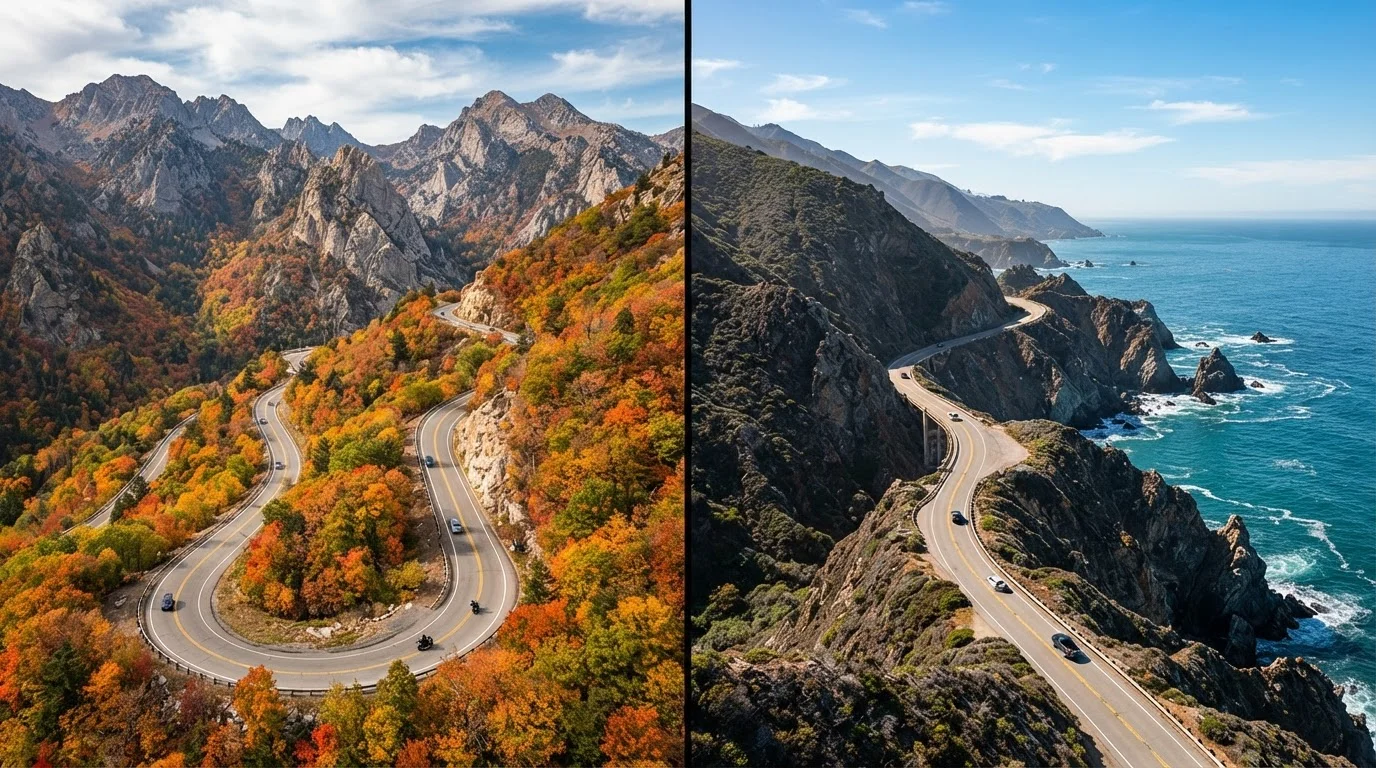
Photo credit: ProximityFinds.com | One-stop Reading Source
In this article
Towering peaks and switchbacks or oceanfront cliffs and harbor towns? A practical comparison to help you decide which landscape suits your travel style.
Key Takeaways
- Mountain routes reward drivers who enjoy dramatic elevation changes, wildlife, and cooler temperatures.
- Coastal drives offer more accessible roads, milder weather windows, and diverse seaside communities.
- Driving skill, vehicle capability, and travel season all meaningfully affect which landscape suits you best.
- Both terrain types include iconic and hidden-gem routes worth exploring across the US.
- Your ideal landscape often comes down to your pace preference - adventurous and immersive vs. relaxed and scenic.
What Each Landscape Actually Feels Like to Drive
Mountain road trips are immersive in a way that's hard to overstate. Think hairpin turns on the Going-to-the-Sun Road in Glacier National Park, or long climbs through the Rockies where the treeline fades and the sky feels enormous. The driving itself becomes part of the experience - demanding enough to keep you fully present, rewarding enough to earn every viewpoint. These routes often pass through national forests, climb above 10,000 feet, and thread through valleys that feel genuinely remote.
Coastal drives trade vertical drama for horizontal sweep. Along the Pacific Coast Highway, for instance, you're riding the edge of the continent - cliffs falling to the Pacific on one side, sun-warmed hillsides on the other. The road surface tends to be gentler, towns appear more frequently, and you rarely feel far from a hot meal or a harbor walk. That accessibility is a genuine advantage, not a consolation prize.
| Mountain Routes | Coastal Drives | |
|---|---|---|
| Scenery style | Peaks, valleys, forests, wildlife | Ocean views, cliffs, harbor towns |
| Driving difficulty | Moderate to challenging; switchbacks common | Generally easier; flatter, wider roads |
| Best season | June through September (pass-dependent) | Year-round; check for fog or storms |
| Vehicle needs | AWD helpful on some routes | Standard vehicle sufficient |
| Town/service frequency | Sparse; plan fuel carefully | More frequent stops and amenities |
| Wildlife viewing | Excellent - elk, bear, marmots | Coastal birds, seals, occasional whale |
| Solitude potential | High on backcountry routes | Lower on popular coastal highways |
Practical Differences That Actually Matter
Weather and seasonality: Mountain passes are often closed or treacherous from late fall through early spring. Many high-elevation routes are best attempted between June and September. Coastal highways generally offer longer driving seasons, though Pacific Coast fog in summer and Atlantic storm season in fall are real considerations worth checking before you go.
Vehicle requirements: Some mountain routes - particularly unpaved byways in the Southwest or backcountry loops in Colorado - benefit from higher ground clearance or all-wheel drive. Most major coastal routes are paved two-lane or divided highways accessible to any standard vehicle.
Driving skill and comfort: If steep grades, sheer drop-offs, or tight switchbacks make anyone in your car anxious, coastal routes are genuinely less stressful. Mountain roads reward confident, patient drivers who don't mind pulling over to let faster traffic pass.
Download Offline Maps Before You Go
Cell service on mountain routes can disappear for dozens of miles at a stretch. Download your entire route as an offline map before departing - several free navigation apps support this. Also note that some high-elevation roads require timed entry reservations during peak season; always verify current access requirements through official park or highway authority websites before your trip.
Stop frequency: Coastal routes tend to offer more regular towns, rest stops, and fuel options. Remote mountain stretches - especially in the Great Basin or northern Rockies - can have long gaps between services. Always check your fuel level before heading into elevation.
Iconic and Hidden-Gem Routes to Know
For mountain driving, the Blue Ridge Parkway is one of America's most celebrated routes - 469 miles through the southern Appalachians with no commercial traffic and sweeping ridge views. The Trail Ridge Road through Rocky Mountain National Park and the Million Dollar Highway in Colorado's San Juan Mountains offer high-altitude thrills closer to the Rockies.
On the coastal side, California's Pacific Coast Highway is the marquee name, but the lesser-known US 1 corridor through Maine - threading past lighthouses, lobster shacks, and glacially carved harbors - rivals it for character. The Gulf Coast's US Highway 90 offers a totally different coastal mood: flat, wide, and rich with Cajun and Gulf culture.
For a deeper look at what makes any route stand out, see our guide on what defines a truly iconic American road trip. And if you're thinking beyond individual routes toward a full multi-park adventure, our national parks road trip planning guide can help you connect the dots.
469 miles
Length of the Blue Ridge Parkway
The Blue Ridge Parkway, managed by the National Park Service, is one of the longest linear parkways in the US national park system.
655 miles
Length of California's Pacific Coast Highway corridor
California's coastal route from the Oregon border to the Mexican border spans roughly 655 miles of Highway 1 and connecting roads.
Matching the Landscape to Your Travel Style
The most useful question isn't which landscape is better - it's which one fits how you actually travel. If you tend to linger at a single overlook for an hour, prefer camping to motels, and love returning home with mud on your boots, mountain routes will reward you richly. If your ideal day involves a farmers market in the morning, a beach walk at noon, and fresh seafood by sunset, coastal drives are your natural match.
Travel parties matter too. Families with young children or older adults often find coastal routes easier to manage - more frequent stops, gentler roads, and more variety in accommodation. Solo drivers or adventure-focused groups may find mountain isolation to be the whole point.
You can also consult a route reference to explore highways that blend both - like the Going-to-the-Sun Road approaching from the flatlands, or Oregon's Highway 101 dipping inland through coastal range forests. The best road trips often refuse to stay in a single category. Use the comparison above as a starting point, not a final word - then let the open road make the case for itself.

Author
Travel Editorial Team
Travel Editorial Team is the collective byline for our editorial team and contributor network. Articles published under this byline or an editorial pen name are researched, written, and reviewed according to our editorial standards for clarity, consistency, and independence before publication.
View all articles →