
Deck Building and Repair: Safety, Materials, and Permit Realities
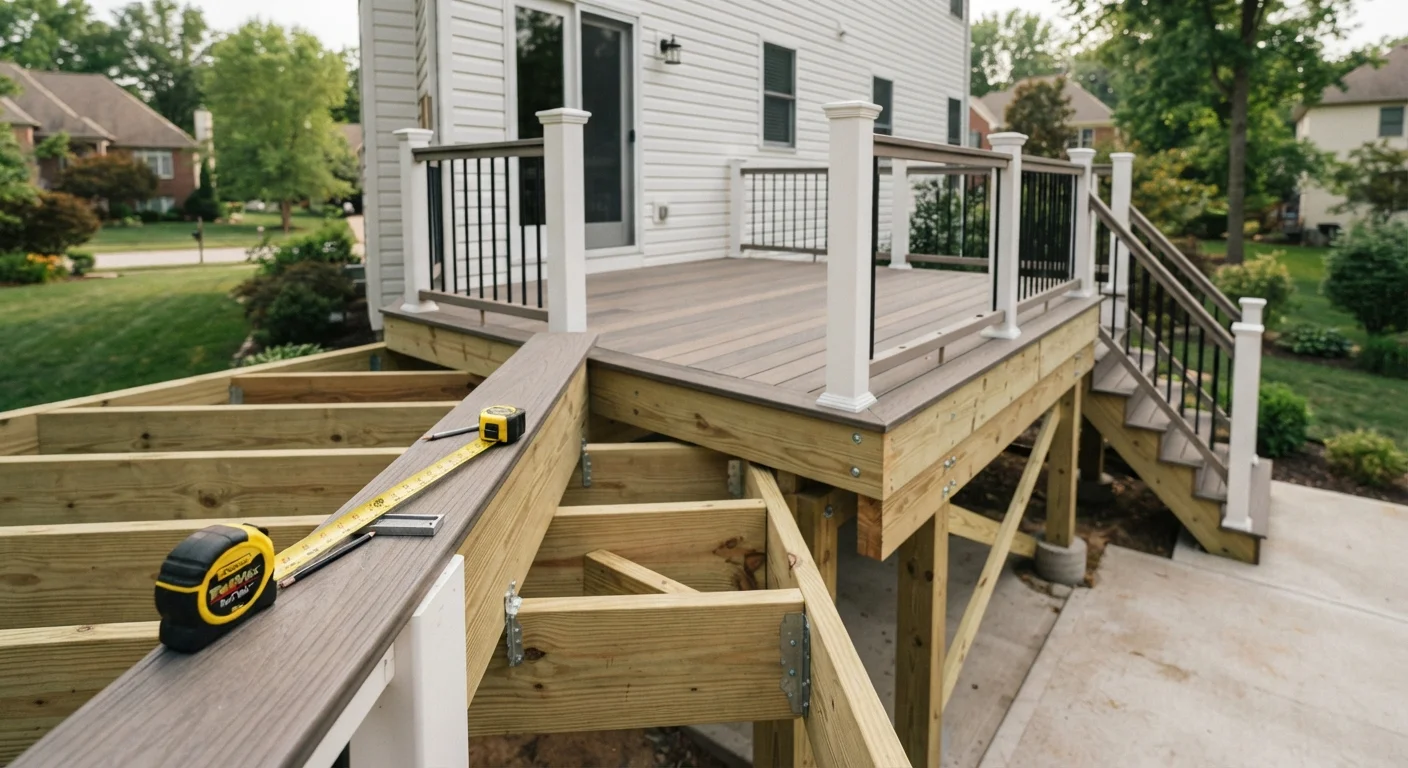
Photo credit: ProximityFinds.com | One-stop Reading Source
In this article
Wood, composite, and PVC decking each have trade-offs in longevity and upkeep. Plus: what permits typically apply and why inspections matter.
Key Takeaways
- Most attached decks require a building permit; skipping this step can create liability and resale problems.
- Wood, composite, and PVC decking each differ significantly in upfront cost, maintenance demands, and lifespan.
- Structural elements - ledger attachment, footings, and post sizing - are where most deck failures begin.
- Regular inspection of fasteners, joists, and ledger boards can catch dangerous rot before it becomes a safety hazard.
- Licensed inspectors evaluate load-bearing compliance that DIY visual checks simply cannot replicate.
Why Permits and Inspections Are Non-Negotiable
Many homeowners assume a backyard deck is purely cosmetic and therefore exempt from local building codes. In reality, most municipalities in the U.S. require a building permit for any attached deck - and many require one for freestanding structures above a certain square footage or height threshold. Requirements vary by jurisdiction, so always verify with your local building department before breaking ground.
Skipping the permit process carries real consequences. If an uninspected deck collapses and causes injury, your homeowner's insurance may deny the claim because the structure was unpermitted. When you sell the home, unpermitted work can surface during buyer inspections and delay or derail closing. Just as open-concept renovations often reveal hidden permit requirements, decks are rarely as code-simple as they appear.
An inspector checks ledger-to-house attachment, footing depth relative to frost line, joist sizing, post-to-beam connections, and railing height - all elements where failure has caused documented injuries. This oversight is a safety net, not red tape.
Permit Requirements Vary Significantly by Location
Some municipalities exempt small, freestanding, low-to-grade decks from permit requirements; others require permits for any structure attached to the house. There is no universal federal rule. Always contact your local building or planning department directly - or check their website - before starting any deck project. Regulations can also differ between cities and unincorporated county areas even within the same region.
Choosing Your Decking Material: Wood, Composite, or PVC
The decking surface you walk on is only one layer of a complex assembly, but it's the one that drives most of the maintenance burden. Understanding the real-world trade-offs helps you match material to your climate, budget, and tolerance for upkeep.
Choose pressure-treated lumber for structural framing regardless of surface material.
Untreated wood in ground contact or exposed framing will decay within a few years, compromising the entire structure. Pressure-treated lumber rated for ground contact or above-ground use resists rot and insect damage for decades when properly maintained.
Select natural wood decking (cedar, redwood, or treated pine) for lower upfront cost if you're prepared for regular maintenance.
Natural wood offers a classic appearance and lower initial material cost, but requires sealing or staining every two to three years to resist moisture penetration and UV damage. Neglected wood decks can deteriorate rapidly in wet climates.
Choose composite decking when you want reduced annual maintenance and greater moisture resistance.
Composite boards - made from wood fiber and recycled plastic - resist splintering, fading, and moisture better than natural wood and typically carry longer manufacturer warranties. The upfront cost is higher, but long-term maintenance costs are lower.
Consider cellular PVC decking in extreme moisture environments where organic content in composite could support mold.
Fully cellular PVC boards contain no wood fiber, making them highly resistant to moisture, rot, and mold. They're an especially practical choice for covered porches, poolside decks, or very humid climates, though they can feel less rigid underfoot than wood or composite.
Use stainless-steel or hot-dipped galvanized fasteners rated for the specific decking material.
Electroplated zinc screws can corrode rapidly when in contact with treated lumber's preservative chemicals, causing staining and structural loosening over time. Fastener failure in railing posts or decking attachment is a direct safety hazard.
Keep in mind that structural framing - posts, beams, and joists - is almost always pressure-treated lumber regardless of which surface material you choose. The material decision above applies to the decking boards themselves.
Structural Safety: What Inspectors Look For
The Consumer Product Safety Commission has documented that ledger board failures and inadequate footing depth are among the leading causes of deck collapses. These aren't cosmetic concerns - they're engineering ones.
~40%
Deck failures traced to ledger connection issues
Research cited by the International Association of Certified Home Inspectors estimates that a large share of deck collapses involve inadequate ledger board attachment or flashing failure.
36 in.
Minimum railing height required by most residential codes
The International Residential Code (IRC) requires guardrails of at least 36 inches on decks 30 inches or more above grade, though some jurisdictions adopt higher thresholds.
Footings must extend below the local frost line to prevent heaving; in colder northern states this can mean digging 42-48 inches deep. Post-to-beam connections should use rated hardware, not just toenails. The ledger - the board bolted to your house - must be flashed properly to prevent water intrusion behind the rim joist, which is a primary source of hidden rot. For a broader look at how skipping structural steps leads to expensive surprises, see home improvement myths that lead to costly repairs.
Deck Repair and Ongoing Maintenance
Deck maintenance isn't glamorous, but it's far cheaper than full replacement. A structured seasonal approach - similar to the strategy outlined in our seasonal home maintenance checklist - catches small problems before they compound.
Annual Inspection Pays for Itself
Once a year - ideally in early spring after freeze-thaw cycles - do a systematic inspection of all fasteners, joist ends, post bases, and decking boards. Look for rust bleeding, soft wood, popped fasteners, and loose railings. Catching a single rotted joist early can save the cost of replacing an entire section of framing. Many licensed home inspectors offer standalone deck inspections for a relatively modest fee.
For wood decks, plan on cleaning and resealing or restaining every two to three years, depending on sun and moisture exposure. Composite and PVC surfaces require cleaning but generally don't need sealing. However, composite decks can develop mold in shaded, high-humidity environments, so regular cleaning with appropriate deck cleaner is still necessary. Always follow the manufacturer's maintenance guidance, as specific products have different care requirements.
When inspecting for repairs, look closely at areas where decking meets the house, around posts at grade level, and anywhere water can pool. Soft spots, dark staining, or visible sponginess in wood are signs of active rot. Isolated board rot can sometimes be addressed by replacing individual boards, but if structural members are compromised, a licensed contractor should assess whether the deck is safe to use at all.

Author
Home Editorial Team
Home Editorial Team is the collective byline for our editorial team and contributor network. Articles published under this byline or an editorial pen name are researched, written, and reviewed according to our editorial standards for clarity, consistency, and independence before publication.
View all articles →