
Dietary Reference Values: A Plain-English Guide to DRIs, RDAs, and DVs
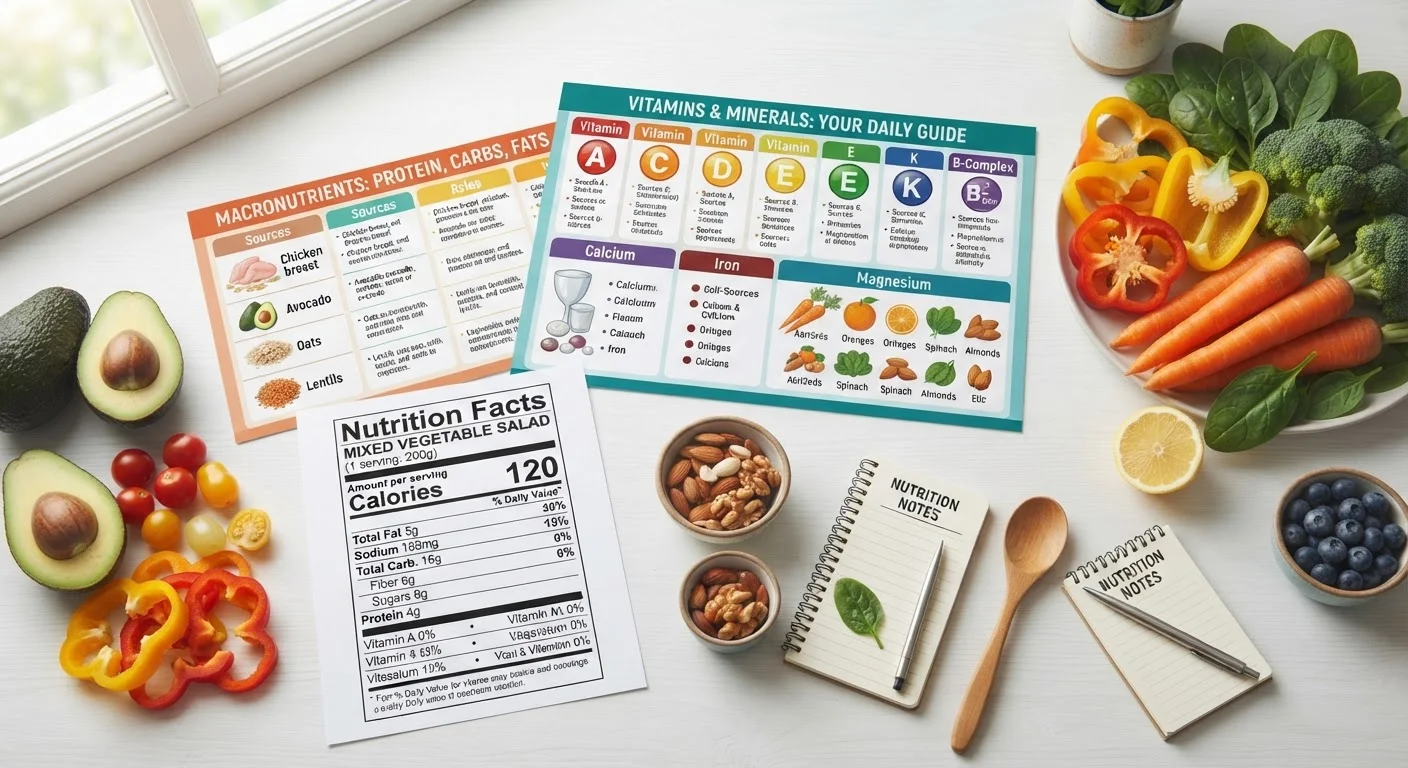
Photo credit: ProximityFinds.com | One-stop Reading Source
In this article
DRI, RDA, AI, DV — these acronyms appear on labels and in guidelines. Here's what each one means and how they're used.
The DRI Framework: One Umbrella, Several Measures
When you see nutrition recommendations in government guidelines or research, they almost always come from the Dietary Reference Intake (DRI) system - a comprehensive framework developed by the National Academies of Sciences, Engineering, and Medicine (NASEM). The DRI replaced older, simpler RDA tables starting in the mid-1990s to better capture nuance in nutrient science.
The DRI is not a single number. It is a family of values, each answering a slightly different question:
- EAR - What intake meets the needs of half a healthy population? (Used by researchers to assess group-level adequacy.)
- RDA - What intake meets the needs of nearly all healthy individuals? (The goal most people should aim for.)
- AI - What is a reasonable intake when evidence for an RDA is insufficient? (Used when the science is still developing.)
- UL - What is the maximum intake unlikely to cause harm? (A ceiling, not a target.)
Understanding which measure you're looking at changes how you should interpret it. The RDA is a goal; the UL is a guardrail.
DRI (Dietary Reference Intake)
An umbrella framework of nutrient intake values established by the National Academies of Sciences, Engineering, and Medicine. It includes several distinct measures - RDA, AI, EAR, and UL - each serving a different purpose for individuals and populations.
RDA (Recommended Dietary Allowance)
The average daily intake level sufficient to meet the nutrient needs of nearly all (97-98%) healthy individuals in a specific life-stage and sex group. RDAs are derived from the EAR and are used as individual intake targets.
AI (Adequate Intake)
A recommended intake value used when scientific evidence is insufficient to establish an RDA. It is based on observed or experimentally determined intake levels in apparently healthy populations.
EAR (Estimated Average Requirement)
The daily intake estimated to meet the requirement of half the healthy individuals in a specific group. Primarily used by nutrition researchers and public health professionals to assess population-level adequacy.
UL (Tolerable Upper Intake Level)
The highest average daily intake of a nutrient that is unlikely to cause adverse health effects in almost all individuals. Chronic intake above the UL increases the risk of toxicity.
DV (Daily Value)
A reference number used on FDA-regulated Nutrition Facts labels in the United States. It is based on a 2,000-calorie diet and allows consumers to compare the nutrient content of foods at a glance.
Daily Values: The Label Standard
While DRIs are used in scientific and policy settings, the Daily Value (DV) is what most Americans encounter directly - on the Nutrition Facts panel of packaged foods. DVs are set by the FDA and are anchored to a 2,000-calorie-per-day reference diet.
The percentage you see listed (e.g., 15% DV for calcium) tells you how much of the daily reference amount one serving provides. This makes it easy to compare foods, even if your own calorie needs differ from 2,000.
| DRI Framework Established | 1994-1997 (replacing older RDAs) (National Academies of Sciences, Engineering, and Medicine) |
| Who Sets DRIs | National Academies of Sciences, Engineering, and Medicine (NASEM) (NASEM Food and Nutrition Board) |
| Who Sets DVs | U.S. Food and Drug Administration (FDA) (FDA Nutrition Labeling regulations) |
| DV Calorie Basis | 2,000 calories per day (FDA Nutrition Facts label regulations) |
| RDA Population Coverage | Meets needs of ~97-98% of healthy individuals (NASEM Dietary Reference Intakes methodology) |
| DVs Last Updated | 2016 (phased in by 2020) (FDA final rule on Nutrition Facts label updates) |
DVs do not always match the current RDA or AI for a nutrient exactly, because they are updated on a different regulatory schedule and must be practical for label use. The FDA updated its DVs in 2016 - the first major revision in decades - to better align them with contemporary nutrition science. You can learn more about how these numbers appear on packaging in our guide on reading a Nutrition Facts label.
These Values Are Population Tools, Not Personal Prescriptions
DRIs and DVs are developed for healthy population groups, not individuals. Your personal nutrient needs can vary based on age, sex, health status, medications, and other factors. Always consult a registered dietitian or healthcare provider before making significant changes to your diet, especially if you manage a chronic condition.
How These Values Connect to Real Nutritional Gaps
DRIs and DVs matter most when they reveal where typical diets fall short. Nutrients like vitamin D, calcium, potassium, and dietary fiber consistently have RDAs or AIs that many Americans do not meet through diet alone. These shortfalls are tracked through national dietary surveys and inform public health priorities.
Conversely, the UL matters for nutrients people are more likely to overconsume - such as sodium, preformed vitamin A, or certain supplemental minerals. Staying well under the UL is especially important for people who combine fortified foods with dietary supplements, since amounts can add up quickly without being obvious.
For a deeper look at which nutrients are most commonly under-consumed and why, see our article on where Americans fall short on key nutrients.
This article is for general informational and educational purposes only and is not a substitute for personalized medical or nutritional advice. Consult a qualified healthcare provider or registered dietitian for guidance specific to your health needs.

Author
Health Editorial Team
Health Editorial Team is the collective byline for our editorial team and contributor network. Articles published under this byline or an editorial pen name are researched, written, and reviewed according to our editorial standards for clarity, consistency, and independence before publication.
View all articles →