
Battery Health: What Drains It, What Tests It, and When to Replace It
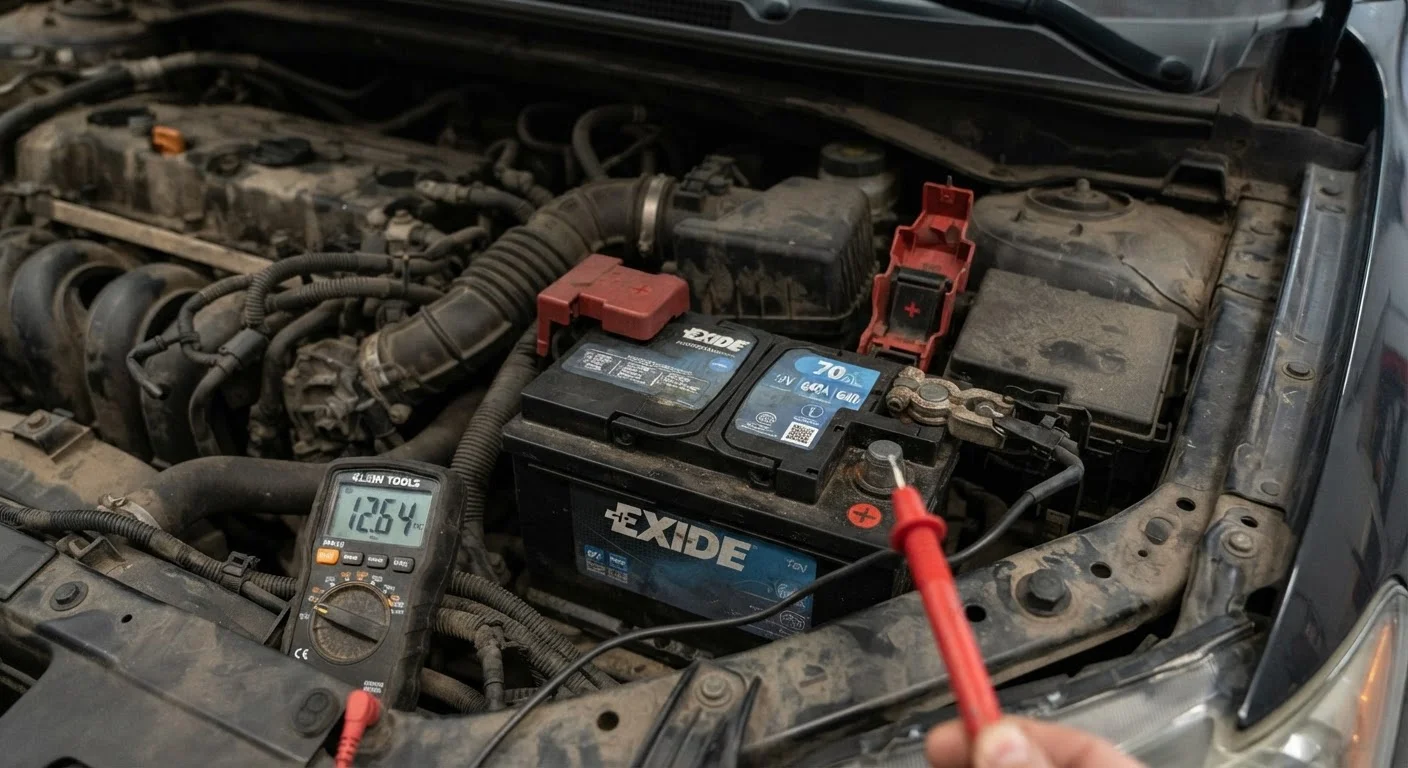
Photo credit: ProximityFinds.com | One-stop Reading Source
In this article
Car batteries fail gradually, then suddenly. Learn what shortens their lifespan, how they're tested, and the signals they're fading.
Key Takeaways
- Most car batteries last three to five years, depending on climate and driving habits.
- Extreme heat is actually harder on batteries than cold - both accelerate wear.
- Short trips prevent the alternator from fully recharging the battery each time.
- A load test is more reliable than a simple voltage check for measuring true battery condition.
- Dim headlights, slow cranking, and a swollen case are all signs of a failing battery.
How a Car Battery Actually Works
Your car's 12-volt lead-acid battery does two main jobs: it delivers a burst of power to start the engine, and it stabilizes the electrical system while the alternator runs. The alternator - driven by the engine - handles the bulk of your car's electrical load once you're moving and also recharges the battery. Think of the battery as a sprint runner and the alternator as the long-distance engine behind it.
Inside the battery, lead plates sit in a sulfuric acid solution. A chemical reaction between those plates and the acid produces electrical current. Every charge and discharge cycle slowly changes the structure of those plates, which is why capacity decreases over time. It's a gradual process, which is exactly what makes a failing battery easy to overlook until it leaves you stranded.
If you're curious how this compares to the lithium-ion chemistry in electric vehicles, see our piece on EV battery basics for a useful side-by-side look.
What Drains and Damages Battery Health
Several everyday factors wear batteries down faster than normal aging alone.
- Heat: High temperatures accelerate the internal chemical reactions inside the battery, causing plate corrosion and water loss from the electrolyte. Consistently hot climates can cut battery life noticeably compared to milder regions.
- Short trips: Every start draws a significant charge. If your drive is only five or ten minutes, the alternator may not have enough time to fully replenish what was used. Repeated partial recharges lead to a condition called sulfation - a buildup of lead sulfate crystals on the plates that reduces capacity permanently.
- Parasitic drain: Even with the ignition off, certain systems draw small amounts of power - clocks, alarm systems, and infotainment memory settings. A healthy battery handles this easily. An aging one can be drained flat by even a few days of sitting unused.
- Deep discharge: Running the battery completely down - accidentally leaving lights on, for example - stresses the plates and reduces how much charge the battery can accept afterward.
- Vibration: A battery that isn't secured tightly in its tray can vibrate while driving, shaking loose the internal plates over time.
If your car sits unused for more than two weeks at a time, a trickle charger or battery maintainer connected in your garage can prevent the slow drain that kills otherwise healthy batteries.
Partial-state-of-charge sitting is one of the leading causes of premature sulfation, which permanently reduces capacity and cannot be reversed with a standard charge.
When having your battery tested, ask for the printed or digital result showing the battery's measured cold cranking amps (CCA) versus its rated CCA - not just a pass/fail label.
A numerical result lets you track degradation over time and make a more informed decision about whether to replace now or monitor for another season.
The pattern of phone battery wear is surprisingly similar - heat, partial charges, and deep discharges all play a role in both chemistries.
How Batteries Are Tested
Testing is the only reliable way to know where your battery actually stands.
Voltage Test
A basic check with a digital multimeter measures resting voltage - the charge level when nothing is running. A fully charged 12-volt battery typically reads around 12.6 volts; below 12.2 volts suggests it's partially discharged. This test is quick and easy, but it only tells you the current state of charge, not the battery's overall capacity or health.
Load Test
A load test applies a controlled electrical load - simulating what the battery experiences during a cold start - and measures how well voltage holds up under that stress. This is a much more meaningful measure of real-world capability. Many auto parts stores offer this test at no charge, and it's also standard at most service shops.
Conductance Test
Modern battery testers use conductance testing, which sends a small AC signal through the battery to evaluate the condition of the internal plates. These handheld devices give a pass/fail or percentage-of-original-capacity reading without the need to fully charge the battery first. They're fast and accurate.
3-5 years
Typical car battery lifespan
Industry guidance from organizations such as AAA consistently cites three to five years as the expected service window for most lead-acid automotive batteries.
~20%
Capacity loss at 32°F
Cold temperatures reduce a battery's available starting power; a battery already weakened by age may lose enough capacity in winter to fail a cold start entirely.
1 in 4
Batteries test below spec at any given time
AAA vehicle research has found that roughly one in four cars tested shows a battery that does not meet its original rated output - many drivers are unaware.
Warning Signs Your Battery Is Fading
Batteries rarely fail without giving some advance notice. Watch for these signals:
- Slow or labored cranking: The engine takes noticeably longer to turn over, especially on cold mornings.
- Dimming headlights: Lights that look weaker at idle but brighten when you rev the engine point to a battery struggling to hold a charge.
- Frequent jump-starts needed: If you've jump-started the car more than once in a short period, the battery isn't recovering properly between drives.
- Dashboard warning light: A battery or charging system light indicates a problem in the charging circuit, which may involve the battery, alternator, or both.
- Swollen or bloated case: Excessive heat can cause the battery casing to bulge. A swollen battery should be treated as failed and replaced promptly - it may no longer be safe to use.
- Visible corrosion: Blue-white buildup around the terminals isn't necessarily a sign of a dead battery, but it does increase resistance and can interfere with charging.
Don't Ignore a Swollen Battery Case
A visibly bloated or bulging battery case is a sign of internal damage, typically caused by overcharging or excessive heat exposure. Such a battery can leak corrosive acid and should not continue to be used. Have it inspected and replaced by a qualified mechanic as soon as possible - do not attempt to charge or jump-start it.
When to Replace Your Battery
Most lead-acid car batteries have a realistic service life of three to five years, though some last longer in favorable conditions. A few practical guidelines:
- If your battery is over four years old and showing any of the warning signs above, get it tested - don't wait for a no-start situation.
- If a load or conductance test shows the battery is below roughly 70-75% of its rated capacity, replacement is the practical call even if it's still technically starting the car.
- If you live in a hot climate, consider checking annually after year three. Heat-related wear tends to show up earlier than in cooler regions.
Schedule a Free Battery Test Annually
Many auto parts retailers offer free battery testing with no appointment needed. Making this part of your annual maintenance routine - especially before winter - can catch a weakening battery before it fails at the worst moment. A test takes less than ten minutes and requires no tools on your part.
When a mechanic or shop performs a replacement, they should also inspect the terminals, cables, and the battery tray for corrosion or damage. Putting a new battery into a compromised connection will shorten its life faster than normal.
For a broader look at how usage habits affect battery longevity across different devices, these principles for consumer electronics share more common ground with car batteries than most people expect.
“The battery is the heart of the vehicle's electrical system. When it starts to weaken, everything from engine starting to onboard electronics is affected - and drivers often don't notice until the problem is already severe.”
— AAA Automotive Research, Consumer vehicle testing and automotive advisory organization

Author
Automotive Editorial Team
Automotive Editorial Team is the collective byline for our editorial team and contributor network. Articles published under this byline or an editorial pen name are researched, written, and reviewed according to our editorial standards for clarity, consistency, and independence before publication.
View all articles →