
Electric Vehicle Batteries: Range, Degradation, and Charging Basics
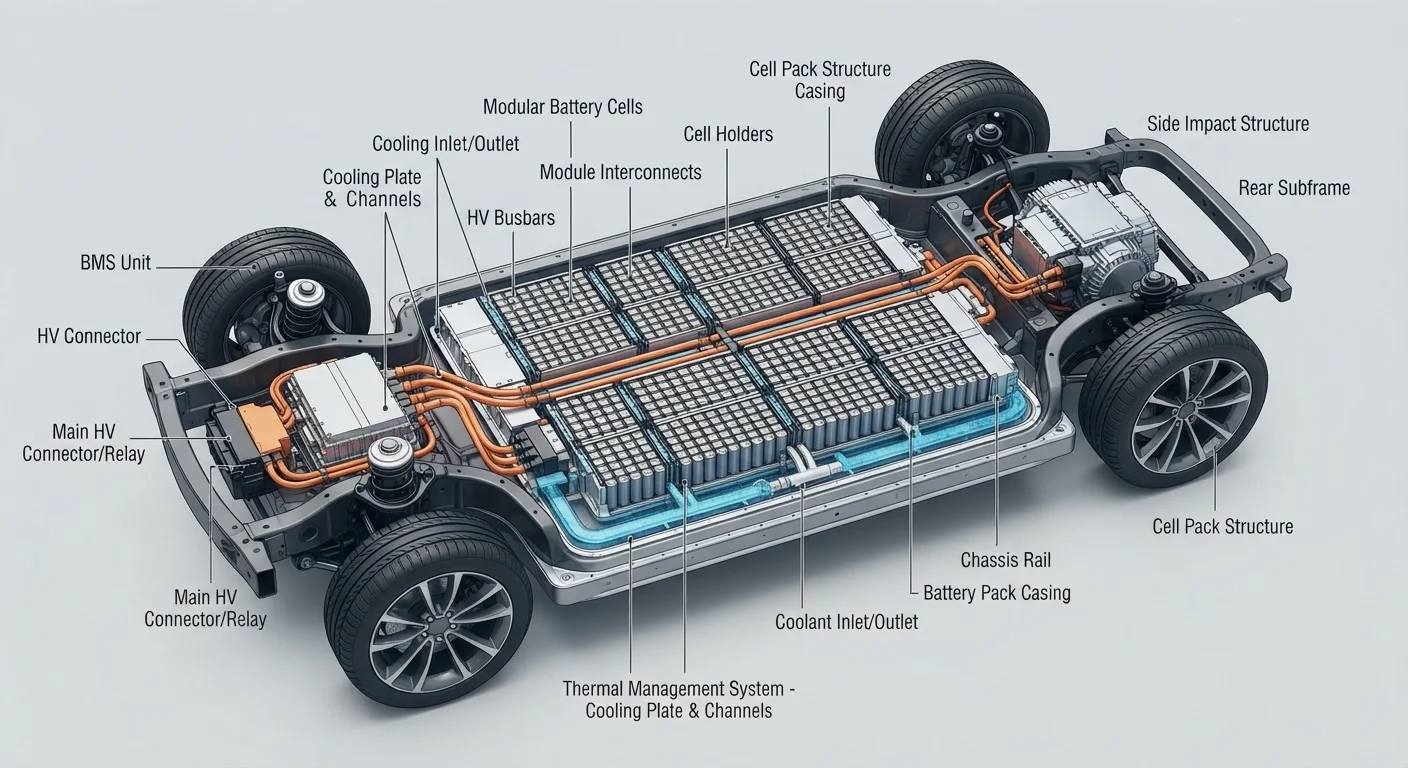
Photo credit: ProximityFinds.com | One-stop Reading Source
In this article
A foundational look at how lithium-ion EV battery packs store energy, what affects range, and how charging levels differ.
Key Takeaways
- EV battery packs are assemblies of hundreds of individual lithium-ion cells grouped into modules.
- Real-world range depends on temperature, driving speed, climate control use, and pack size.
- Battery capacity gradually declines over time - this is normal and not unique to EVs.
- Three charging levels exist: Level 1 (standard outlet), Level 2 (home or public charger), and DC fast charging.
- Keeping your charge between 20% and 80% most of the time slows long-term degradation.
- Extreme heat and frequent DC fast charging accelerate capacity loss more than everyday driving.
How EV Battery Packs Work
Unlike the 12-volt lead-acid battery that starts a conventional engine - covered in our guide to your car's electrical system - an EV's main drive battery is an entirely different animal. It's a high-voltage pack, typically operating between 200 and 800 volts, built from hundreds or even thousands of individual lithium-ion cells.
Those cells are grouped into modules, and multiple modules are assembled into the full battery pack, which is usually mounted flat under the vehicle floor. Each cell stores energy chemically and releases it as electrical current on demand. A Battery Management System (BMS) - essentially onboard software - monitors cell temperature, state of charge, and health in real time, balancing the pack and protecting cells from unsafe conditions.
Lithium-ion cell
The basic building block of an EV battery - a small unit that stores and releases energy through chemical reactions between lithium-containing materials.
Battery pack
The complete high-voltage assembly of cells and modules installed in an EV that powers the electric motor and all major vehicle systems.
kWh (kilowatt-hour)
The unit used to measure how much total energy a battery can store - analogous to the gallon capacity of a gas tank.
Battery Management System (BMS)
Onboard software and electronics that continuously monitor cell temperature, charge level, and health, keeping the pack safe and balanced.
Regenerative braking
A system that captures kinetic energy when the car slows down and converts it back into electricity, partially recharging the battery during driving.
State of charge (SOC)
The current charge level of the battery expressed as a percentage - similar to a fuel gauge showing how full your tank is.
What Actually Determines Your Range
The EPA range figure you see on a window sticker is a standardized estimate, not a guarantee of what you'll see on the road. Several variables push that number up or down every day:
- Pack size (kWh): A larger battery stores more energy, like a bigger fuel tank.
- Temperature: Cold weather slows cell chemistry and forces the heater to draw pack power, reducing usable range significantly. Heat can also reduce efficiency.
- Driving speed: Highway driving at 75-80 mph consumes energy far faster than city driving at 35 mph, where regenerative braking recovers energy on every slowdown.
- Climate control: Running the heater or AC draws directly from the drive battery.
- Vehicle load and terrain: Carrying extra weight or climbing hills increases energy demand.
Understanding these factors helps you plan trips honestly rather than relying solely on a sticker number.
Battery Degradation: What It Is and Why It Happens
Every lithium-ion battery - in your phone, your laptop, or your car - loses a small amount of capacity over time. This is called degradation, and it's a normal consequence of the charge-discharge chemistry, not a defect. If you've noticed your phone battery holding less charge after a couple of years, the underlying mechanism is the same.
In an EV, degradation means the pack gradually holds fewer kilowatt-hours, which translates to slightly shorter range over the years. The rate of loss is typically steepest in the first year or two and then flattens. Factors that accelerate degradation include:
- Frequent DC fast charging, which pushes high current through cells rapidly
- Regularly charging to 100% or allowing the pack to sit near 0%
- Prolonged exposure to high ambient temperatures
Avoid Sitting at Extremes
Regularly storing your EV at a very high charge (above 90-100%) or a very low charge (below 10%) for extended periods can accelerate capacity loss. This is especially important if you're leaving the vehicle parked for days or weeks at a time. Many vehicles have a setting to manage charge level during long storage periods - check your owner's manual.
Charging Levels Explained
EV charging is organized into three levels based on voltage and speed:
- Level 1
- Uses a standard 120-volt household outlet. Adds roughly 3-5 miles of range per hour. Practical for plug-in hybrids or drivers with modest daily mileage, but slow for full battery EVs.
- Level 2
- Uses a 240-volt circuit - the same type that powers a clothes dryer. A dedicated home charger or public Level 2 station adds roughly 15-30 miles of range per hour depending on the vehicle's onboard charger capacity. This is the workhorse of everyday EV ownership.
- DC Fast Charging (Level 3)
- Bypasses the onboard charger and delivers direct current at high power - often 50 kW to 350 kW depending on the station and vehicle. Can charge many EVs from 20% to 80% in 20-45 minutes. Best suited for road trips rather than daily top-ups.
Habits That Help Your Battery Last
Good charging habits can meaningfully slow degradation over your ownership period. The principles here parallel what researchers have found about consumer electronics - many old charging myths don't apply to modern lithium-ion cells.
Set a Daily Charge Limit
Most modern EVs let you cap the maximum charge level through the vehicle's settings or companion app. Setting this to 80% for everyday use reduces long-term stress on the cells without meaningfully affecting most commutes. Bump it to 100% only when you need the full range for a longer trip.
For general battery health, consider these practices:
- Set your vehicle's charge limit to around 80% for daily driving; reserve 100% for long trips.
- Avoid letting the battery sit below 10-15% for extended periods.
- Use DC fast charging selectively - it's a valuable tool for road trips, not the best choice for routine home charging.
- If possible, park in a garage during extreme heat or cold to reduce thermal stress on the pack.
- Take advantage of your vehicle's pre-conditioning feature in cold weather while it's still plugged in.
For a parallel look at how these same principles apply to conventional 12-volt batteries, see our article on battery health and when to replace it.
Frequently Asked Questions

Author
Automotive Editorial Team
Automotive Editorial Team is the collective byline for our editorial team and contributor network. Articles published under this byline or an editorial pen name are researched, written, and reviewed according to our editorial standards for clarity, consistency, and independence before publication.
View all articles →