
Understanding Your Car's Electrical System: Battery, Alternator, and Starter
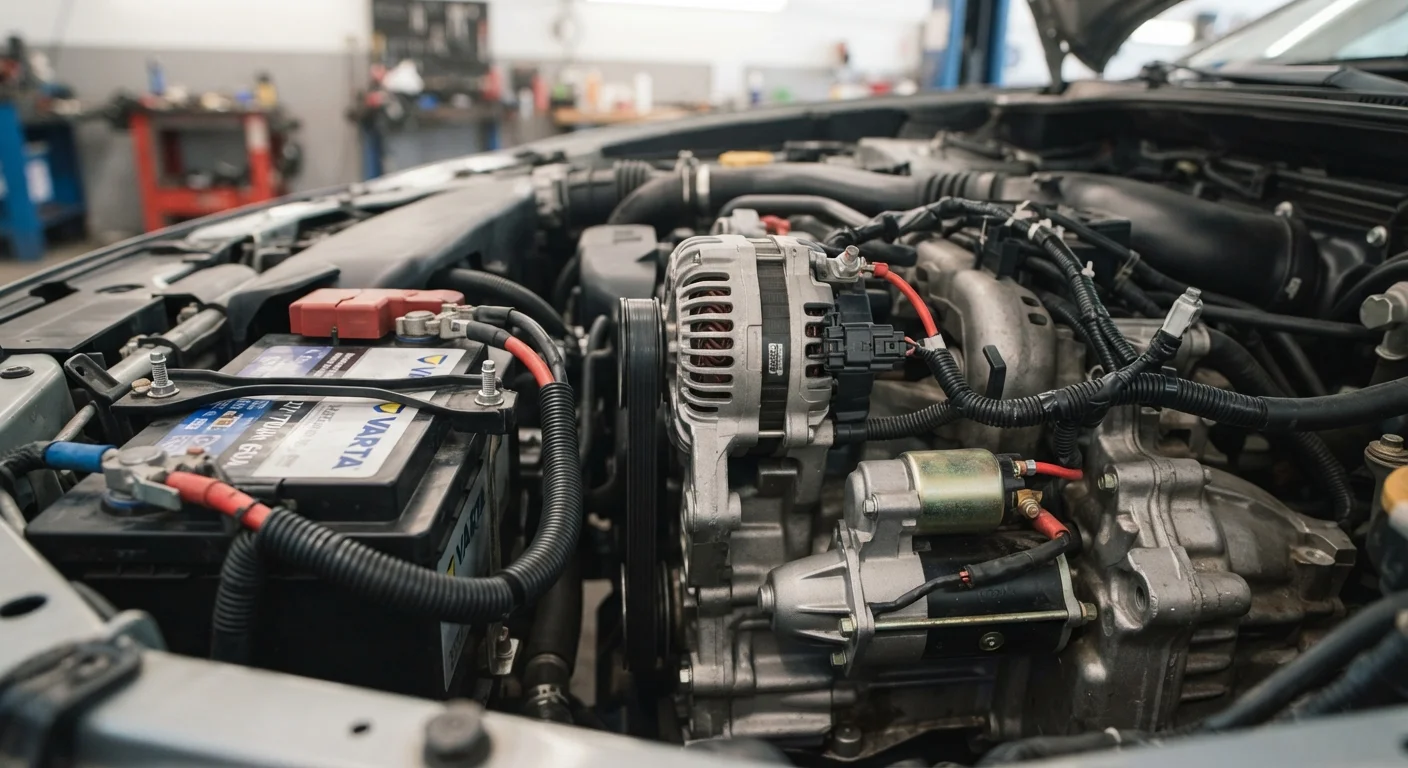
Photo credit: ProximityFinds.com | One-stop Reading Source
In this article
Learn how your battery, alternator, and starter motor work as a team to start your car and keep every system running.
Key Takeaways
- The battery provides the burst of power needed to start the engine and backs up the alternator at peak demand.
- The alternator recharges the battery and powers electrical systems while the engine is running.
- The starter motor uses battery power to crank the engine until combustion takes over.
- Failure in any one of the three components can leave you stranded, even if the other two are healthy.
- Warning signs like slow cranking, dimming lights, or dashboard alerts often point to one of these three parts.
The Battery: Your Car's Energy Reserve
Think of the battery as a rechargeable reservoir of electrical energy. Its primary job is to deliver a large, controlled surge of power to the starter motor the moment you turn the key or press the ignition button. Once the engine fires, the battery steps back into a support role - backing up the alternator during peak electrical demand and keeping things like the clock and alarm system running when the car is parked.
Most cars use a lead-acid battery, which stores energy through a chemical reaction between lead plates and a sulfuric acid solution. The voltage you'll see stamped on most batteries - 12 volts - refers to the nominal output across six internal cells. A fully charged, healthy battery actually measures closer to 12.6 volts at rest.
Cold weather is especially hard on batteries because low temperatures slow the chemical reaction inside, reducing the battery's ability to deliver current. That's one reason the seasonal inspection checklist for winter always includes a battery check.
12.6V
Resting voltage of a fully charged car battery
A healthy, fully charged 12-volt lead-acid battery reads approximately 12.6 volts at rest with the engine off.
3-5 years
Average lifespan of a standard car battery
Battery life varies by climate, driving habits, and vehicle electrical load; extreme heat tends to shorten lifespan more than cold.
13.5-14.5V
Normal alternator output while engine is running
This range keeps the battery charged without overcharging it; readings consistently outside this range signal a potential alternator issue.
The Alternator: The System's Power Generator
Once the engine is running, the alternator takes over as the primary source of electrical power. It's a generator driven by a belt connected to the engine's crankshaft. As the engine spins, so does the alternator's internal rotor, creating an alternating current that's converted to DC and fed into the vehicle's electrical system.
The alternator does two things simultaneously: it powers all the electrical loads in your car - lights, climate control, audio, sensors - and it recharges the battery to replace whatever charge the starter used at startup. A healthy alternator typically outputs between 13.5 and 14.5 volts, just enough above the battery's resting voltage to keep it topped up without overcharging it.
Alternator problems often show up subtly at first - slightly dimmer lights at idle, a faint whine from the engine bay, or a battery-shaped warning light on the dash. Left unaddressed, they can leave you stranded even with a relatively new battery.
“The alternator is the unsung hero of the modern car. Drivers think about the battery when something goes wrong, but in most cases the alternator has been quietly compensating for a developing fault long before any warning light appears.”
— Automotive Engineering Educators, Vocational automotive training community, widely cited in technician coursework
The Starter Motor: The Engine's On Switch
The starter motor is an electric motor with one specific purpose: spinning the engine fast enough to initiate combustion. When you turn the ignition, a small relay called a solenoid engages, connecting the starter motor to the battery and extending a small gear (called a pinion) that meshes with the engine's ring gear. The motor spins, the engine cranks, and once combustion begins sustaining itself, the starter disengages automatically.
The whole sequence takes less than a second under normal conditions. A healthy starter draws a lot of current - often 100 to 200 amps - so even a slightly weak battery can make it sluggish. That's why a slow, labored crank is often the first sign of battery trouble, not starter trouble. A mechanic can test both components to determine which one is actually at fault.
Unlike the battery and alternator, the starter has no ongoing role once the engine is running. It simply waits for the next ignition cycle. For a broader look at how other systems in your car work together, the fluid system explainer is a useful companion read.
How the Three Work Together - and What Fails First
These three components form a loop. The battery powers the starter, the starter cranks the engine, and the running engine drives the alternator, which recharges the battery. Break any link in that loop and the whole system stops working as intended.
The battery typically fails first because it has a finite chemical lifespan - usually three to five years. Alternators tend to last longer but can fail earlier if the drive belt wears out or internal components overheat. Starters are generally the most durable of the three, often lasting 100,000 miles or more, though they can fail suddenly without warning.
Pay Attention to Dashboard Warning Lights
A battery-shaped warning light doesn't always mean the battery itself is the problem - it signals that the charging system isn't operating correctly, which could point to the alternator, wiring, or the battery. Don't ignore it and assume it will resolve on its own. Have the charging system tested at a shop or auto parts store, many of which offer free basic battery and alternator checks.
If your car won't start, the most useful thing you can do before calling for help is note exactly what happens when you turn the key. A complete absence of sound suggests a battery or connection issue. A clicking sound points to a weak battery or failing starter. A crank that just won't catch may mean the engine itself - not the electrical system - needs attention. Sharing these details with a mechanic helps them diagnose the problem faster.
For more on keeping your electrical system healthy year-round, check the car maintenance hub. And if you're curious how EV powertrains handle energy storage differently, the electric vehicle battery guide offers a clear comparison.
Frequently Asked Questions

Author
Automotive Editorial Team
Automotive Editorial Team is the collective byline for our editorial team and contributor network. Articles published under this byline or an editorial pen name are researched, written, and reviewed according to our editorial standards for clarity, consistency, and independence before publication.
View all articles →