
Driving Solo Across the US: Honest Trade-Offs Every Traveler Should Know
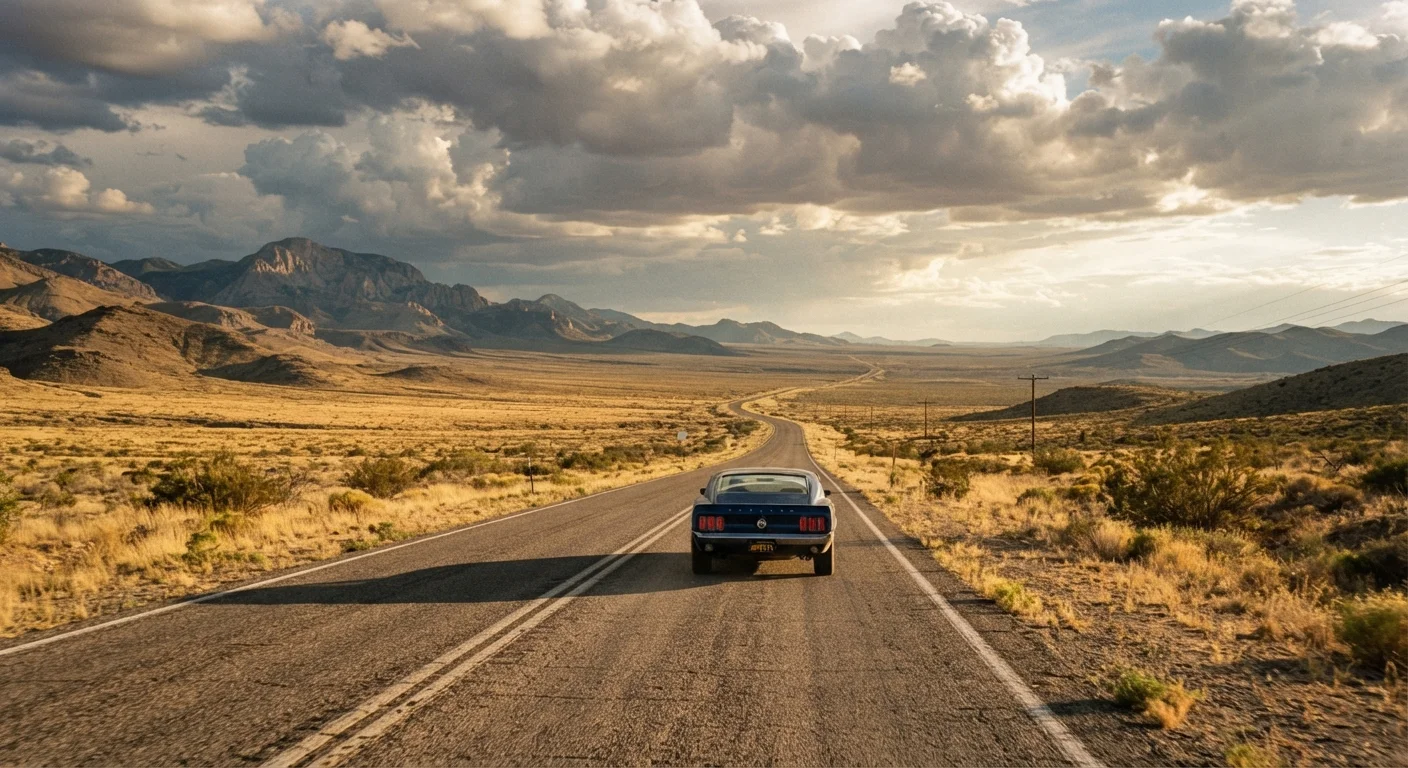
Photo credit: ProximityFinds.com | One-stop Reading Source
In this article
Solo road trips offer freedom and self-discovery, but they come with real challenges. A balanced look at what traveling alone across America actually involves.
Key Takeaways
- Solo driving gives you total schedule control, but fatigue management becomes entirely your responsibility.
- Costs per mile are often higher solo since fuel, lodging, and tolls aren't split with anyone.
- Remote stretches of American highway can mean hours without cell service or roadside assistance.
- The psychological rewards of solo travel - clarity, confidence, self-reliance - are widely reported by experienced road trippers.
- Preparation quality directly determines whether solo challenges become manageable or genuinely risky.
Complete schedule flexibility with no compromises
You stop, linger, detour, or push forward entirely on your own terms. This freedom is particularly valuable on longer trips where interests and energy levels among travelers naturally diverge.
Deep engagement with places and people
Solo travelers often report connecting more meaningfully with locals because they're more approachable and more likely to seek out conversation. A group traveling together can become a self-contained bubble.
Genuine personal challenge and confidence-building
Navigating unexpected situations - a detour, a mechanical issue, an unfamiliar town - independently builds real self-reliance that transfers beyond travel.
Pace matches your actual energy and interests
If you want to spend three hours at a single overlook or skip a famous attraction entirely, you can. No trip is wasted on things you don't care about.
Mental clarity and genuine decompression
Extended solo driving time, particularly through open landscapes, is frequently described by travelers as uniquely restorative - a kind of moving meditation unavailable at home.
All driving hours fall on one person
Fatigue is a genuine safety issue on long trips. Without a co-driver to share shifts, you must be disciplined about stopping, resting, and not pushing beyond safe limits - especially on monotonous highway stretches.
Higher per-person cost on most line items
Accommodation, fuel, tolls, and food costs aren't shared, making solo trips more expensive on a per-person basis than the same route traveled with even one other person.
Safety incidents are harder to manage alone
A flat tire, car trouble, illness, or accident in a remote area becomes significantly more stressful without another person present to assist or call for help.
Extended solitude isn't right for everyone
Some travelers underestimate how much they want social interaction until they're three days in. Honest self-knowledge about your tolerance for sustained alone time prevents a miserable experience.
No shared memory or spontaneous collaboration
Part of what makes a great trip memorable is sharing it - making in-the-moment decisions together, laughing at the same thing, having someone to reflect with afterward.
What Solo Road Tripping Actually Looks Like
Driving across the United States alone - whether coast to coast, corner to corner, or on a focused regional loop - sounds like pure romance. Open highway, your playlist, no compromises. In practice, it's a mix of genuine exhilaration and unglamorous logistics that every traveler should understand before committing to weeks behind the wheel.
The US is big in ways that surprise even experienced travelers. A single day's drive from, say, western Texas to the New Mexico border can feel like traversing a country. That scale works for you when you're chasing solitude and scenery - and against you when something goes wrong at mile 400 with no town in sight. Understanding both sides honestly is what makes the difference between a trip you'll talk about for decades and one that ends prematurely.
For a deeper look at what solo travel involves beyond domestic driving, see our comparison of solo international travel trade-offs.
Complete schedule flexibility with no compromises
You stop, linger, detour, or push forward entirely on your own terms. This freedom is particularly valuable on longer trips where interests and energy levels among travelers naturally diverge.
Deep engagement with places and people
Solo travelers often report connecting more meaningfully with locals because they're more approachable and more likely to seek out conversation. A group traveling together can become a self-contained bubble.
Genuine personal challenge and confidence-building
Navigating unexpected situations - a detour, a mechanical issue, an unfamiliar town - independently builds real self-reliance that transfers beyond travel.
Pace matches your actual energy and interests
If you want to spend three hours at a single overlook or skip a famous attraction entirely, you can. No trip is wasted on things you don't care about.
Mental clarity and genuine decompression
Extended solo driving time, particularly through open landscapes, is frequently described by travelers as uniquely restorative - a kind of moving meditation unavailable at home.
The Real Costs: Time, Money, and Energy
Solo road trips carry a financial structure that surprises many first-timers. Because you're not splitting gas, accommodation, or tolls, the per-person cost of a solo drive is often comparable to - or higher than - flying and renting a car locally. That's not a reason to skip the trip; it's a reason to budget honestly.
~2,800 mi
Typical coast-to-coast driving distance
A direct I-80 route from New York to San Francisco covers roughly 2,800 miles, representing a minimum of four full driving days at a safe daily pace.
4-6 hrs
Recommended solo driving maximum per stretch
Driver fatigue research consistently shows reaction time and decision-making degrade after extended solo driving; most safety guidance recommends breaks every 2 hours and limits of 8 hours total per day.
Lodging is usually the biggest variable. A solo traveler pays a full room rate that a couple splits in half. Camping, hostels with private rooms, or extended-stay motels can reduce this significantly, but each comes with its own trade-offs in comfort and planning. Our guide on common road trip myths covers the 'driving is always cheaper' assumption in useful detail.
Time cost matters too. Long solo driving days are mentally taxing in a way that group trips aren't. Safety experts and driving organizations generally recommend limiting solo driving to around 8 hours per day - which means a true coast-to-coast trip (roughly 2,800 miles on I-80) takes at least four full driving days with no detours. Build your schedule around realistic driving windows, not optimistic ones.
All driving hours fall on one person
Fatigue is a genuine safety issue on long trips. Without a co-driver to share shifts, you must be disciplined about stopping, resting, and not pushing beyond safe limits - especially on monotonous highway stretches.
Higher per-person cost on most line items
Accommodation, fuel, tolls, and food costs aren't shared, making solo trips more expensive on a per-person basis than the same route traveled with even one other person.
Safety incidents are harder to manage alone
A flat tire, car trouble, illness, or accident in a remote area becomes significantly more stressful without another person present to assist or call for help.
Extended solitude isn't right for everyone
Some travelers underestimate how much they want social interaction until they're three days in. Honest self-knowledge about your tolerance for sustained alone time prevents a miserable experience.
No shared memory or spontaneous collaboration
Part of what makes a great trip memorable is sharing it - making in-the-moment decisions together, laughing at the same thing, having someone to reflect with afterward.
Safety, Isolation, and the Value of Preparation
The stretches of America that look most dramatic on a map - remote desert highways, mountain passes, long plains corridors - are also the places where a breakdown or medical episode is hardest to manage alone. Cell coverage in rural America remains genuinely patchy. Portions of Nevada, Montana, Wyoming, and the Southwest can run 50 to 100 miles without reliable signal.
Cell Coverage Gaps Are Real
Large portions of rural America - including significant stretches of Nevada, Wyoming, eastern Montana, and parts of the Southwest - have limited or no cell service for extended distances. This isn't a minor inconvenience; it means that navigation apps, emergency calls, and roadside assistance services may all be unavailable simultaneously. Downloading offline maps before departure and sharing a detailed itinerary with someone at home are practical steps that cost nothing and matter significantly in an emergency.
Practical steps that meaningfully reduce risk include: carrying a paper map or downloaded offline maps, telling someone your planned route and check-in schedule, keeping a basic emergency kit (jumper cables, water, first aid supplies, a portable phone charger), and having a roadside assistance plan active before you leave. Vehicle preparation matters too - tires, fluids, and brakes should be checked before any long-distance drive, not just cross-country ones.
If you're planning a route through the Southwest specifically, our first-timer's Southwest road trip overview covers terrain-specific preparation in depth. For lesser-known routes that avoid high-traffic corridors entirely, America's underappreciated drives is worth reading before you finalize your route.
The Intangible Upside: Why People Keep Doing It
For all the honest challenges, solo road tripping has a stubborn hold on the American imagination for good reason. Traveling alone removes every social negotiation from the equation. You stop when a roadside overlook catches your eye. You spend an extra night in a small town because the diner was unexpectedly great. You sit quietly in a national park at sunrise without managing anyone else's experience of it.
Travelers who have done it frequently describe a specific kind of mental reset that comes from days of self-directed movement - the kind that's harder to achieve when you're coordinating with others. It's not for everyone, and it's worth comparing the experience honestly against alternatives. Our article on solo travel versus guided tours lays out that comparison clearly.
The classic American routes each offer their own version of this. The Pacific Coast Highway and Route 66 are different in almost every way - scenery, pace, culture, logistics - and which one resonates tends to reveal something about what you're actually looking for from the road. Solo travel gives you the space to find out.

Author
Travel Editorial Team
Travel Editorial Team is the collective byline for our editorial team and contributor network. Articles published under this byline or an editorial pen name are researched, written, and reviewed according to our editorial standards for clarity, consistency, and independence before publication.
View all articles →