
Solo International Travel: Honest Trade-offs Americans Should Weigh
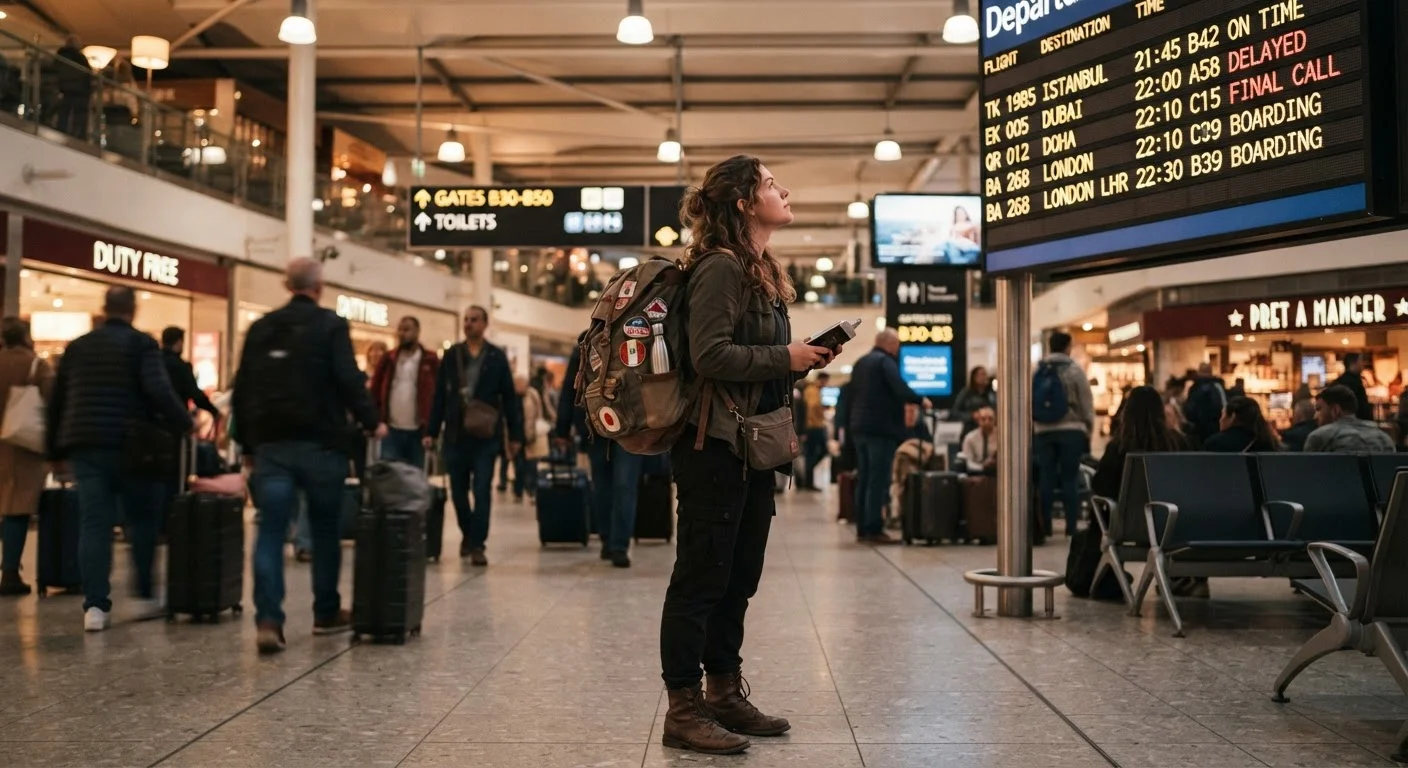
Photo credit: ProximityFinds.com | One-stop Reading Source
In this article
Going abroad alone offers freedom — but also real challenges. A balanced look at what solo travel genuinely involves, from logistics to safety planning.
Key Takeaways
- Solo international travel offers unmatched flexibility but requires more upfront planning than group trips.
- Safety risks are real but manageable with research, smart habits, and reliable communication tools.
- Solo travelers often pay more per person than those splitting costs with travel companions.
- The experience of navigating a foreign country alone can be deeply rewarding and confidence-building.
- Always verify visa rules, entry requirements, and travel advisories through official government sources before departure.
Total control over your itinerary
You decide when to linger at a market, skip a museum, or change cities entirely. There's no negotiating with travel companions whose priorities differ from yours.
Easier to connect with locals and other travelers
Solo travelers are more approachable and more likely to accept spontaneous invitations. Research consistently finds that solo travelers report more meaningful interactions with local residents.
Genuine confidence boost
Navigating foreign transit systems, language barriers, and unexpected hiccups on your own builds a kind of self-reliance that's hard to replicate in any other way.
Travel at your own pace without compromise
Early risers, night owls, slow travelers, and fast movers all thrive when no one else's schedule is involved. You eat when you're hungry and rest when you're tired.
More open to unexpected detours
Without group consensus required, you can pivot quickly - catching a local festival you just heard about or taking a scenic route that wasn't in the plan.
Higher per-person costs across the board
Single-occupancy hotel rooms often cost 60-80% of the double-room rate, meaning you pay nearly full price without splitting it. Solo supplements on tours and cruises are a known industry surcharge.
Safety considerations require more planning
Traveling alone means there's no built-in backup if something goes wrong. Pickpocketing, scams targeting tourists, and nighttime navigation all warrant more deliberate precautions when you're on your own.
Loneliness is a real, underreported factor
Extended solo trips frequently surface feelings of isolation, especially during meals, holidays, or difficult moments. Many solo travelers report this catches them off guard even when they consider themselves introverted.
All logistics fall to you alone
Flight changes, lost luggage, illness, missed connections - every problem is yours to solve without a travel partner to help research, translate, or simply keep watch over your bags.
Some destinations are less solo-friendly
Certain regions carry elevated safety advisories for solo travelers, and a handful of cultural or logistical environments make traveling alone more challenging, particularly for women in some destinations.
Why Americans Are Choosing to Travel Solo Internationally
Solo international travel has grown steadily as a deliberate choice, not just a fallback when friends can't commit. Americans are heading abroad alone to experience places on their own terms, absorb different cultures without the friction of group dynamics, and push themselves outside their comfort zones in ways that group travel rarely demands.
That said, the Instagram version of solo travel - spontaneous, effortlessly glamorous, problem-free - doesn't reflect the full picture. Before you book a one-way ticket to Lisbon or Bangkok, it's worth understanding what you're actually signing up for. See our guide to what Americans often overlook before their first international trip for a grounded starting point.
Total control over your itinerary
You decide when to linger at a market, skip a museum, or change cities entirely. There's no negotiating with travel companions whose priorities differ from yours.
Easier to connect with locals and other travelers
Solo travelers are more approachable and more likely to accept spontaneous invitations. Research consistently finds that solo travelers report more meaningful interactions with local residents.
Genuine confidence boost
Navigating foreign transit systems, language barriers, and unexpected hiccups on your own builds a kind of self-reliance that's hard to replicate in any other way.
Travel at your own pace without compromise
Early risers, night owls, slow travelers, and fast movers all thrive when no one else's schedule is involved. You eat when you're hungry and rest when you're tired.
More open to unexpected detours
Without group consensus required, you can pivot quickly - catching a local festival you just heard about or taking a scenic route that wasn't in the plan.
The Real Costs - Financial and Otherwise
Budget math works differently when you're alone. Hotels, tours, and even some transportation options price in pairs by default. The single-supplement surcharge is especially common on guided tours and cruises, where solo travelers sometimes pay as much as double the per-person rate.
~70%
Solo travelers who are women
Travel industry surveys have repeatedly found that women make up a large majority of solo international travelers, reflecting a significant shift in travel demographics over the past decade.
60-80%
Typical single-room rate vs. double
Solo travelers commonly pay a single-supplement surcharge, meaning a room that would cost $100 per person for two often runs $160-$180 for one.
Beyond money, the emotional cost of extended solo travel is worth acknowledging honestly. Many travelers describe a particular kind of fatigue that sets in after weeks of making every decision alone, combined with no one to process shared experiences with. These aren't reasons to stay home - but they are reasons to plan realistic trip lengths, especially for first-timers. Comparing solo travel against guided tours is worth doing before committing to full independence abroad.
Higher per-person costs across the board
Single-occupancy hotel rooms often cost 60-80% of the double-room rate, meaning you pay nearly full price without splitting it. Solo supplements on tours and cruises are a known industry surcharge.
Safety considerations require more planning
Traveling alone means there's no built-in backup if something goes wrong. Pickpocketing, scams targeting tourists, and nighttime navigation all warrant more deliberate precautions when you're on your own.
Loneliness is a real, underreported factor
Extended solo trips frequently surface feelings of isolation, especially during meals, holidays, or difficult moments. Many solo travelers report this catches them off guard even when they consider themselves introverted.
All logistics fall to you alone
Flight changes, lost luggage, illness, missed connections - every problem is yours to solve without a travel partner to help research, translate, or simply keep watch over your bags.
Some destinations are less solo-friendly
Certain regions carry elevated safety advisories for solo travelers, and a handful of cultural or logistical environments make traveling alone more challenging, particularly for women in some destinations.
Safety, Logistics, and Staying Connected
Safety planning is more consequential when you're solo. That doesn't mean international travel is inherently dangerous - millions of Americans travel abroad safely every year. It does mean the margin for casual preparation is narrower. Research your destination's specific risks, share your itinerary with someone at home, and register with the Smart Traveler Enrollment Program (STEP) at the U.S. State Department, which helps the nearest embassy reach you in an emergency.
Always Check Official Travel Advisories
The U.S. Department of State publishes country-specific travel advisories at travel.state.gov, rated on a four-level scale from normal precautions to 'Do Not Travel.' These advisories are updated regularly and should be your starting point - not a travel blog or social media post. Entry requirements, visa rules, and safety conditions can change with little notice, so check official sources close to your departure date.
Staying reliably connected is also more critical when you're alone. A dead phone in an unfamiliar city is a minor inconvenience with a travel partner and a real problem without one. Understanding your connectivity options before you land matters - our overview of roaming, local SIMs, and international data plans breaks down the trade-offs clearly.
Travel insurance is another layer many solo travelers underestimate. When you're the only one managing a medical issue, a missed connection, or an emergency evacuation, having coverage designed for international travel is less optional. See what travel insurance actually covers and when it matters for a clear-eyed breakdown.
How to Set Yourself Up for a Successful Solo Trip
Preparation does more heavy lifting in solo travel than in almost any other travel style. Use a structured pre-departure checklist - the International Travel Prep checklist for Americans covers the essentials from visa applications to emergency contacts.
Pack strategically: solo travelers benefit from lighter loads since there's no one to share the burden of an overstuffed bag. Our carry-on vs. checked luggage guide is especially relevant when you're navigating airports and transit alone. And take the time to understand basic cultural norms at your destination - what's polite at home can be unexpectedly rude elsewhere, and a little awareness goes a long way toward respectful, rewarding interactions.
Solo international travel rewards those who prepare thoughtfully. The trade-offs are real, but for the right traveler with the right groundwork, the experience is genuinely hard to match.

Author
Travel Editorial Team
Travel Editorial Team is the collective byline for our editorial team and contributor network. Articles published under this byline or an editorial pen name are researched, written, and reviewed according to our editorial standards for clarity, consistency, and independence before publication.
View all articles →