
Road Tripping the American Southwest: A First-Timer's Complete Overview
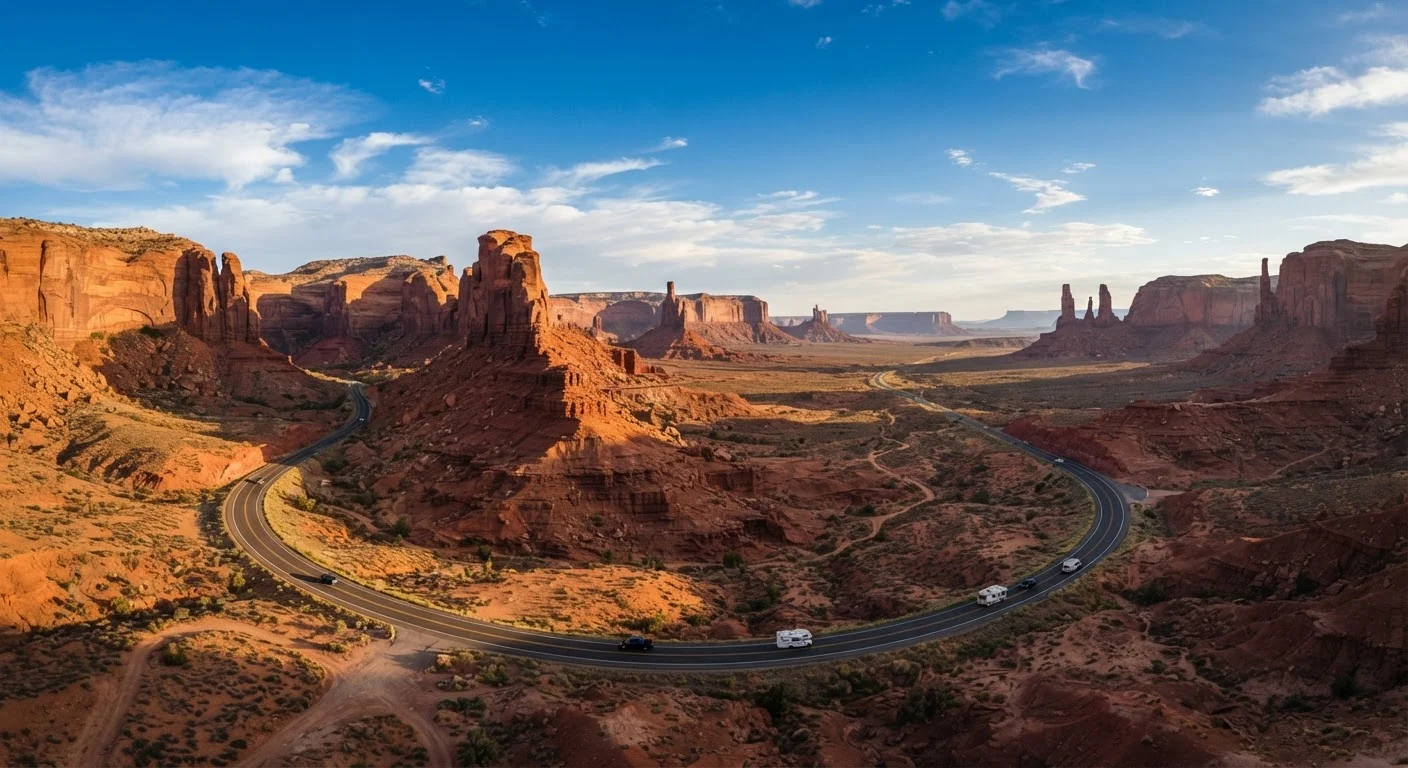
Photo credit: ProximityFinds.com | One-stop Reading Source
In this article
Red rock canyons, national parks, and open desert highways — everything a first-time Southwest road tripper needs to know before hitting the road.
Key Takeaways
- The American Southwest packs an extraordinary concentration of national parks into a drivable region.
- Spring and fall offer the most comfortable temperatures for desert road tripping.
- Reservations for campsites and popular park entry slots often sell out months in advance.
- Distances between services can be vast - fuel, water, and planning ahead are non-negotiable.
- A flexible itinerary with built-in buffer days makes the experience far more enjoyable.
Why the Southwest Is a Road Tripper's Dream
Few regions on Earth pack so much visual drama into such a drivable footprint. Within roughly 500 miles, a Southwest road trip rolls through five distinct landscape types: slickrock canyon country, high-desert plateaus, volcanic badlands, pine-forested mountains, and the open Sonoran Desert. For everyday Americans who want world-class scenery without a passport, it's hard to beat.
The region also benefits from a remarkable concentration of protected land. Utah alone holds five national parks - commonly called the Mighty Five - while Arizona contributes the Grand Canyon, Petrified Forest, Saguaro, and more. Nevada adds Great Basin; New Mexico brings Carlsbad Caverns and White Sands. You can structure an entire trip around National Park Service sites and never run short of wonder.
If you're weighing a domestic adventure against heading abroad, our overview of international travel for Americans can help you compare the trade-offs - but for sheer road-trip accessibility, the Southwest stands in a class of its own.
Timed Entry Reservation
A system some national parks use during busy periods requiring visitors to book a specific arrival window in advance, separate from any park pass.
America the Beautiful Pass
An annual federal recreation pass that covers entry fees at national parks and other federal lands across the United States for one flat fee.
Slickrock
Smooth, bare sandstone or other rock surfaces common in canyon country. Despite the name, dry slickrock offers excellent grip for hiking boots but becomes genuinely slippery when wet.
Flash Flood
A sudden, rapid flood that can occur in desert canyons with little warning, often caused by heavy rain miles away from where the flooding happens.
High-Clearance Vehicle
A vehicle with extra ground clearance between its undercarriage and the road surface, needed for rough dirt or rocky roads that would damage a standard car.
Slot Canyon
A narrow, deep canyon carved by water erosion through rock, often only a few feet wide but hundreds of feet tall - common in Arizona and Utah.
Classic Routes and How to Connect the Dots
The most popular first-timer loop starts in Las Vegas - a practical flight hub - and arcs through Utah's national parks before dipping into Arizona. A typical sequence: Vegas → Zion → Bryce Canyon → Capitol Reef → Moab (Arches and Canyonlands) → Monument Valley → Grand Canyon South Rim → Sedona → back to Vegas or Phoenix. This loop covers roughly 1,200 to 1,500 miles depending on detours, manageable over 10 to 14 days.
A second strong option is the Arizona loop for those flying into Phoenix: Sedona → Grand Canyon → Monument Valley → Canyon de Chelly → Petrified Forest → Tucson → Saguaro National Park → back to Phoenix. This route leans more toward Indigenous cultural heritage sites alongside natural landmarks.
For broader context on how these routes fit America's road trip landscape, see our US road trip route reference. And if you're planning to anchor your journey around park entries specifically, our national parks road trip planning guide walks through a route-first methodology that works especially well in the Southwest.
Build In a Buffer Day
Even the best-planned Southwest itinerary benefits from at least one unscheduled day per week. Unexpected road closures, a trail you want to hike twice, or a roadside landscape that demands a longer stop are all real possibilities. Leaving breathing room transforms a stressful sprint into a genuine adventure.
Timing, Weather, and Seasonal Realities
Spring (March-May) and fall (September-November) are the sweet spots. Temperatures sit in the comfortable 60s-80s°F at lower elevations, wildflowers appear in April, and crowds thin compared to peak summer. These windows are ideal for hiking, which is the best way to actually experience these landscapes.
Summer brings extreme heat - Death Valley and low-elevation Arizona regularly exceed 110°F, and heat-related illness is a genuine risk for unprepared hikers. Higher-elevation parks like Bryce Canyon remain cooler, but popular trailheads get packed. If summer is your only option, plan hikes for very early morning and shelter during midday hours.
Winter is underrated by many first-timers. Crowds drop dramatically, accommodation prices fall, and snow-dusted red rock formations are genuinely stunning. The trade-off: some roads and facilities close seasonally, and a few high-elevation routes can become icy and hazardous. Always verify current conditions through official National Park Service sources before your trip.
Park Policies Change Frequently
Timed-entry systems, shuttle requirements, and reservation windows at Southwest national parks have shifted considerably in recent years and continue to evolve. Always check the official National Park Service website (nps.gov) for the most current entry requirements for each park on your list well before your trip date - not just in the days before you leave.
Practical Logistics Before You Leave Home
Reservations matter enormously in the Southwest. Zion National Park operates a shuttle system and has required timed entry during peak periods; Arches has implemented timed-entry reservations in recent years; popular campgrounds like Watchman (Zion) and Moab area sites book out months ahead. Check each park's official NPS page for the most current reservation requirements - these policies evolve.
An America the Beautiful annual pass grants entry to all national parks and federal recreation lands for a single annual fee; if you're visiting three or more parks, it's almost always worthwhile. Verify the current price at the official USGS store before purchasing.
Packing right is non-trivial for desert travel. Beyond standard road trip gear, you'll want serious sun protection, electrolyte supplies, a quality cooler, and more water capacity than you think you need. Our companion piece on what experienced road trippers always pack is worth reading before you load the car. It's also worth checking common road trip myths - several of them apply directly to the Southwest, including the dangerous assumption that you can wing accommodation without reservations.
Safety and Desert Driving Essentials
Desert driving introduces hazards that catch first-timers off guard. Gas stations can be 50 to 100 miles apart in rural Utah and Arizona - never let your tank drop below half in remote areas. Cell service disappears for long stretches; download offline maps via a trusted navigation app before you go, and consider a satellite communicator device for truly remote backroads.
Flash floods are a serious and underestimated danger. Slot canyons like Antelope Canyon and the Narrows in Zion can flood with little warning even when skies above you appear clear - always check weather upstream. Heed any posted warnings and ranger advisories without exception.
For solo travelers, the remote nature of Southwest roads demands extra preparation. Our guide on driving solo across the US examines the real trade-offs involved. Always share your itinerary with someone at home, carry basic vehicle emergency supplies, and respect posted road closures - backcountry rescue operations are expensive, dangerous for rescuers, and entirely preventable with good planning. The Southwest rewards those who prepare; it punishes those who don't.
Never Underestimate Desert Heat
Heat-related illness can develop rapidly in the desert, especially at lower elevations during summer. Carry far more water than you think you'll need - at least one liter per person per hour of hiking is a commonly cited guideline, though individual needs vary. If someone in your group shows signs of heat exhaustion (heavy sweating, weakness, nausea), move them to shade, cool them down, and seek medical help promptly.
Frequently Asked Questions

Author
Travel Editorial Team
Travel Editorial Team is the collective byline for our editorial team and contributor network. Articles published under this byline or an editorial pen name are researched, written, and reviewed according to our editorial standards for clarity, consistency, and independence before publication.
View all articles →