
Planning a National Parks Road Trip: A Route-First Approach
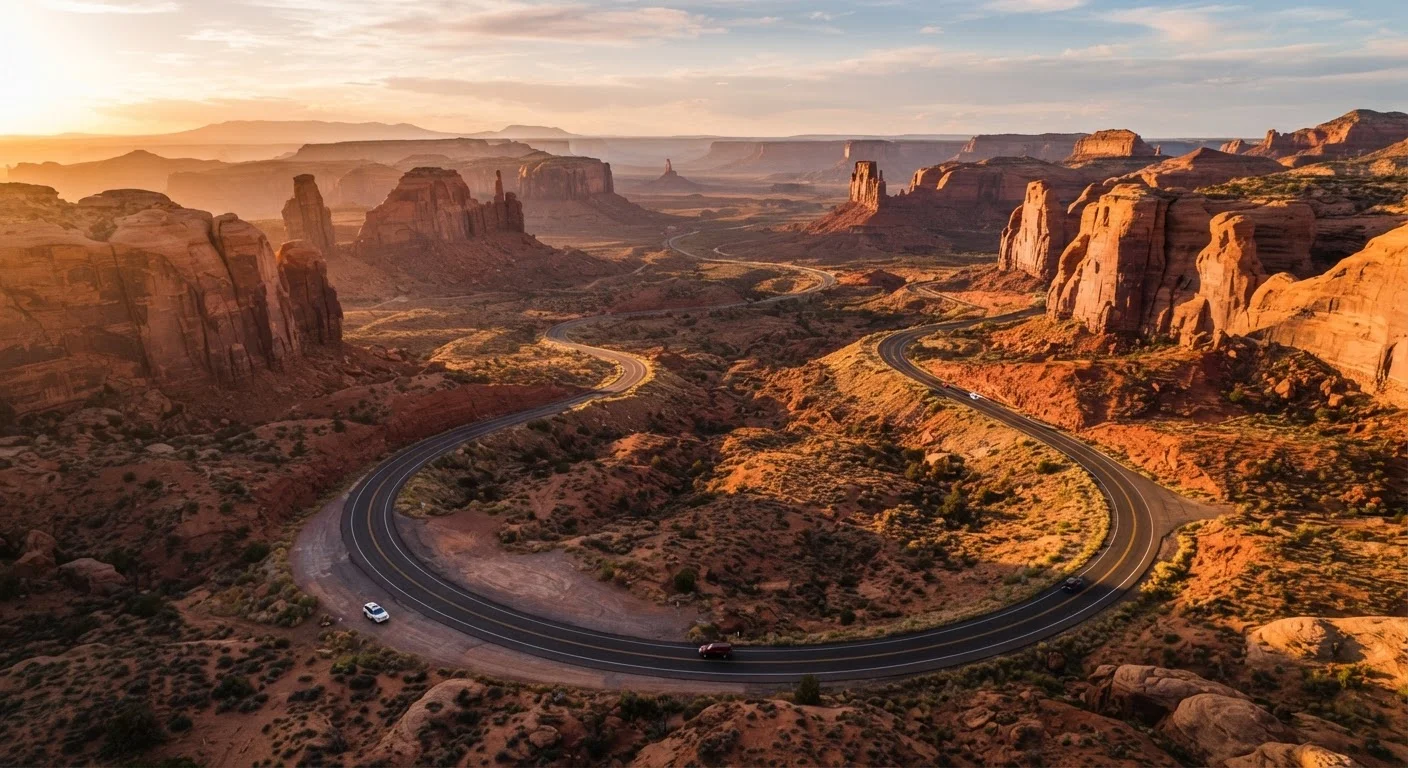
Photo credit: ProximityFinds.com | One-stop Reading Source
A practical walkthrough of how to plan a multi-park road trip across the US, from choosing a logical route to understanding park entry and seasonal timing.
Key Takeaways
- Plan your route geography first - then layer in specific parks, not the other way around.
- Seasonal timing dramatically affects crowd levels, road access, and park permit availability.
- The America the Beautiful pass covers entrance fees at most national parks for one year.
- Timed-entry reservations are now required at several high-demand parks - book early.
- Spacing drives to under 4 hours per day preserves energy for actual exploration.
- Lodging inside park boundaries books out months in advance; have a backup plan.
Why the Route Comes First
National parks road trips are uniquely rewarding, but they're also uniquely easy to over-engineer. The temptation to visit every iconic landmark within a single trip leads to itineraries that feel more like a checklist sprint than a journey. A route-first approach flips the script: you identify a logical geographic corridor, then select the parks that fall naturally along it.
This method reduces driving time, creates a coherent sense of place, and leaves room for the unplanned moments that often become the best memories. Whether you're eyeing the forested ridgelines of the Blue Ridge Parkway or plotting a loop through Utah's canyon country, the planning process follows the same practical sequence.
What you will need
Recreation.gov
Used to check timed-entry permits, campground reservations, and specific park passes.
America the Beautiful Annual Pass
Covers entrance fees at national parks and federal recreational lands for 12 months.
Paper or digital road atlas
Helps visualize driving distances and connective highways between parks.
Offline maps app (e.g., downloaded Google Maps or Maps.me)
Many park areas have no cell service - offline maps keep navigation functional.
Campground or lodging booking platform
Needed to secure accommodations well in advance, especially inside park boundaries.
Step-by-Step: From Blank Map to Road-Ready Plan
Choose a geographic region, not a park list
Most people start by listing dream parks - Zion, Yellowstone, Glacier, Great Smoky Mountains - then try to connect them on a map. The result is often an exhausting, continent-spanning itinerary that burns more time on interstates than on trails.
Instead, anchor your trip to one region: the Southwest, the Pacific Northwest, the Southern Appalachians, or the Northern Rockies, for example. Each region clusters multiple world-class parks within practical driving distance. The Southwest alone links Zion, Bryce Canyon, Capitol Reef, Canyonlands, and Arches within a roughly 300-mile corridor - a genuinely driveable circuit. See our Southwest road trip overview for a breakdown of how those parks connect.
Map the driving distances honestly
Pull up a road atlas or mapping tool and write down the drive time between each park on your shortlist. A common mistake is underestimating park-road speeds - winding canyon roads and mountain passes regularly slow travel to 25-35 mph for long stretches.
Aim for no more than 3-4 hours of driving on any given day. Days with long drives rarely leave enough time to hike, explore, or simply absorb the landscape. Our US scenic byway reference can help you identify connective roads worth taking versus those best avoided.
Research seasonal access for each park
National parks are not uniformly open or accessible year-round. High-elevation parks like Rocky Mountain or Crater Lake may have key roads closed by snow well into May or June. Desert parks like Death Valley or Saguaro carry serious heat risk in summer. Timing your trip around shoulder seasons - spring and fall - often means better conditions, lighter crowds, and more available accommodations.
Check each park's official NPS page for road status calendars and any current closures before finalizing your dates.
Check timed-entry and permit requirements
Several of the most popular parks now require advance timed-entry reservations separate from the entrance fee. Zion, Glacier, Acadia, and others have used reservation systems in recent seasons to manage overcrowding. These reservations open weeks to months ahead and sell out quickly.
Visit Recreation.gov and each park's NPS page to identify whether a timed-entry permit is required during your travel window. Build this step into your planning timeline - not the week before departure.
Secure lodging in the right order
Book in-park lodges and campgrounds first - they fill months in advance, especially for summer dates. If in-park accommodations are gone, gateway towns (nearby small cities or towns just outside park boundaries) almost always offer alternatives at a range of price points.
Avoid locking in non-refundable lodging before your timed-entry permits are confirmed. Sequence matters: permits first, then accommodation.
Build intentional buffer days into your schedule
A common trip-planning error is scheduling every day at maximum capacity. Weather delays, unexpected trail closures, or simply falling in love with a view and wanting to linger can derail a tightly packed itinerary. Plan at least one unscheduled half-day for every four days of travel.
For a deeper framework on structuring days that stay flexible, see building a travel itinerary that leaves room to breathe.
Cell Service Is Unreliable in Most Parks
Do not depend on live GPS navigation or real-time information inside national park boundaries. Download offline maps before you leave a town with reliable connectivity. Carry a printed or downloaded copy of your reservation confirmations and park maps as a backup.
Travelers with accessibility needs should research each park individually before booking - terrain, trail surfaces, and facility availability vary considerably. Our guide to planning trips with accessibility needs offers a useful research framework.
For those weighing a domestic parks trip against an international adventure, the travel planning hub covers both paths with practical, unbiased guidance.

Author
Travel Editorial Team
Travel Editorial Team is the collective byline for our editorial team and contributor network. Articles published under this byline or an editorial pen name are researched, written, and reviewed according to our editorial standards for clarity, consistency, and independence before publication.
View all articles →