
Planning Trips With Accessibility Needs: What to Research Before You Book
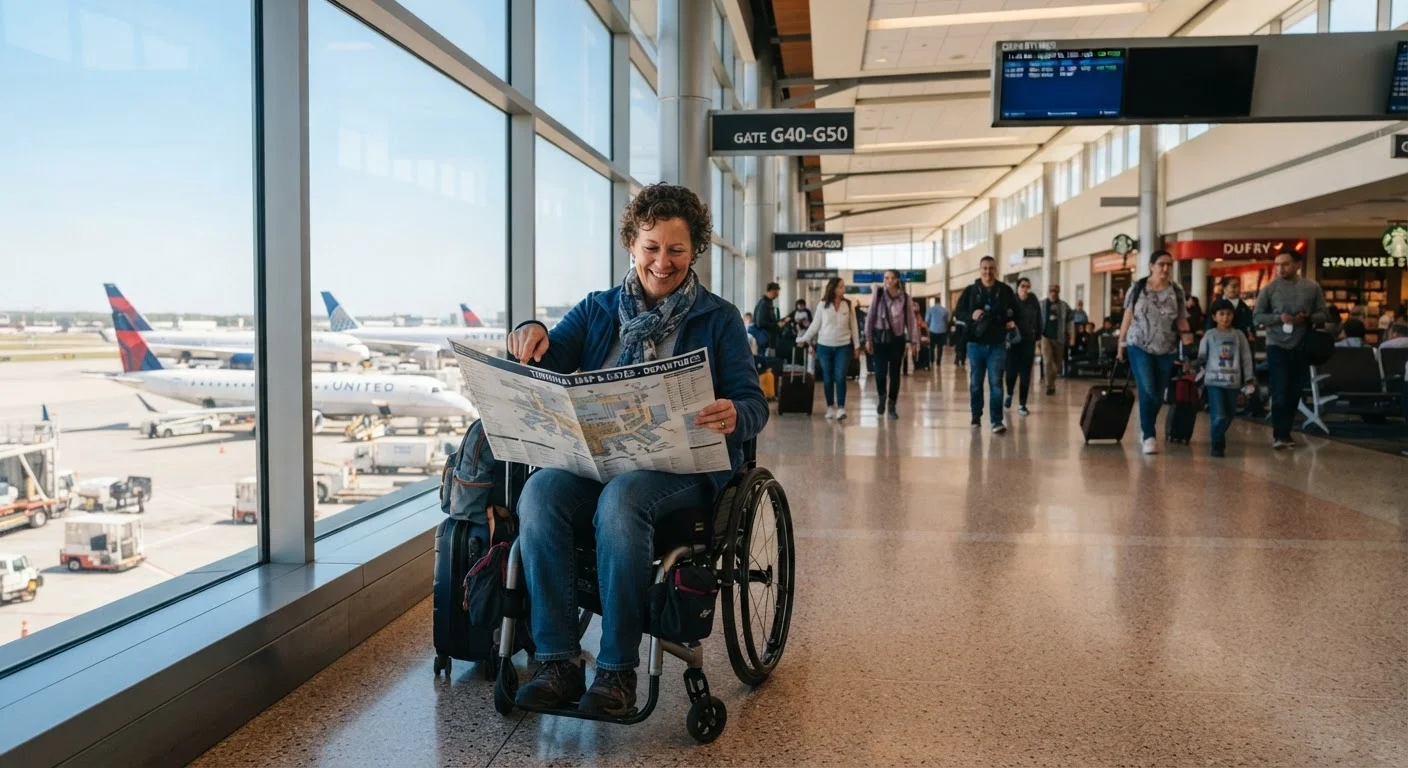
Photo credit: ProximityFinds.com | One-stop Reading Source
In this article
Accessibility varies widely across destinations, accommodations, and transit. Here's a framework for gathering the right information ahead of time.
Key Takeaways
- Accessibility standards vary dramatically between countries, cities, and individual properties - never assume.
- Calling hotels and attractions directly yields far more reliable information than relying on website descriptions alone.
- Building buffer time and backup plans into your itinerary reduces stress when accessibility gaps appear unexpectedly.
- Official government travel resources and disability-focused travel communities are among the most reliable research starting points.
Why Standard Trip Research Isn't Enough
Most travel planning advice assumes a fairly uniform experience of moving through airports, hotels, and attractions. For travelers with mobility limitations, chronic conditions, sensory differences, or other access needs, that assumption breaks down quickly. A hotel rated five stars may have no roll-in shower. A celebrated historic city center may be entirely cobblestone. An airline's website may claim wheelchair assistance without clarifying what "assistance" actually means at the gate.
The good news is that accessible travel is genuinely possible to nearly every destination - it just requires a different, more specific research process. Think of it as layering: you're not just researching where to go, you're researching how every link in the chain actually functions for your particular needs. For a broader foundation on trip planning, see our complete first-timer's walkthrough to build the full framework alongside this guidance.
Best Practices for Accessible Trip Research
The following practices reflect what experienced accessible travelers consistently identify as most valuable when preparing for a trip.
Contact accommodations directly and ask specific, written questions before booking.
Property websites frequently use vague language like "accessible room" that doesn't reflect what's actually available. A direct conversation - followed up by email for documentation - reveals the real details: step heights, shower configurations, bed height, elevator dimensions, and more.
Research the destination's built environment, not just individual properties.
A fully accessible hotel surrounded by uneven terrain, broken curb cuts, or inaccessible transit doesn't deliver an accessible trip. Understanding the broader infrastructure - sidewalk quality, public transit accessibility, taxi or rideshare availability - is essential to realistic planning.
Notify airlines and transport providers of your needs at booking, then reconfirm 48 hours before departure.
Airline accessibility assistance - wheelchair service, bulkhead seating, stowing mobility devices - must be arranged in advance and can fall through the cracks between booking systems and ground crews. Reconfirming directly reduces that risk.
Identify medical and emergency resources at your destination before you leave home.
Knowing where the nearest accessible medical facility is, whether your medications are legal in the destination country, and how local emergency services operate turns a potential crisis into a manageable situation. This is especially important for international travel.
Build visible buffer time and a named backup plan into every key day.
Accessibility gaps - a broken elevator, an attraction that overstated its access, unexpected terrain - are common enough that having a pre-researched alternative prevents a single obstacle from derailing an entire day.
Quick Actions You Can Take Right Now
You don't have to tackle every piece of research at once. These starting moves build momentum without overwhelming you.
Document Every Accessibility Confirmation
When a hotel or transport provider confirms an accessibility feature by phone, follow up immediately with an email summarizing what was discussed and ask them to reply confirming accuracy. This creates a paper trail that's invaluable if conditions differ when you arrive. Save all confirmations in one folder you can access offline during your trip.
Thinking About Itinerary Structure Differently
Accessible travel often calls for intentionally lighter daily schedules. Distances that look short on a map may involve significant physical effort depending on terrain, and rest periods matter more when navigating environments that weren't designed with your needs in mind. Our guide on building an itinerary that leaves room to breathe is a useful companion here - those principles apply with even greater force.
For international destinations, consult the U.S. State Department's country information pages and verify entry requirements, since some nations have specific documentation requirements for travelers with medical equipment or assistance animals. Always verify these details directly with the relevant embassy or consulate before booking. Our international travel planning roadmap covers the broader checklist that complements your accessibility research.
Accessibility Standards Differ Internationally
The Americans with Disabilities Act (ADA) sets specific standards in the U.S., but no equivalent framework applies uniformly abroad. Some countries have strong accessibility legislation; others have very little. This doesn't mean international travel is off the table - it means your research process needs to be more granular when crossing borders. Disability-focused travel communities and destination-specific forums are among the most reliable sources for current, on-the-ground conditions.
This article provides general travel planning information. Individual accessibility needs vary widely; consult relevant healthcare providers and contact destinations directly to verify conditions suit your specific situation.

Author
Travel Editorial Team
Travel Editorial Team is the collective byline for our editorial team and contributor network. Articles published under this byline or an editorial pen name are researched, written, and reviewed according to our editorial standards for clarity, consistency, and independence before publication.
View all articles →