
Packing the Car: What Experienced Road Trippers Always Bring (And What Gets Left Behind)
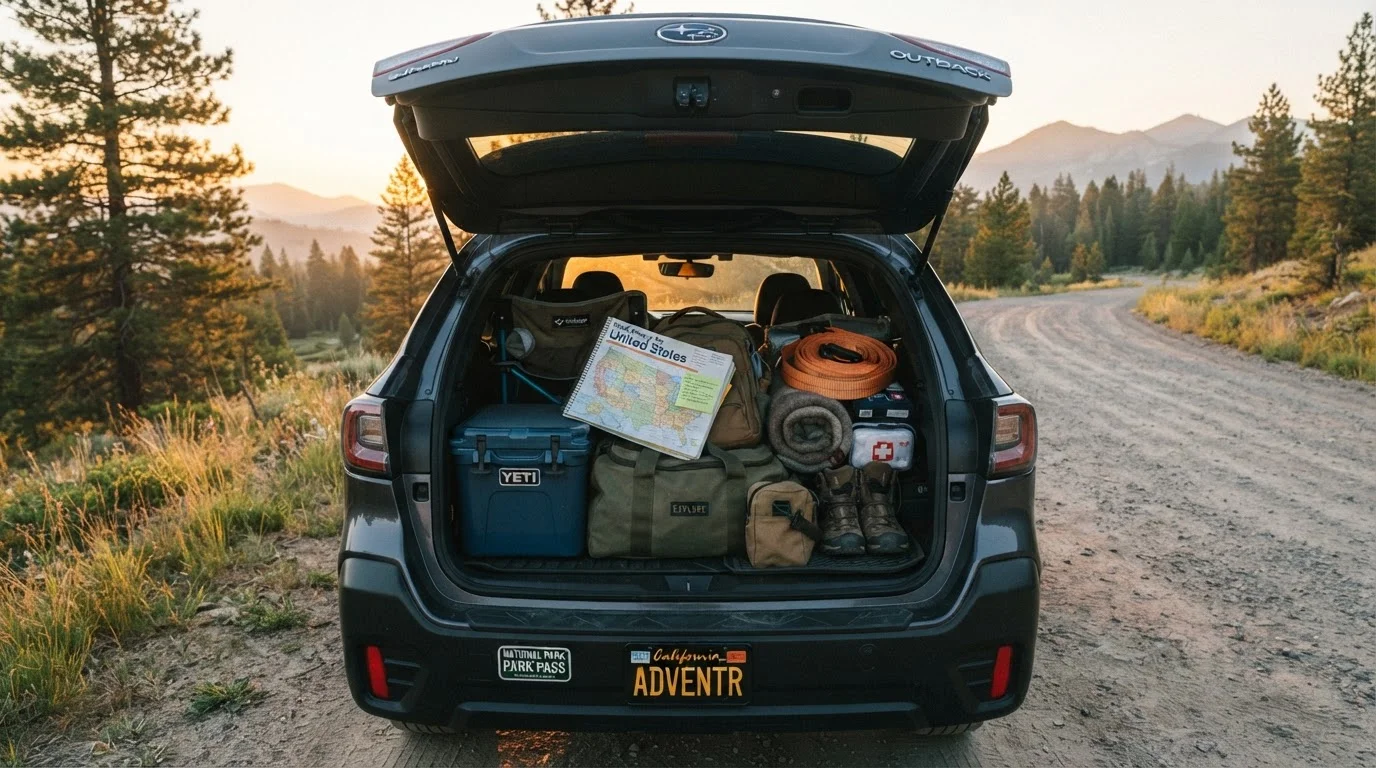
Photo credit: ProximityFinds.com | One-stop Reading Source
In this article
A practical, experience-tested checklist of what to pack for a multi-day American road trip, from safety gear to creature comforts.
Key Takeaways
- Safety gear - jumper cables, a first-aid kit, and a spare tire - belongs in every car before any long drive.
- Veteran road trippers consistently leave behind bulky "just in case" clothing they never actually wear.
- A physical backup map remains valuable even when you plan to rely on a phone navigation app.
- Snacks and a reusable water supply cut costs and reduce the need for unnecessary stops.
- Organizing your trunk before departure saves real time and frustration during the trip.
Why What You Pack Determines How You Feel on Day Three
A road trip is one of the few travel formats where your packing decisions ride with you every single mile. Unlike flying - where the checked-bag debate centers on airport logistics - a car lets you bring almost anything. That freedom is both the gift and the trap.
Pack too little and you're scrambling for a pharmacy at 9 p.m. in a small town. Pack too much and you can't see out the rear window, you're digging through bags at every stop, and your car becomes a rolling storage unit. The sweet spot that experienced road trippers eventually find comes down to one principle: bring what solves real problems, skip what just eases hypothetical anxiety.
Before you load a single bag, it's also worth pairing this checklist with a solid vehicle check. Our guide to pre-road-trip vehicle inspection walks through the mechanical side so your car is as ready as your trunk.
Safety & Emergency
Navigation & Documents
Comfort & Sustenance
Tech & Power
Clothing & Toiletries
Vehicle Extras
What Consistently Gets Left Behind
If overpacking is something you struggle with, you're in good company - it's rarely about poor judgment and almost always about a mindset shift. Our deeper look at why overpacking happens explains the psychology well. For road trips specifically, here are the recurring culprits veterans learn to cut:
- More than two "maybe" outfits. Experienced trippers pack for actual activities on the itinerary, not imagined scenarios.
- Full-size toiletry bottles. Travel sizes or refillable containers handle a week-long trip easily and free up trunk space.
- Hardcover books and bulky entertainment. A loaded tablet or phone serves the same purpose in a fraction of the space.
- Duplicate tools. One multi-tool handles most minor fixes. Three different sets of gadgets just add weight.
- Fancy shoes for every occasion. Two pairs - one comfortable walking shoe, one versatile option - covers almost every road trip scenario.
Don't Pack Medications You Can't Access
Prescription medications, EpiPens, and critical over-the-counter items should ride in the cabin - never in a locked trunk or buried bag. If you need something urgently, the last thing you want is to unpack half your gear on a highway shoulder to find it. Keep a small day bag with health essentials within arm's reach of all passengers.
Getting the packing right ties directly into having a realistic itinerary. An overloaded schedule creates the same stress as an overloaded car. See our piece on building a road trip itinerary that holds to align your planning with your pace.
Soft-sided duffel bags
Compress and flex to fill trunk space more efficiently than hard-shell suitcases.
Portable jump-start battery pack
Allows you to restart a dead battery without waiting for another vehicle or roadside assistance.
Reusable hard-sided cooler
Keeps food and drinks cold for multiple days, reducing convenience-store reliance on long drives.
Offline map app (phone)
Provides turn-by-turn navigation in remote areas with no cellular signal.
Packing cubes or zip pouches
Keeps cables, documents, and small items organized and instantly findable at stops.
Portable power bank
Recharges phones and devices when you are away from the vehicle for extended periods.
Loading Smart: Organization Counts as Much as What You Bring
Even a perfectly curated pack list falls apart if everything is jumbled in the trunk. Experienced road trippers load heavy items flat on the trunk floor, keep frequently needed items (snacks, car chargers, a first-aid kit) within easy reach, and use soft duffel bags that compress and flex around each other far better than rigid suitcases.
A reusable cooler in a accessible position can replace four convenience-store stops a day - a real cost saver when you consider what Americans typically spend on food during road trips. Small zip pouches for cables, maps, and documents eliminate the frantic search at toll booths and trailheads.
Trunk Organization Is a Safety Issue
Loose, heavy items in an unsecured trunk become projectiles in a sudden stop or collision. Always place heavy gear (coolers, tool kits) flat on the trunk floor and use cargo nets or organizers to prevent shifting. A tidy trunk isn't just convenient - it genuinely reduces injury risk for everyone in the vehicle.
Road trips are fundamentally different from international travel in terms of preparation. If you're also planning a trip abroad this year, our international pre-departure checklist covers the additional layers - visas, vaccinations, currency - that domestic driving simply doesn't require.

Author
Travel Editorial Team
Travel Editorial Team is the collective byline for our editorial team and contributor network. Articles published under this byline or an editorial pen name are researched, written, and reviewed according to our editorial standards for clarity, consistency, and independence before publication.
View all articles →