
Understanding Your Car's Fluid System: Beyond the Oil Cap
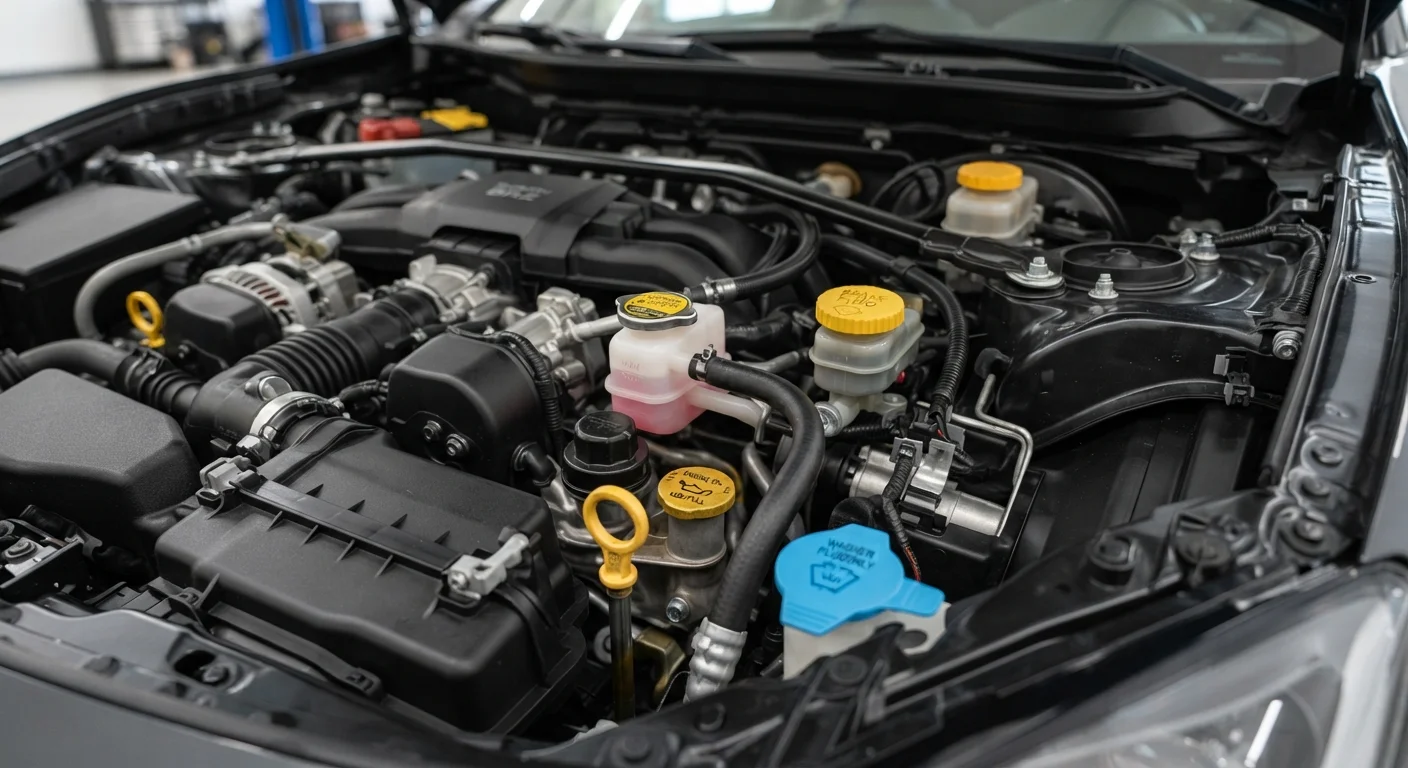
Photo credit: ProximityFinds.com | One-stop Reading Source
In this article
Coolant, brake fluid, transmission fluid, power steering fluid — what each one does, where to find it, and how to check its condition.
Why Car Fluids Matter More Than Most Drivers Realize
Most drivers know they need an oil change every few thousand miles. But engine oil is just one of six or more fluids quietly keeping your car safe and functional. Letting any of them run low - or ignoring signs of contamination - can cause expensive damage or, in the case of brake fluid, a genuine safety hazard.
This guide covers each major fluid: what it does, where to find it under the hood, and how to read its condition at a glance. For a broader look at how often these fluids should be serviced, see our maintenance interval reference.
| Number of key fluids to monitor | 6 (oil, coolant, brake, transmission, power steering, washer fluid) |
| Brake fluid check method | Visual - translucent reservoir near firewall, between MIN and MAX lines |
| Coolant check safety rule | Always check when engine is cold - hot coolant is pressurized |
| Transmission fluid color (healthy) | Red and translucent |
| Safe DIY top-off | Windshield washer fluid only - other fluids require correct spec and care |
The Six Fluids You Should Know
Engine Oil - The one most drivers know. Oil lubricates moving metal parts inside the engine, reduces friction, and carries heat away. Check it with the dipstick: wipe it clean, reinsert fully, then pull it out again. The oil should fall between the two marks and look amber to light brown. Black, gritty oil or a milky appearance (which can indicate coolant contamination) are reasons to act promptly.
Coolant (Antifreeze) - Coolant circulates through the engine and radiator to regulate temperature, preventing both overheating in summer and freezing in winter. Check the translucent plastic overflow reservoir - not the radiator cap - when the engine is cold. The level should sit between the MIN and MAX lines. Coolant is typically bright green, orange, or pink depending on the formulation; a rusty or murky color signals it's time to flush it. Our seasonal maintenance guide covers why coolant condition matters before temperature extremes hit.
Brake Fluid - Hydraulic pressure from brake fluid is literally what stops your car when you press the pedal. The reservoir is a small white or yellow plastic container near the firewall. Fluid should be between MIN and MAX. New brake fluid is nearly clear to pale yellow; dark brown fluid has absorbed moisture and is degraded - a concern because moisture lowers the fluid's boiling point, reducing braking performance under hard use. If a dashboard warning light appears, check here first. See what your warning lights mean for more context.
Transmission Fluid - This fluid lubricates and cools your transmission's internal components and, in automatics, transmits hydraulic pressure to shift gears. Many vehicles have a transmission dipstick (similar to the oil dipstick but usually located further back in the engine bay); others require a shop inspection. Healthy transmission fluid is typically red and translucent. Dark, burnt-smelling fluid is a red flag. Learn more about how transmissions actually work in our transmission explainer.
Power Steering Fluid - If your car has hydraulic power steering (not the newer electric systems), this fluid helps the pump amplify your steering input. The reservoir is usually labeled with a steering wheel icon. Low fluid or a whining noise when turning warrants a check. Note: many newer vehicles use electric power steering and have no such reservoir.
Windshield Washer Fluid - The only fluid here you can safely top off yourself with no mechanical risk. Use a purpose-made washer fluid, not plain water, which can freeze and doesn't clean as effectively.
Hydraulic fluid
A liquid used to transmit mechanical force through pressure. Brake fluid and power steering fluid are both hydraulic fluids - pressing a pedal or turning a wheel moves fluid through lines to create action at the other end.
Coolant (Antifreeze)
A liquid, usually water mixed with ethylene glycol, that circulates through the engine and radiator to regulate operating temperature. It prevents overheating in heat and freezing in cold.
Dipstick
A long metal rod inserted into a fluid reservoir that allows you to check fluid level and condition without opening the system. Engine oil and some transmissions use dipsticks.
Moisture absorption (brake fluid)
Over time, brake fluid draws in water from the surrounding air, a property called hygroscopy. Absorbed moisture lowers the fluid's boiling point, which can reduce braking performance under prolonged or hard use.
Reading Fluid Condition at a Glance
Fluid levels tell you one story; fluid color and smell tell another. Here's a quick reference:
- Oil: Amber = good. Black = overdue. Milky/foamy = possible coolant leak - see a mechanic.
- Coolant: Bright and clear = good. Rusty or murky = flush needed.
- Brake fluid: Pale yellow = good. Dark brown = degraded, replace it.
- Transmission fluid: Red and clear = good. Dark or burnt-smelling = service needed.
If you notice any fluid puddles under your parked car, try to identify the location and color. Oil is dark and found under the engine; coolant is often sweet-smelling and brightly colored; transmission fluid is reddish and found toward the middle of the car.
When in Doubt, Let a Mechanic Check It
Checking fluid levels is generally straightforward, but interpreting what you find - especially milky oil or a recurring low brake fluid level - can point to underlying issues that aren't visible from the reservoir. If a fluid consistently drops between service intervals or looks unusual, have a qualified technician inspect the system rather than simply topping it off.
Keeping fluids in good shape is one of the most cost-effective ways to extend your vehicle's life. For a full picture of your car's other key systems, explore our Understanding Your Car hub.

Author
Automotive Editorial Team
Automotive Editorial Team is the collective byline for our editorial team and contributor network. Articles published under this byline or an editorial pen name are researched, written, and reviewed according to our editorial standards for clarity, consistency, and independence before publication.
View all articles →