
What Your Car's Warning Lights Are Actually Telling You
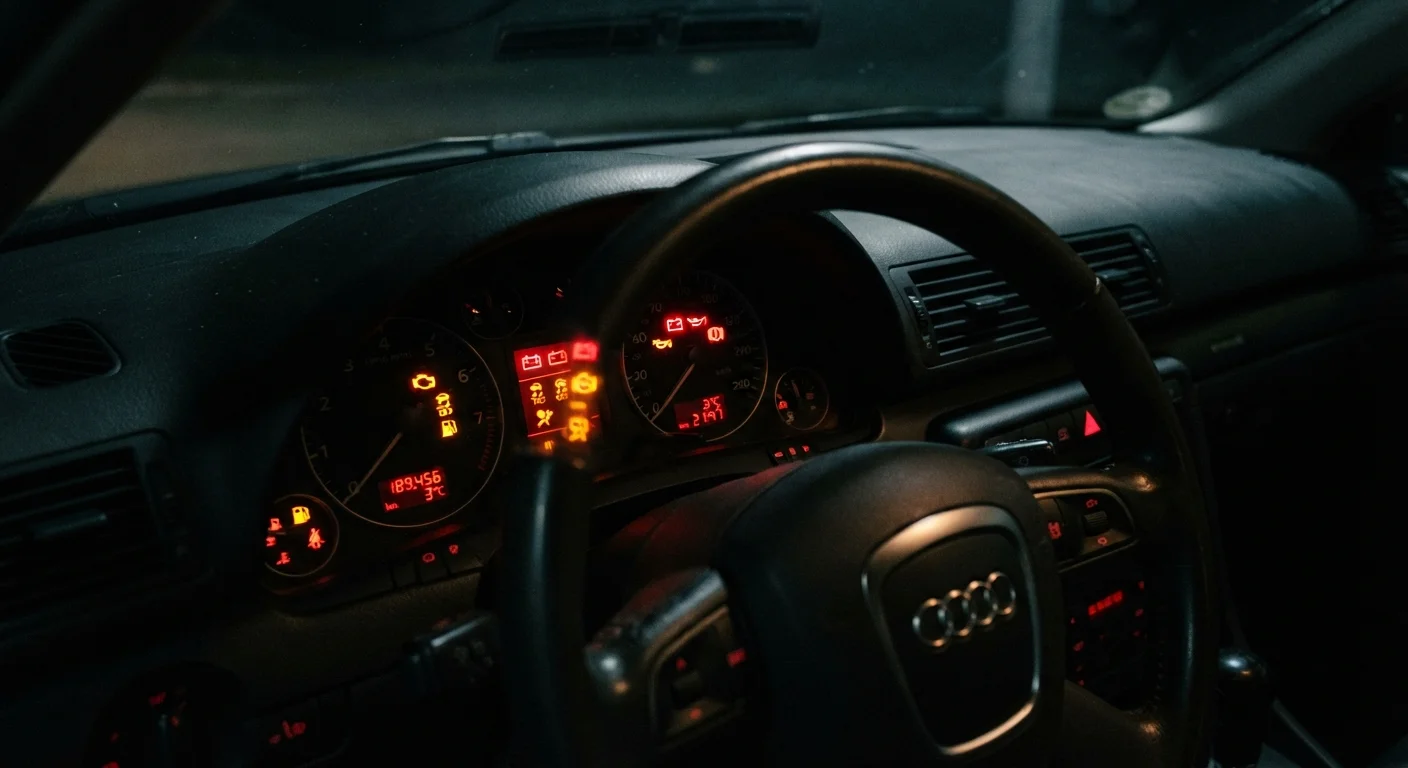
Photo credit: ProximityFinds.com | One-stop Reading Source
In this article
From the check engine light to TPMS, learn what your dashboard warning symbols mean and when to take action.
Why Warning Lights Exist - and What Colors Mean
Your car's dashboard warning lights are part of its onboard diagnostic system, which monitors dozens of sensors continuously while you drive. When something falls outside normal parameters, a light triggers to alert you. Think of it as your car's way of communicating - not always to say something's broken, but to say something needs attention.
Color is the first thing to read. Red lights are urgent - stop driving or pull over safely when you see one. Yellow or amber lights signal a condition that needs attention soon, but you likely have time to drive to a shop. Green and blue lights are informational, letting you know a system like high beams or cruise control is active. This color system is fairly consistent across makes and models, though the exact symbols vary.
| Red light urgency | Stop driving as soon as safely possible |
| Amber light urgency | Schedule service within 1-2 days |
| Most common light | Check Engine (can have 100+ possible causes) |
| Flashing vs. solid check engine | Flashing = stop driving; solid = schedule service |
| TPMS trigger threshold | Typically 25% below recommended PSI (National Highway Traffic Safety Administration) |
| Free diagnostic code reads | Available at many auto parts retailers |
The Most Common Warning Lights Decoded
Here's a plain-English breakdown of the lights drivers encounter most often:
- Check Engine (amber engine outline): One of the most misunderstood lights. It can signal anything from a loose gas cap to a misfiring cylinder. A solid amber check engine light usually allows for a short delay before service; a flashing one means stop driving and call a mechanic - it often indicates active catalytic converter damage. See our full dashboard light decoder for a symbol-by-symbol breakdown.
- Oil Pressure (red oil can): This is serious. Low oil pressure can destroy an engine within minutes of driving. Pull over safely, turn off the engine, and check the oil level before attempting to drive further.
- Battery (red battery outline): Your charging system isn't keeping up. This could be a failing alternator, a worn belt, or a battery near the end of its life. You may have limited time before the car stalls.
- Temperature (red thermometer in water): Your engine is overheating. Pull over immediately. Continuing to drive risks warping engine components - a repair that can run into the thousands. Understanding your car's fluid system, including coolant levels, can help prevent this light from appearing.
- TPMS (amber tire cross-section with exclamation mark): One or more tires are significantly under-inflated. Check pressure at your earliest opportunity. Driving on low tires affects handling, fuel economy, and tire lifespan. For more on why tire pressure matters, see our article on tire pressure and what it costs you.
- Brake Warning (red exclamation in circle): Could mean the parking brake is engaged, brake fluid is low, or there's a fault in the braking system. If the parking brake is off and the light stays on, get it inspected immediately. Learn more about what brake symptoms look like in our guide to recognizing brake wear.
OBD-II
On-Board Diagnostics, version 2. The standardized system in vehicles made after 1996 that monitors engine and emissions systems and stores diagnostic trouble codes when a fault is detected.
Diagnostic Trouble Code (DTC)
A code stored by the vehicle's computer when a sensor reading falls outside normal range. Mechanics and scan tools use these codes to identify what triggered a warning light.
TPMS
Tire Pressure Monitoring System. A sensor-based system that alerts drivers when tire pressure drops significantly below the recommended level, typically shown as an amber dashboard light.
Alternator
A generator driven by the engine that recharges the battery and powers electrical systems while the car is running. A failing alternator can trigger the battery warning light.
When to Drive, When to Stop, and When to Call for Help
Not every warning light means you're stranded. But the cost of ignoring the wrong one can be steep - both financially and for your safety. A general rule: if the light is red and relates to oil, temperature, or brakes, stop driving. If it's amber and the car is behaving normally, you can typically schedule a shop visit within a day or two.
One practical step: get the diagnostic trouble code (DTC) read. Auto parts retailers often read these codes for free, and knowing the code helps you have an informed conversation with a mechanic. You won't need to diagnose it yourself - just knowing the code prevents you from walking in blind.
Your Owner's Manual Is the Best Reference
Warning light symbols aren't fully universal - some manufacturers use slightly different icons or colors. Your owner's manual has an exact guide for your vehicle's specific lights, usually in the instrument cluster section. If you don't have a physical copy, most manufacturers provide digital versions on their websites. Keeping a photo of the relevant pages on your phone is a practical backup.
Before long drives, a quick systems check can catch these issues before they become roadside problems. Our pre-road-trip safety checklist walks through exactly what to look at before you leave home.

Author
Automotive Editorial Team
Automotive Editorial Team is the collective byline for our editorial team and contributor network. Articles published under this byline or an editorial pen name are researched, written, and reviewed according to our editorial standards for clarity, consistency, and independence before publication.
View all articles →