
Tire Pressure and Why Getting It Wrong Costs You More Than You Think
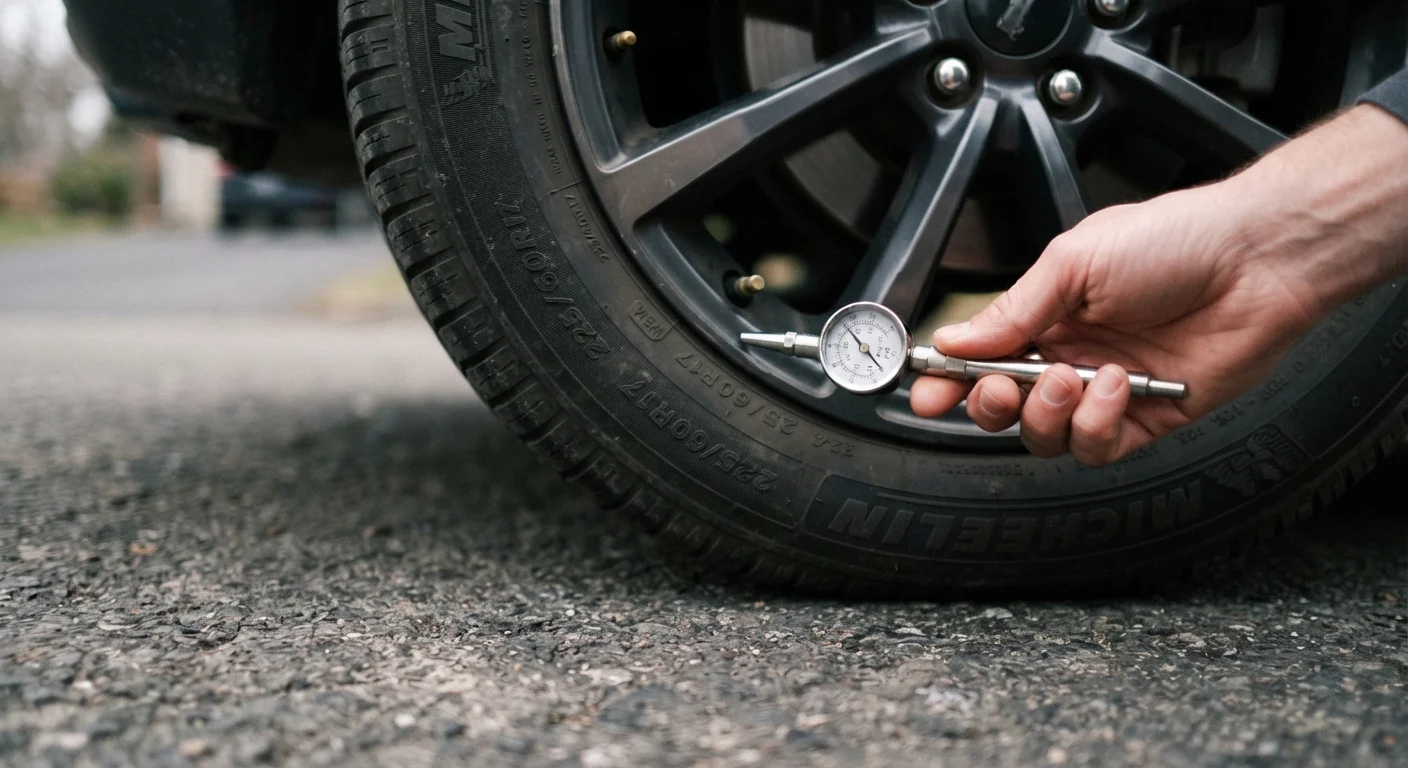
Photo credit: ProximityFinds.com | One-stop Reading Source
In this article
Under- and over-inflated tires wear unevenly, hurt fuel economy, and compromise handling. Here's what the right PSI actually does for your car.
Key Takeaways
- Your car's recommended PSI is on a sticker inside the driver's door jamb, not on the tire sidewall.
- Under-inflation is more common and more dangerous than over-inflation.
- Incorrect tire pressure reduces fuel economy, accelerates uneven tire wear, and affects braking distance.
- Tire pressure should be checked monthly and always when tires are cold.
- The TPMS warning light often doesn't trigger until pressure is already significantly off target.
The Number on the Tire Is Not Your Target
Most drivers who do check tire pressure use the wrong number. The large PSI figure molded into the tire sidewall - often around 44 or 51 PSI - is the maximum pressure that tire can safely contain, not a recommended operating target. Running your tires at max pressure is like filling a balloon until it's about to pop: technically possible, but not smart.
Your actual target is found on a sticker inside the driver's door jamb or in your owner's manual. It's set by the vehicle manufacturer based on how the car is designed to handle load and distribute weight. Front and rear tires sometimes have different recommended pressures, so check both.
Check Pressure When Tires Are Cold
Driving heats the air inside your tires and temporarily raises pressure - sometimes by 4-6 PSI. Always check pressure before driving or after the car has been parked for at least three hours. Readings taken on warm tires will be misleadingly high and could lead you to let out air you actually need.
What Under-Inflation Actually Does to Your Car
Under-inflation is the more common problem, and it quietly works against you in several ways at once.
- Uneven tread wear: A soft tire flexes more than intended, causing the outer edges of the tread to wear faster than the center. This shortens tire life considerably.
- Higher fuel costs: Soft tires increase rolling resistance - the friction your engine has to overcome to keep the car moving. The drag adds up at the pump over time.
- Reduced handling and braking: An under-inflated tire doesn't respond to steering inputs as precisely and takes longer to stop. This is a safety issue, not just a performance quirk.
- Heat buildup: Excessive flex generates heat inside the tire. In severe or prolonged cases, this can lead to tire failure.
Staying on top of maintenance intervals - including tire pressure checks - is part of responsible ownership. Our guide to car maintenance intervals covers how tire-related tasks fit into a broader schedule.
~1 PSI
Pressure lost per 10°F temperature drop
The U.S. Department of Energy notes that tire pressure changes roughly 1 PSI for every 10-degree Fahrenheit shift in outside temperature.
0.2% per PSI
Fuel economy loss from under-inflation
The U.S. Department of Energy estimates fuel economy drops approximately 0.2% for every 1 PSI all tires are under-inflated.
25%
Pressure drop before most TPMS lights activate
Federal regulations require TPMS systems to warn when pressure falls 25% or more below the vehicle's recommended level - meaning problems start well before the alert.
Over-Inflation: Less Common, Still Costly
Over-inflated tires create a different set of problems. When a tire is too firm, the contact patch - the portion of the tire actually touching the road - shrinks. That sounds efficient, but it means less grip in corners and longer stopping distances.
Tread wear shifts to the center of the tire, leaving the outer edges relatively unused while the middle wears down prematurely. Over-inflated tires are also more susceptible to sudden damage: hitting a pothole or curb at the wrong angle can cause an immediate blowout that a properly inflated tire might have survived.
Build It Into Your Monthly Routine
Pick one day a month - the first of the month works well - and make tire pressure checks a habit. It takes under two minutes with a basic gauge. Pair it with a quick visual inspection for unusual wear patterns, which can signal alignment or suspension issues beyond just pressure. Your driving habits also play a role in how quickly tires wear; see our article on how driving habits affect vehicle wear for related context.
The Hidden Financial Impact Adds Up Fast
Tires are one of the larger recurring vehicle expenses most drivers face. Running the wrong pressure shortens their useful life - sometimes significantly. If a set of tires that should last 50,000 miles wears out at 35,000 because of chronic under-inflation, that's a real cost that a two-minute monthly check could have prevented.
Fuel costs compound the picture. Even modest improvements in rolling resistance from properly inflated tires translate to meaningful savings across tens of thousands of miles. These are the kinds of small neglect patterns that snowball - as explored in our piece on the hidden costs of skipping routine maintenance.
Your TPMS warning light is a backup, not a substitute for regular checks. By the time it activates, you're already operating outside the optimal range. A simple tire gauge - available at any auto parts store for a few dollars - is all you need to stay ahead of it.
Frequently Asked Questions

Author
Automotive Editorial Team
Automotive Editorial Team is the collective byline for our editorial team and contributor network. Articles published under this byline or an editorial pen name are researched, written, and reviewed according to our editorial standards for clarity, consistency, and independence before publication.
View all articles →