
The Real Job of Your Car's Transmission
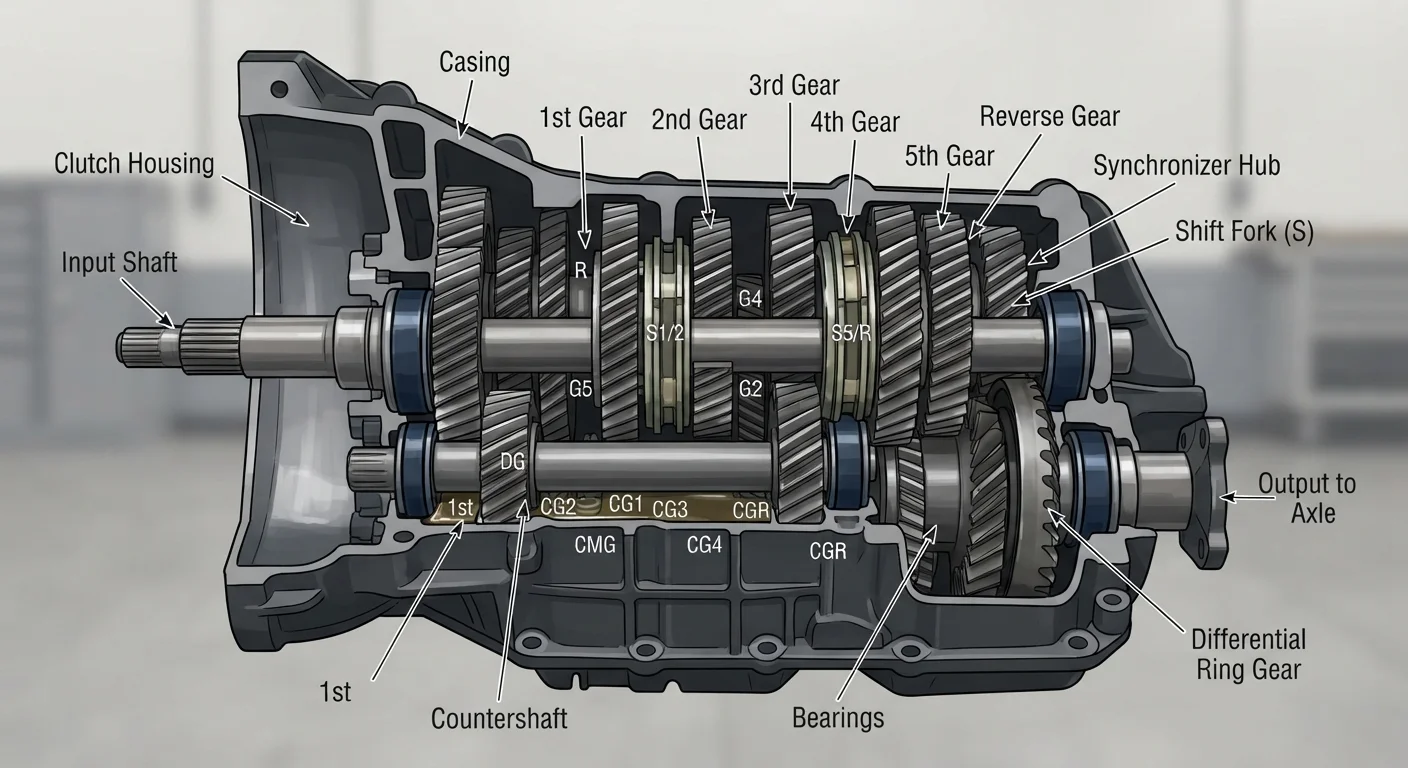
Photo credit: ProximityFinds.com | One-stop Reading Source
In this article
Learn why transmissions exist, how they manage gear ratios, and what distinguishes automatic, manual, and CVT designs.
Key Takeaways
- Your transmission converts engine power into the right amount of force and speed for driving conditions.
- Gear ratios allow the engine to stay in its efficient operating range at all vehicle speeds.
- Automatic, manual, and CVT transmissions achieve the same goal through different mechanical means.
- Transmission fluid is critical for lubrication and cooling - it needs regular inspection.
- Unusual noises, slipping gears, or delayed engagement are signs to have your transmission inspected promptly.
Why Your Engine Needs a Transmission
An internal combustion engine is only truly efficient within a relatively narrow band of speeds - typically between about 1,500 and 4,500 RPM depending on the engine. The problem is that your wheels need to turn anywhere from nearly zero (pulling away from a stop) to highway speeds. A direct, fixed connection between engine and wheels would make the car undriveable.
The transmission solves this by acting as a mechanical translator. It selects different gear ratios to keep the engine operating where it's happiest, regardless of how fast the car is moving. In a low gear, the engine spins many times for each wheel rotation - multiplying torque so the car can accelerate from a standstill. In a high gear, the relationship flips, letting the engine cruise at low RPM while the wheels spin fast.
8-10
Forward gears in many modern automatics
Increased gear counts in contemporary automatic transmissions help keep engines near peak efficiency across a wider speed range.
30K-100K mi
Typical transmission fluid change interval
Intervals vary significantly by vehicle model and fluid specification - always consult your owner's manual for the correct schedule.
~1,500-4,500
Efficient RPM range for most gas engines
The transmission's primary job is to keep engine speed within this band regardless of vehicle speed or load.
Automatic, Manual, and CVT: Three Approaches to the Same Problem
Manual transmissions put gear selection directly in the driver's hands via a clutch pedal and gear lever. Pressing the clutch disconnects the engine from the gearbox momentarily, letting you slide to a new gear. Enthusiasts value the control; daily commuters often prefer the simplicity of not managing it.
Automatic transmissions use a hydraulic torque converter and a set of planetary gear sets to shift gears on your behalf, based on throttle position and vehicle speed. Modern automatics often have six, eight, or even ten forward gears, allowing very fine-tuned power delivery and better fuel efficiency than their four-speed predecessors.
Continuously variable transmissions (CVTs) take a different approach entirely. Instead of fixed gear steps, a CVT uses a steel belt running between two variable-diameter pulleys. By adjusting the pulley diameters continuously, the transmission finds the ideal ratio for any situation - which is why CVT-equipped cars often feel like they're holding one long, steady note rather than stepping through gears.
Check Your Owner's Manual for Fluid Type
Not all transmission fluids are interchangeable. Using the wrong specification can cause shifting problems or accelerate wear. Your owner's manual or the dipstick tube label will specify the exact fluid type your transmission requires. When in doubt, ask a qualified mechanic before adding anything.
Keeping Your Transmission Healthy
The transmission contains dozens of moving metal parts spinning at high speed, and they all depend on clean transmission fluid to stay lubricated and cool. Low or degraded fluid is one of the most common causes of premature transmission wear.
Checking your transmission fluid is straightforward on many vehicles - similar to checking the oil - but some modern sealed units require a shop inspection. Either way, following your manufacturer's service interval matters. For a broader look at fluid maintenance, including brake fluid and coolant alongside transmission fluid, see our guide on your car's fluid system.
Beyond fluid, how you drive affects transmission longevity. Avoid holding the car on a hill with the throttle in an automatic (use the brake instead). Don't shift from reverse to drive while still rolling. And if you tow regularly, know your vehicle's rated tow capacity - overloading generates excess heat that breaks down fluid faster.
Unusual symptoms - a slipping sensation between gears, a delay when shifting from park to drive, shuddering during acceleration, or a burning smell - should prompt a visit to a qualified mechanic sooner rather than later. Catching a developing issue early is almost always less expensive than a full rebuild. For a complete picture of service intervals across your vehicle, our maintenance intervals reference is a useful starting point.
How the Transmission Connects to the Rest of the Drivetrain
The transmission doesn't work alone. Once it selects the right ratio, its output shaft connects to a driveshaft (in rear-wheel drive vehicles) or directly to a transaxle (in front-wheel drive layouts), which then turns the wheels. In all-wheel and four-wheel drive systems, a transfer case splits that power between front and rear axles.
Understanding this chain helps explain why transmission type matters when shopping for a specific drivetrain. AWD, 4WD, and FWD systems each integrate with the transmission in different ways, affecting how power is distributed under various road conditions.
“The transmission is arguably the most complex mechanical system in a modern vehicle. Most drivers never think about it - and that's exactly how it should be, until something goes wrong.”
— SAE International, Professional engineering organization for automotive and mobility industries
Frequently Asked Questions

Author
Automotive Editorial Team
Automotive Editorial Team is the collective byline for our editorial team and contributor network. Articles published under this byline or an editorial pen name are researched, written, and reviewed according to our editorial standards for clarity, consistency, and independence before publication.
View all articles →