
Common Myths About Charging Your Devices That Still Won't Die
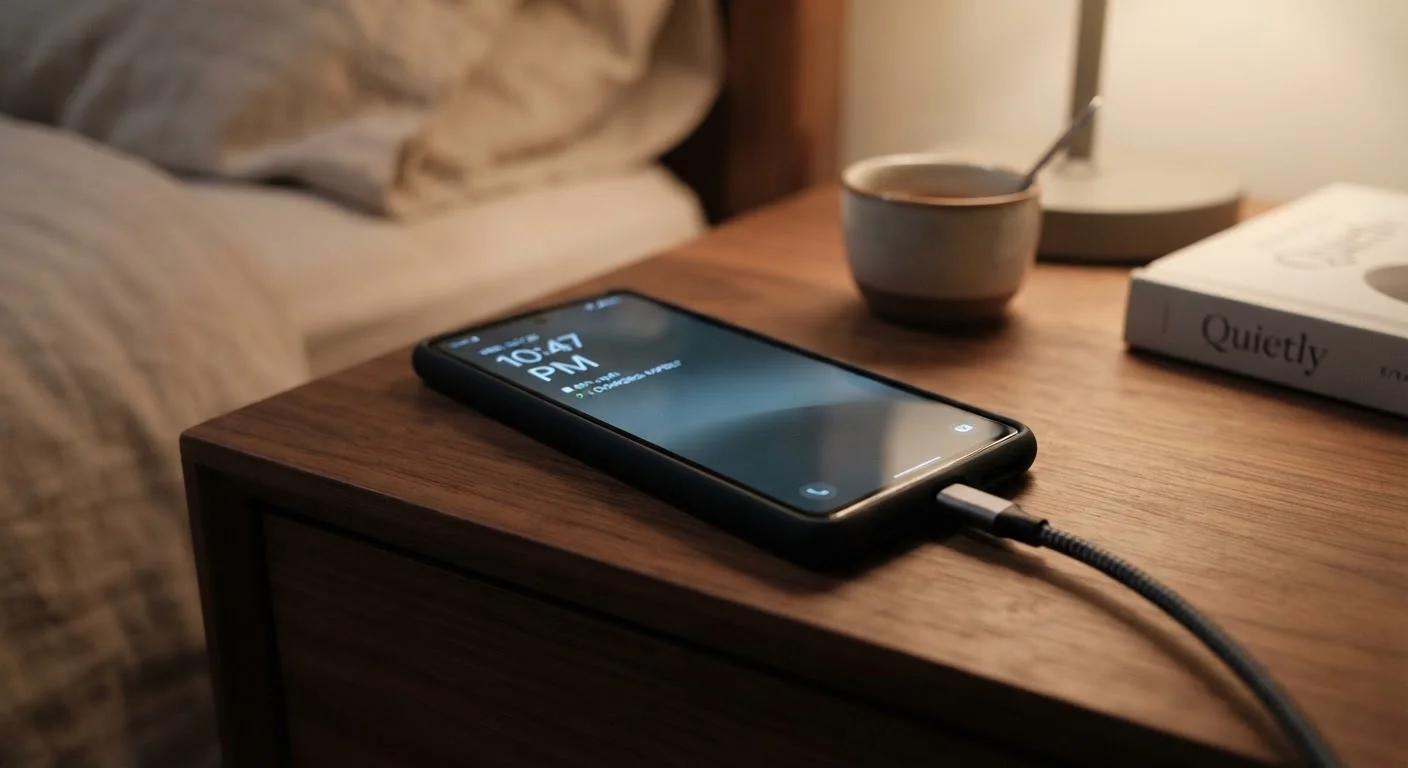
Photo credit: ProximityFinds.com | One-stop Reading Source
Should you drain your battery to zero before charging? Does overnight charging damage it? These persistent beliefs don't hold up to how modern batteries actually work.
Key Takeaways
- Modern lithium-ion batteries do not need to be drained to zero before recharging.
- Overnight charging is generally safe on current smartphones due to built-in charge management.
- Keeping a battery between roughly 20% and 80% charge tends to reduce long-term wear.
- Heat - not charging frequency - is typically the biggest driver of lithium-ion battery degradation.
- Third-party chargers are not inherently dangerous, but they must meet established safety standards.
Why These Myths Persist
Charging advice that circulates online and in conversation is often decades out of date. Much of it originated with nickel-cadmium (NiCd) and nickel-metal hydride (NiMH) batteries - chemistries that powered portable electronics through the 1990s and early 2000s. Those batteries genuinely benefited from periodic full discharge cycles to avoid a phenomenon called "memory effect," where the cell loses usable capacity if repeatedly charged from a partial state.
The problem is that lithium-ion (Li-ion) and lithium-polymer (LiPo) batteries - which power virtually every smartphone, tablet, and laptop sold today - work on fundamentally different electrochemistry. Memory effect is not a meaningful concern for these cells. The old rules not only fail to help; some actively work against battery longevity. Understanding what actually causes battery degradation starts with clearing out the misinformation.
The Myths, Corrected
The following misconceptions are among the most persistent. Each one is grounded in a partial truth or outdated context - which is exactly why they're hard to shake.
Myth
You should drain your battery completely to zero before recharging it.
Fact
Fully discharging a lithium-ion battery repeatedly accelerates wear rather than preventing it.
This rule applied to older NiCd batteries to prevent memory effect. Lithium-ion cells, by contrast, undergo more chemical stress at very low states of charge. Manufacturers generally recommend avoiding frequent deep discharges. Partial top-ups throughout the day are preferable, not harmful. Other smartphone myths follow a similar pattern - advice that sounds technical but doesn't match how current hardware actually behaves.
Myth
Charging your phone overnight will overcharge and damage the battery.
Fact
Modern smartphones stop drawing charging current once the battery reaches 100%, preventing overcharge.
Battery management systems built into devices and charging chips cut off or trickle power once full charge is reached. The bigger concern with overnight charging is sustained heat if the phone is in a case or on a soft surface that traps warmth. Some manufacturers have introduced "optimized charging" features that learn your schedule and slow the final charge percentage until just before wake time, reducing the time spent at 100%.
Myth
More charging cycles always means a shorter battery life.
Fact
Cycle count matters, but depth of discharge and heat exposure typically have a larger effect on capacity loss.
A charge cycle is defined as using a full 100% of capacity - whether in one discharge or across multiple partial ones. Shallow cycles (e.g., 50% to 80% repeatedly) consume far less than one full cycle each time and cause proportionally less degradation. Battery longevity is a product of multiple interacting factors, not cycle count alone. Heat and software habits often matter more than how often you plug in.
Myth
Third-party chargers always damage your battery or phone.
Fact
Certified third-party chargers that meet established electrical safety standards are generally safe to use.
The risk with chargers is not the brand - it's the absence of safety certification and quality control. Chargers that carry recognized testing marks have passed independent evaluation for voltage regulation, insulation, and fault protection. Counterfeit or uncertified accessories with no identifying marks are a legitimate concern. Checking for a certification mark before purchasing is a more useful filter than restricting yourself to manufacturer accessories.
Myth
Closing background apps saves battery and keeps your phone running faster.
Fact
Forcibly closing apps can actually increase battery consumption by requiring full app reloads from storage.
Mobile operating systems are designed to manage background processes efficiently. An app suspended in memory consumes negligible power. When you force-close it and then relaunch it, the processor does more work loading it fresh - potentially using more energy than leaving it suspended. Both Apple and Google have published guidance noting that closing apps is generally unnecessary for battery management on modern devices.
~500
Typical full charge cycles before noticeable capacity loss
Battery University, a widely cited reference maintained by Cadex Electronics, notes that lithium-ion cells typically retain around 80% capacity after approximately 300-500 full charge cycles under standard conditions.
~20°C
Optimal storage temperature for lithium-ion batteries
Research on lithium-ion degradation consistently identifies elevated temperature as a primary aging factor; storage and use near room temperature (around 20°C / 68°F) is associated with slower capacity loss.
Practical Habits That Actually Help
Now that the myths are out of the way, a few evidence-grounded habits are worth adopting. These are consistent with guidance from battery researchers and device manufacturers:
- Aim for the middle range. Lithium-ion cells experience the least electrochemical stress when kept roughly between 20% and 80% charge. Many smartphones now include settings that limit charging to 80% for this reason.
- Avoid sustained heat. Charging in direct sunlight, leaving a phone on a hot car dashboard, or using a phone intensively while it charges all raise cell temperature and accelerate wear. This is a more significant degradation factor than charging frequency.
- Use certified accessories. Chargers and cables that carry certification marks from recognized testing bodies (such as UL in the US) have been independently verified for electrical safety. Extremely low-cost accessories with no markings are the ones worth scrutinizing - not third-party products as a category.
For a broader look at protecting your investment, practical steps to extend the life of consumer electronics covers habits that apply across devices, not just batteries. And if you're curious how similar lithium-ion chemistry plays out at a much larger scale, EV battery fundamentals around range and charging provides useful context.
Watch for Heat During Charging
If your device becomes noticeably hot while charging - not just warm - remove it from its case and place it on a hard, flat surface in a cool area. Sustained high temperatures during charging can accelerate capacity loss over time. If a device regularly overheats during normal charging, that may indicate a hardware issue worth having evaluated by the manufacturer or a qualified repair technician.

Author
Technology Editorial Team
Technology Editorial Team is the collective byline for our editorial team and contributor network. Articles published under this byline or an editorial pen name are researched, written, and reviewed according to our editorial standards for clarity, consistency, and independence before publication.
View all articles →