
The Classic American Road Trip: What Makes a Route Truly Iconic
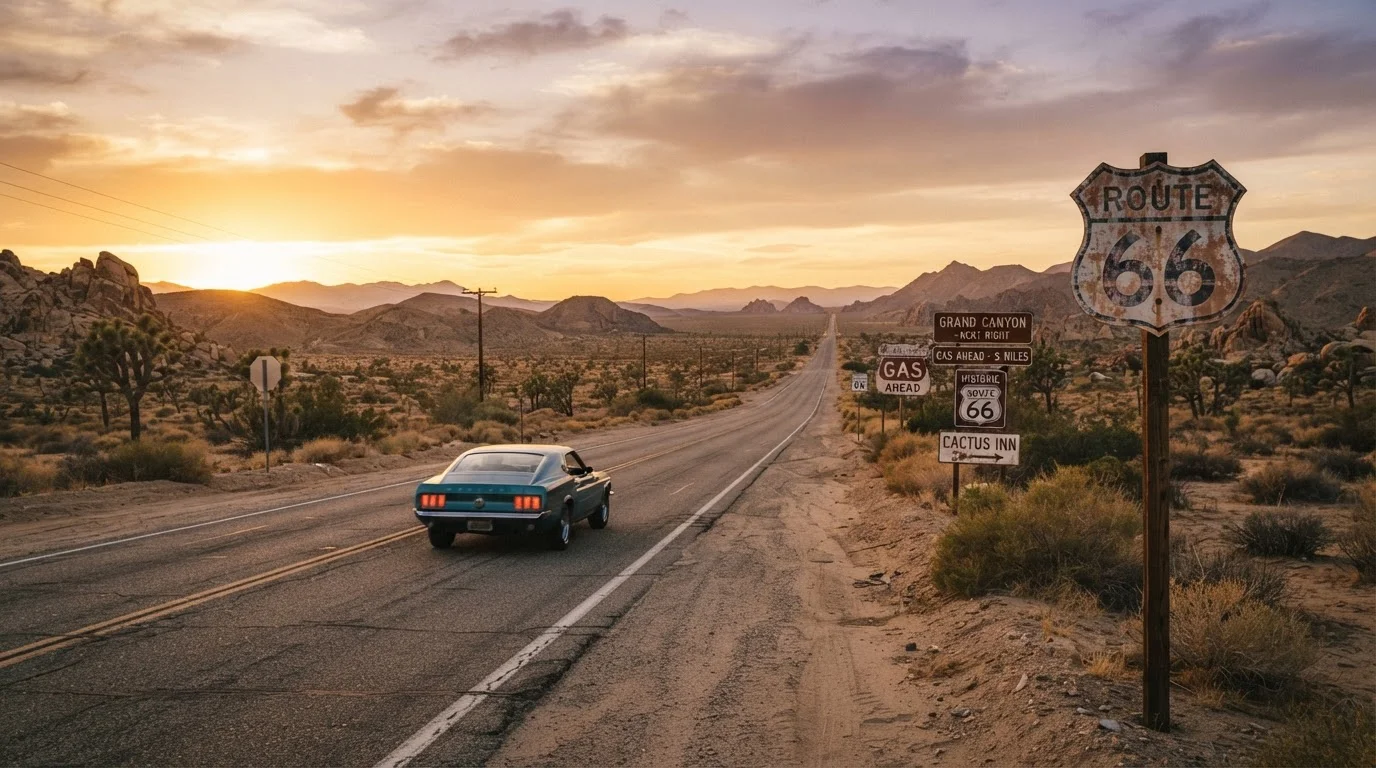
Photo credit: ProximityFinds.com | One-stop Reading Source
In this article
From Route 66 to the Pacific Coast Highway, explore what defines an iconic American road trip route and why certain drives endure in the national imagination.
Key Takeaways
- Iconic routes earn their status through a combination of scenery, history, cultural resonance, and accessibility.
- Route 66 and the Pacific Coast Highway are the two most culturally recognized American road trip corridors.
- A route doesn't need to be famous to be iconic - personal significance matters as much as national reputation.
- America's Byways program officially recognizes hundreds of scenic and historic routes across the country.
- The best road trips balance a destination mindset with openness to unexpected stops along the way.
The Ingredients That Make a Route Legendary
Not every long drive qualifies as iconic. The roads that endure in the American imagination share a particular alchemy: they combine landscape, narrative, and accessibility in a way that makes the journey itself the point - not just the destination at the end.
Scenery is the obvious starting ingredient. A road that cuts through Monument Valley, hugs a Pacific cliff face, or winds through Appalachian foliage in autumn gives drivers something visually unforgettable at nearly every mile. But scenery alone doesn't create legend.
History and cultural storytelling are equally powerful. Route 66 became mythic partly because John Steinbeck immortalized it in The Grapes of Wrath as the "Mother Road" - a lifeline for displaced families heading west. The Blue Ridge Parkway carries the weight of Depression-era construction and centuries of Cherokee history. When a road has a story, driving it feels participatory, not passive.
Accessibility matters too. Routes that are drivable in a standard car without special permits or extreme skill reach a wider audience, which broadens cultural adoption. The more people who share the experience, the richer the collective memory becomes.
150+
Routes in America's Byways program
The Federal Highway Administration recognizes over 150 roads across the US for scenic, historic, cultural, natural, recreational, or archaeological significance.
2,448 mi
Length of historic Route 66
Route 66 stretched from Chicago, Illinois to Santa Monica, California and was part of the original US Highway System established in 1926.
469 mi
Length of the Blue Ridge Parkway
The Blue Ridge Parkway connects Shenandoah National Park in Virginia to Great Smoky Mountains National Park in North Carolina and is among the most visited units of the National Park System.
America's Most Celebrated Corridors
Two routes consistently top any list of iconic American drives, and understanding why helps clarify what elevates a highway to legend status.
Route 66 ran 2,448 miles from Chicago to Santa Monica, California. Established in 1926, it became the spine of American westward migration and later a symbol of postwar road-trip freedom. Its decommissioning in 1985 only deepened its mythology - now travelers actively seek out surviving stretches, vintage neon signs, and mid-century diners as a kind of living archaeology.
Pacific Coast Highway (Highway 1) traces the California coastline with dramatic effect: sea stacks, elephant seal colonies, redwood groves, and cliff-side villages all appear in sequence. Unlike Route 66's historical weight, PCH earns its status almost entirely through natural spectacle paired with a relaxed California ethos.
Beyond those two, routes like the Blue Ridge Parkway, Going-to-the-Sun Road in Montana, and the Natchez Trace Parkway all carry official recognition under the Federal Highway Administration's America's Byways program - a designation that acknowledges scenic, historic, and cultural significance. For a full reference to what distinguishes these corridors from one another, see our US road trip route reference guide.
“The road is life. The open road is a beckoning, a strangeness, a place where a man can lose himself and perhaps find himself.”
— William Least Heat-Moon, Author of 'Blue Highways,' a celebrated account of back-road America
Personal Iconicity: When a Route Becomes Yours
There's a quieter dimension to iconic road trips that travel writing sometimes misses: the routes that aren't famous at all but feel monumental to the person driving them. A two-lane state highway through your home county, driven every summer since childhood, carries its own kind of legend - one built from personal memory rather than national mythology.
This matters practically. When planning a road trip, don't feel obligated to follow the marquee routes simply because they appear on every list. Lesser-known corridors often deliver the same ingredients - scenery, history, discovery - with significantly fewer crowds and lower costs. Our guide to America's underappreciated drives explores several standout options that rarely make the highlight reels.
Build in Buffer Days for Spontaneity
The most memorable road trip moments often happen off-schedule - a roadside fruit stand, an unmarked overlook, a diner with a story on every wall. When planning your route, build at least one or two buffer days so unexpected discoveries don't feel like setbacks. Rigid itineraries and iconic roads don't always mix well.
If you're weighing the type of landscape you want to anchor your trip, whether that's mountain passes and switchbacks or ocean cliffs and harbor towns, our comparison of mountain versus coastal drives can help you choose. What ultimately makes a route iconic is the combination of what the road offers and what you bring to it - curiosity, presence, and a willingness to stop when something looks interesting. That's the real formula.
Verify Conditions Before You Go
Road conditions on scenic routes - particularly coastal highways and mountain passes - can change due to weather, landslides, wildfires, or seasonal closures. Always check with your state's Department of Transportation or the relevant National Park Service page before departing. What's open in July may be completely inaccessible in February.
Frequently Asked Questions

Author
Travel Editorial Team
Travel Editorial Team is the collective byline for our editorial team and contributor network. Articles published under this byline or an editorial pen name are researched, written, and reviewed according to our editorial standards for clarity, consistency, and independence before publication.
View all articles →