
Vertical Space, Drawer Dividers, and Hidden Storage: Which Approach Works Best?
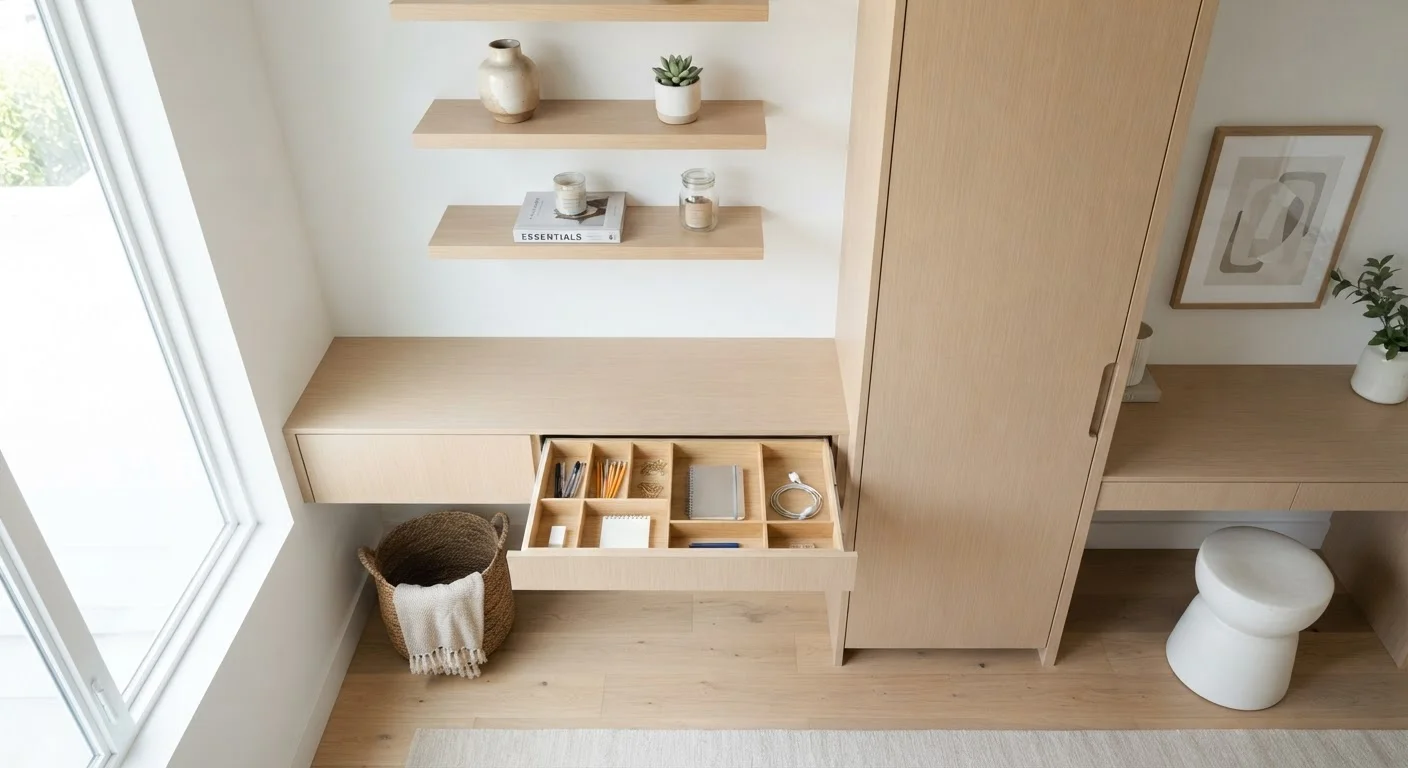
Photo credit: ProximityFinds.com | One-stop Reading Source
In this article
Not all storage solutions suit every home. Compare three popular organization approaches to find what fits your space and habits.
Key Takeaways
- Vertical storage maximizes floor space but requires accessible placement to stay practical.
- Drawer dividers work best for small items that tend to pile up and get lost.
- Hidden storage reduces visual clutter but can lead to forgotten items if not labeled.
- Most homes benefit from combining all three approaches rather than relying on just one.
- The best storage system is one you'll actually maintain over time.
Why Storage Strategy Matters More Than Storage Products
Walk into any home improvement store and you'll find hundreds of bins, baskets, and organizers - yet clutter persists in most American homes. The problem usually isn't a shortage of containers. It's an absence of a clear approach that matches how you actually use your space.
Three strategies consistently come up in home organization: using vertical space, adding drawer dividers, and incorporating hidden storage. Each solves a different problem, suits different rooms, and fits different personalities. Understanding what each method does well - and where it falls short - helps you invest effort and resources in the right direction. For a broader overview of how these strategies apply room by room, see the room-by-room organization guide.
Vertical Space: Going Up Instead of Out
When floor space is limited, the walls become your best asset. Vertical storage - wall-mounted shelves, tall bookcases, stacked cabinetry, pegboards, and over-door organizers - extends your usable storage area without claiming more square footage. This makes it especially valuable in small apartments, narrow kitchens, and compact laundry rooms.
Where It Works Well
- Kitchens: Open shelving above the counter keeps everyday dishes accessible while freeing counter space.
- Home offices: Floor-to-ceiling shelving organizes books, binders, and supplies without crowding a small workspace.
- Entryways: Tall coat hooks and wall-mounted cubbies keep bags, keys, and outerwear off the floor.
Common Pitfalls
Height is only useful if you can reach what's stored there. Items placed too high tend to go unused or require unsafe climbing. Reserve upper zones for seasonal or rarely needed items, and keep everyday essentials at eye level or below. For inspiration on squeezing more function from tight quarters, the small-space storage guide covers vertical tactics in detail.
Label Upper Shelves for Easy Reference
When storing items above eye level, attach a small label to the shelf edge or use a consistent color-coded bin system. This removes the need to pull everything down just to find what you need. A quick glance should tell you exactly what's there and whether anything is running low.
Drawer Dividers: Bringing Order to Everyday Chaos
Drawers are natural clutter magnets. Without structure, a kitchen drawer can swallow spatulas, rubber bands, spare batteries, and takeout menus into one unusable heap. Drawer dividers - whether adjustable inserts, separate containers, or built-in partitions - assign every item a fixed location, making it easier to find things and notice when something is out of place.
Where It Works Well
- Kitchen utensil drawers: Separating cooking tools from gadgets reduces rummaging time significantly.
- Bathroom vanity drawers: Cosmetics, hair accessories, and medications each get their own zone.
- Home office supply drawers: Pens, paper clips, and sticky notes stay sorted and retrievable.
- Bedroom dresser drawers: Folded clothing stays organized and visible rather than crumpled at the bottom.
Common Pitfalls
Rigid dividers that don't match your actual drawer dimensions often create dead zones. Adjustable or modular inserts tend to work better across different drawer sizes. The system also needs buy-in from everyone sharing the space - one person's habit of tossing things randomly will undo careful organization quickly. If you share your home, the shared-space organization guide offers useful strategies for building habits that stick for both people.
| Vertical Space | Drawer Dividers | Hidden Storage | |
|---|---|---|---|
| Best room fit | Kitchens, offices, entryways | Kitchens, bathrooms, bedrooms | Living rooms, bedrooms, entryways |
| Item visibility | High - items remain visible | Medium - visible when drawer is open | Low - items concealed behind doors |
| Ease of implementation | Moderate - may require installation | Easy - inserts drop into existing drawers | Moderate to high - may need furniture |
| Works for small items | Not ideal | Excellent | Adequate with labeling |
| Works for bulky items | Good on lower shelves | Poor - drawers have depth limits | Good in larger compartments |
| Visual impact on room | Prominent - adds visual weight | None - contained within furniture | Minimal - clean, uncluttered look |
| Risk of forgetting items | Low - items stay in view | Low to medium | High without labels |
| Cost to implement | Varies - shelving can be inexpensive | Generally low | Can be higher for furniture-based |
Hidden Storage: Calm on the Surface
Hidden storage - ottomans with interior compartments, beds with under-frame drawers, built-in window seats, furniture with concealed shelving - keeps a space looking tidy by moving clutter out of sight entirely. For living rooms, primary bedrooms, and entryways where visual calm matters, this approach can transform how a room feels without requiring you to own fewer things.
Where It Works Well
- Living rooms: Storage ottomans and media consoles with closed doors keep remotes, blankets, and game controllers invisible.
- Bedrooms: Under-bed drawers make use of dead space and hide off-season clothing.
- Entryways: Bench seating with interior storage handles shoes, hats, and bags elegantly.
Common Pitfalls
Out of sight can mean out of mind. Items stored in hidden compartments are easy to forget about, which can lead to the space filling up with rarely needed belongings. Labeling storage zones - even when they're concealed - helps maintain awareness of what's inside. For a look at how open versus enclosed approaches compare in closet contexts specifically, the closet shelving comparison is worth reading alongside this article.
Hidden Storage Can Become a Clutter Trap
Concealed storage is only effective when it's used intentionally. Without a clear system for what goes where, closed compartments tend to accumulate forgotten items - defeating the purpose. Before adding hidden storage, decide specifically what categories of items will live inside each space and label accordingly.
How to Choose - or Combine - These Approaches
The most effective home organization systems rarely rely on a single strategy. A well-organized kitchen might use vertical wall shelving for pots and pans, drawer dividers for utensils, and a closed cabinet with a concealed pull-out pantry for dry goods - all in the same room.
A few practical questions help clarify which method fits each space:
- Do you value visibility or calm? If seeing your belongings helps you stay organized, lean toward vertical open shelving. If visual clutter raises your stress, hidden storage earns its keep.
- What size are the items you're storing? Drawer dividers excel with small, loose items. Large or bulky belongings usually need shelving or concealed cabinets instead.
- Who else uses the space? The more people sharing an area, the simpler and more intuitive the system needs to be.
- How much maintenance will you realistically do? Complex systems get abandoned. Choose the approach you'll return items to consistently.
If you're curious about the philosophical side of decluttering that often underpins major organization overhauls, does minimalism actually help offers an honest counterpoint worth considering before committing to a full system overhaul. For terminology that comes up frequently in organization planning, the home organization glossary explains key concepts in plain language.

Author
Home Editorial Team
Home Editorial Team is the collective byline for our editorial team and contributor network. Articles published under this byline or an editorial pen name are researched, written, and reviewed according to our editorial standards for clarity, consistency, and independence before publication.
View all articles →