
Closet Organization: Open Shelving vs. Enclosed Storage
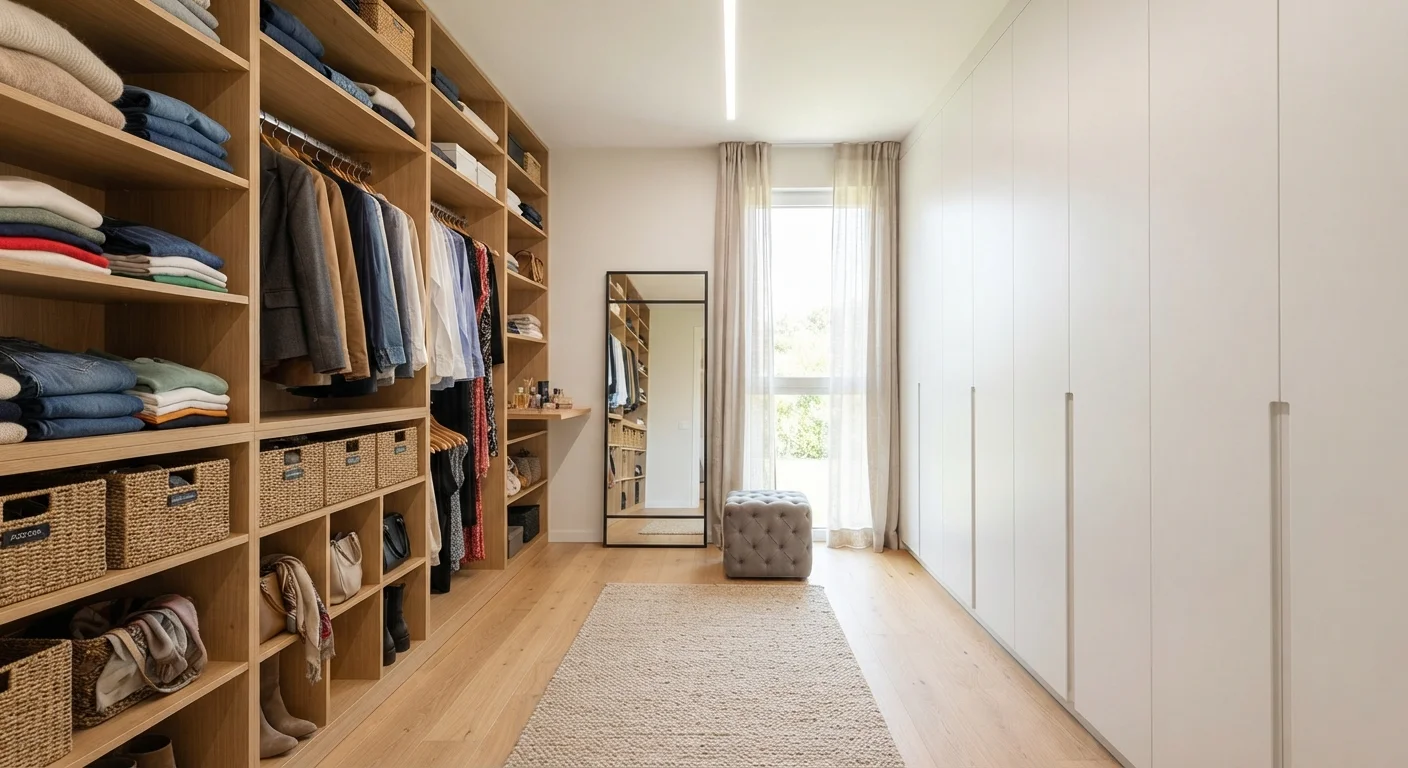
Photo credit: ProximityFinds.com | One-stop Reading Source
In this article
Open shelving keeps things visible; enclosed storage hides the chaos. See how each approach stacks up for different closet needs.
Key Takeaways
- Open shelving improves visibility and access but requires consistent tidiness to look its best.
- Enclosed storage hides clutter and protects items from dust, making it ideal for guest or linen closets.
- Most effective closets combine both approaches rather than relying on one exclusively.
- Your daily habits and the type of items stored should drive which system you choose.
- Decluttering before installing either system is essential for lasting results.
How Each System Actually Works
Open shelving means exactly what it sounds like: shelves without doors, panels, or covers, leaving everything stored on them in full view. In closets, this typically includes adjustable shelf units, hanging rods with shelf tiers above or below, and freestanding bookcases repurposed for folded clothing or accessories.
Enclosed storage uses cabinet doors, drawer fronts, or solid panels to conceal what's inside. In closets, this ranges from built-in wardrobe cabinets to modular drawer towers and armoire-style units. The defining feature is that stored items are hidden from sight when the doors are closed.
Both systems can be installed in virtually any closet, and many well-designed spaces use a combination of the two. Before settling on either, it's worth working through the decluttering process first - adding storage structure to an overcrowded closet only reorganizes the problem rather than solving it.
| Criterion | Open Shelving | Enclosed Storage |
|---|---|---|
| Visibility | Everything visible at a glance | Contents hidden behind doors |
| Dust protection | Items exposed to dust | Contents well protected |
| Typical installation cost | Generally lower | Generally higher |
| Flexibility to reconfigure | Easy to adjust | More difficult to change |
| Visual tidiness | Requires ongoing maintenance | Hides clutter instantly |
| Best closet type | Walk-in, reach-in, entryway | Linen, guest room, formal |
| Space efficiency | Uses full vertical height easily | May lose space to door swing |
The Real Trade-Offs to Consider
Visibility and access: Open shelving makes it easy to see everything at a glance, which reduces the time you spend searching for items. The downside is that visual clutter is always on display. A few misfolded sweaters or a stray accessory immediately shows. Enclosed storage masks those imperfections, but it can also cause out-of-sight, out-of-mind problems - items get forgotten and pile up inside drawers or at the back of shelves.
Dust and protection: Open shelves expose clothing and linens to dust, which matters most in infrequently opened closets. Enclosed systems naturally protect contents, making them preferable for seasonal clothing, fine linens, and anything stored for longer periods.
Cost and flexibility: Open shelving is generally less expensive to install and easier to adjust over time. Enclosed cabinetry costs more upfront and is harder to reconfigure. For smaller spaces or renters who can't make permanent changes, open systems often make more practical sense. See how this plays out alongside other approaches in our comparison of vertical space, drawer dividers, and hidden storage.
A Hybrid Approach Often Works Best
Most professional organizers recommend combining open and enclosed elements rather than choosing one exclusively. A common pattern is open shelving or hanging rods for items accessed daily, paired with enclosed drawers or cabinets for things stored less frequently. This balances convenience with a clean visual presentation. Before purchasing any system, sketch out what you store and how often you access each category - that map will guide smarter decisions than any single storage style can on its own.
For a broader look at how storage decisions fit into your whole home, the room-by-room home organization guide covers strategies for every space, not just closets.
Matching the System to the Closet Type
Not all closets serve the same purpose, and the right storage approach depends heavily on how a specific closet is used.
- Master bedroom walk-in: A hybrid approach works best here. Open shelving or hanging rods for everyday clothing and accessories, with enclosed drawers for undergarments, jewelry, or items you prefer to keep private.
- Reach-in bedroom closet: Open shelving maximizes the limited depth and keeps the space from feeling like a cave. Double-hanging rods paired with a few shelves above and a drawer unit below use the full height efficiently.
- Linen closet: Enclosed storage wins here. Towels and bedding accumulate dust quickly on open shelves; cabinet doors protect them and keep the hallway or bathroom looking clean.
- Entryway or mudroom closet: Open shelving suits high-traffic items like bags, shoes, and outerwear that need to be grabbed quickly. Hooks and cubbies - essentially open storage - outperform enclosed cabinets for daily-use gear.
If you're working with a particularly compact space, small-space storage strategies offer additional ideas for squeezing more function out of limited square footage.
~70%
Americans who report difficulty maintaining closet organization
According to a survey by the National Association of Professional Organizers, a large majority of U.S. households struggle with closet clutter and upkeep.
2x
Time saved locating items with visible storage systems
Professional organizers commonly note that open, labeled storage can roughly halve the time people spend searching for everyday items in their closets.

Author
Home Editorial Team
Home Editorial Team is the collective byline for our editorial team and contributor network. Articles published under this byline or an editorial pen name are researched, written, and reviewed according to our editorial standards for clarity, consistency, and independence before publication.
View all articles →