
Decluttering Before You Organize: Why the Order Matters
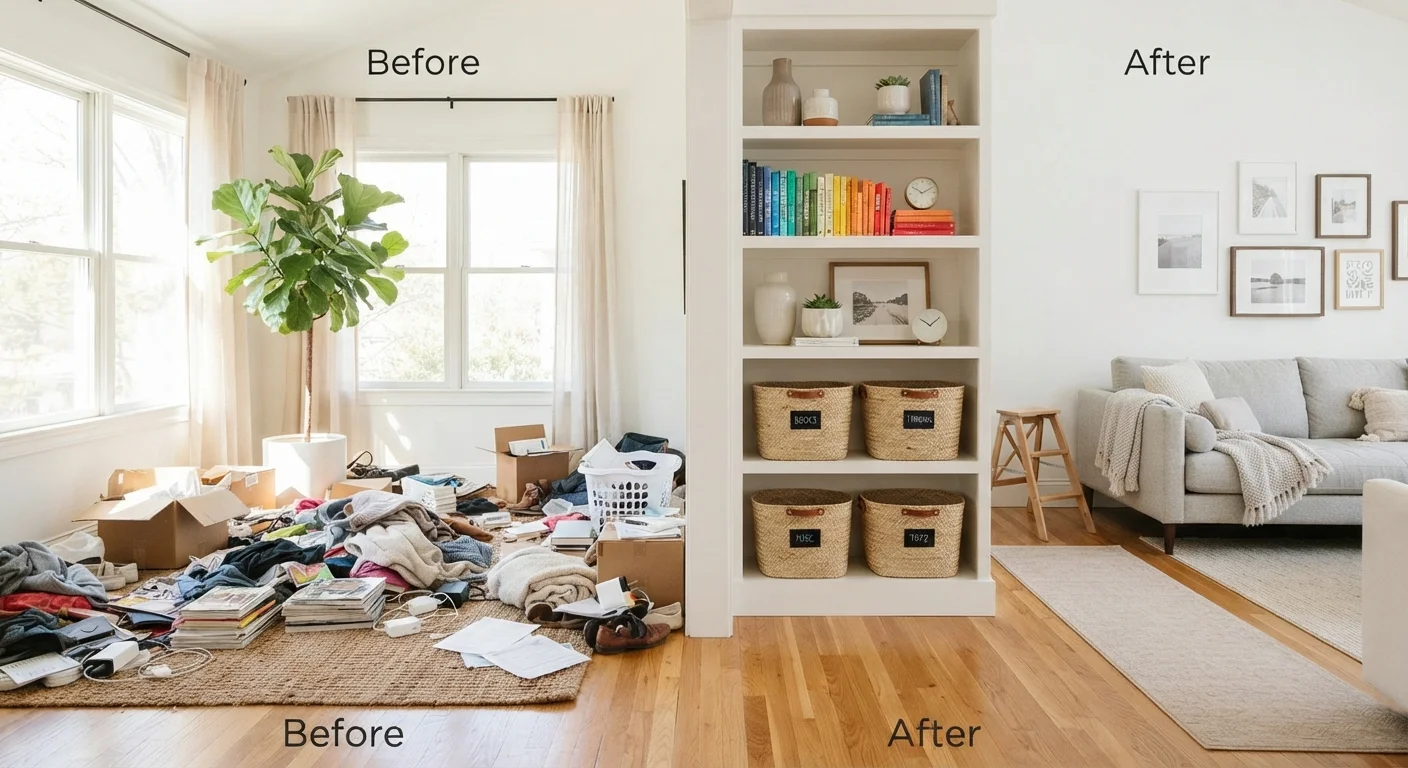
Photo credit: ProximityFinds.com | One-stop Reading Source
In this article
Skipping the declutter step is one of the most common organizing pitfalls. Here's why clearing out first leads to lasting results.
Key Takeaways
- Organizing before decluttering means you're building systems around items you may not need.
- Clutter adds decision fatigue, making every future retrieval and cleanup harder.
- Decluttering first reveals how much storage space you actually need.
- Buying containers before purging often results in wasted money and more clutter.
- The declutter-then-organize sequence produces more durable, low-maintenance results.
The Most Common Organizing Mistake Homeowners Make
Most people approach a messy room by heading to the store for bins, baskets, and shelf dividers. It feels productive - and it looks like organizing. But if those containers are filled with things you don't actually need, you've just given clutter a neater address.
This is the core problem: organizing and decluttering are two separate tasks, and sequence matters. Organizing is the process of assigning logical homes to items you're keeping. Decluttering is the prior step of deciding what deserves to stay at all. Attempting the second task without completing the first is like mopping a floor before sweeping - you're just moving the problem around.
As common beliefs about home organization often illustrate, buying more storage is frequently mistaken for a solution when the real issue is simply owning too much. More containers don't reduce clutter - they just obscure it.
Work One Zone at a Time
Trying to declutter your entire home at once is a reliable path to burnout. Instead, choose a single drawer, shelf, or corner and complete it fully before moving on. Visible progress in small zones builds momentum and keeps the project manageable over time.
What Happens When You Skip the Declutter Step
When you organize first, several problems emerge quickly:
- Your systems become overcrowded. Containers overflow, drawers don't close, and shelves feel chaotic within weeks because there was never enough space to begin with.
- Maintenance becomes exhausting. Every reset requires sorting through items you don't need alongside the ones you do. Decision fatigue sets in fast.
- You spend money unnecessarily. Storage products purchased before a purge often don't fit the space, the items, or the reduced inventory you'd have after decluttering.
- The root cause stays hidden. Organized clutter still slows you down when you're searching for something. Volume itself is the problem, not the arrangement.
Professional organizers consistently observe that spaces relapse into disorder much faster when decluttering was skipped. The systems simply weren't built on an accurate picture of what needed to be stored.
Decluttering Is a Decision Process
One reason skipping the declutter step feels tempting is that sorting and deciding what to keep is genuinely harder than buying containers. Organizing feels like action; decluttering requires judgment. Acknowledging this mental load - rather than avoiding it - is what makes the difference between a short-term fix and a lasting one.
How the Right Order Changes the Outcome
When you declutter first, something important becomes clear: you discover how much storage you genuinely need. This changes every decision that follows - which containers to buy, how many, what size, and whether you need additional furniture at all.
The sequence looks like this:
- Define the zone. Work one drawer, shelf, or room at a time. Don't pull everything out at once unless you have the time to finish.
- Sort ruthlessly. Divide items into keep, donate, discard, and relocate. Be honest about what earns its space.
- Assess what remains. Look at what's left with fresh eyes. Now you know your actual storage needs.
- Build your system. Choose containers, labels, and layouts based on the real inventory - not an inflated one.
This process naturally leads into a room-by-room home organization walkthrough, where you can apply these principles to every space methodically.
80%
Of clutter items rarely or never used
Professional organizing research consistently suggests the vast majority of household items are seldom or never touched after being stored, underscoring how much typical homes hold beyond genuine need.
1 in 4
American garages too cluttered to park in
U.S. consumer research surveys have found that roughly one quarter of American homeowners can't use their garage for its intended purpose due to accumulated belongings.
Staying Organized After You've Done the Work
Decluttering before organizing sets up strong foundations, but those foundations need maintenance. Clutter tends to creep back in quietly - one item at a time - until the system is overwhelmed again.
The most effective defense is building simple habits into daily life rather than relying on periodic overhauls. Returning items to their designated places immediately, doing a short weekly reset, and questioning every new item before it enters your home all reinforce the work you've already done.
It's also worth noting that this process isn't about achieving a perfectly minimal home. As an honest look at whether minimalism makes homes easier to organize points out, extreme reduction isn't necessary - or right for everyone. The goal is simply owning what you use and use what you own, then storing it logically.
Once you've worked through the declutter-first approach, the result isn't just a tidier space. It's a system that you can actually sustain.
Frequently Asked Questions

Author
Home Editorial Team
Home Editorial Team is the collective byline for our editorial team and contributor network. Articles published under this byline or an editorial pen name are researched, written, and reviewed according to our editorial standards for clarity, consistency, and independence before publication.
View all articles →