
Room-by-Room Home Organization: A Complete Walkthrough
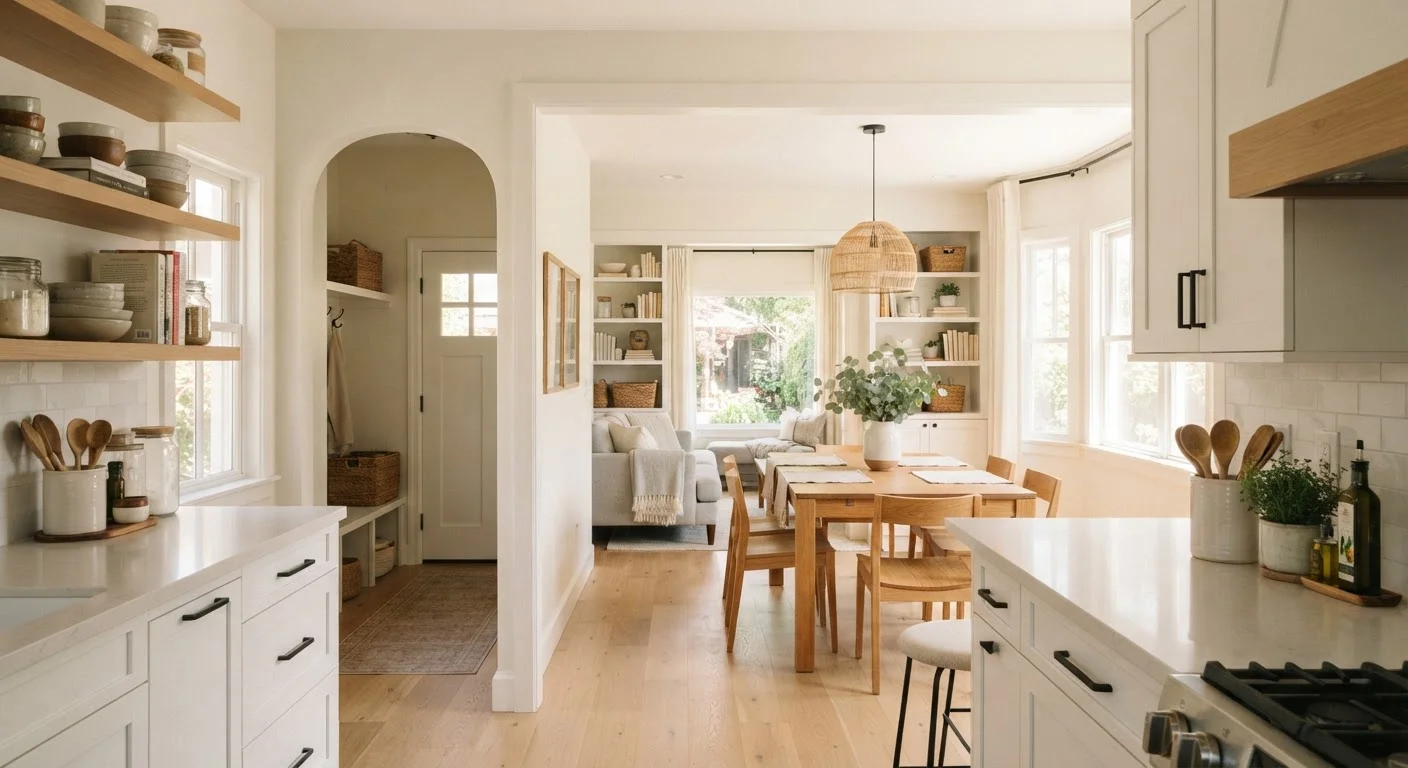
Photo credit: ProximityFinds.com | One-stop Reading Source
In this article
From the kitchen junk drawer to the bedroom closet, this end-to-end guide covers practical organization strategies for every space in your home.
Key Takeaways
- Tackling one room at a time prevents overwhelm and builds consistent momentum.
- Functional zones - grouping items by how and where you use them - are the foundation of lasting organization.
- Vertical storage and drawer dividers are simple, low-cost upgrades with outsized impact.
- A junk drawer isn't bad; an unmanaged junk drawer is - categorize and contain it.
- Daily micro-habits prevent re-accumulation far better than occasional marathon declutter sessions.
- Pair this guide with a seasonal declutter checklist for ongoing home maintenance.
Why a Room-by-Room Approach Works
Whole-home organization feels daunting until you break it into digestible pieces. Working room by room lets you finish something tangible before moving on, which builds momentum instead of fatigue. It also means your disruption is contained - the kitchen is in progress while the living room remains usable.
Before you start, it helps to understand a few foundational concepts. If terms like zones, capsule storage, or decanting are unfamiliar, our home organization glossary defines them in plain language. Once you know the vocabulary, the strategies in each section below will click faster.
25%
Time Americans spend searching for misplaced items
The National Association of Professional Organizers has cited that Americans spend roughly 25% of their time looking for lost or misplaced items in their homes.
80%
Clutter from indecision, not lack of space
Professional organizers commonly estimate that the majority of household clutter accumulates due to deferred decisions rather than insufficient storage capacity.
Kitchen: Tackle Counters, Cabinets, and That Junk Drawer
The kitchen accumulates clutter faster than any other room because it serves so many functions. Start with the countertops: keep only daily-use appliances out. Everything else belongs in a cabinet or pantry.
Cabinets and Pantry
- Group items by use: baking supplies together, canned goods together, spices near the stove.
- Place frequently used items at eye level; store rarely used items up high or in back corners.
- Use shelf risers to double usable vertical space inside cabinets.
The Junk Drawer
Every home has one, and that's fine. The goal isn't to eliminate it - it's to categorize what's inside. Empty it completely, discard duplicates and dead batteries, then sort what remains into small bins or dividers: one section for tools, one for batteries and cords, one for miscellaneous but genuinely useful items.
Before buying a single organizer, spend one week noticing exactly where mess accumulates and why - the answer usually reveals a missing 'home' for a specific category of item.
Purchasing storage products before understanding your actual habits leads to containers that don't match usage patterns and adds cost without solving the root problem.
Decant dry pantry goods - pasta, rice, oats - into uniform containers and label them. It takes one afternoon but dramatically reduces visual chaos and makes restocking faster.
Uniform containers eliminate the visual noise of mismatched packaging and allow you to gauge quantities at a glance, reducing both waste and unnecessary purchases.
Living Room: Create Zones and Contain the Clutter
Living rooms fail organizationally when they serve too many purposes without boundaries. Define activity zones - a reading nook, a media area, a homework corner - so each zone has its own dedicated storage.
- Baskets and ottomans with lids are your best friends here. They hide clutter while doubling as seating or surfaces.
- Remote controls, chargers, and small electronics should have a single, fixed home - a shallow tray on a side table works well.
- Children's toys benefit from a dedicated bin that can be easily carried out and put away. One bin per category (blocks, art supplies, puzzles) keeps sorting quick.
For smaller living spaces, see our guide on creative small-space storage ideas for room-specific solutions that maximize every square foot.
Label Everything at the Category Level
Resist the urge to over-label with very specific categories like 'HDMI cables from 2019.' Broad labels - 'Cables,' 'Remote Controls,' 'Batteries' - are flexible enough to accommodate new items without becoming inaccurate. A label system that grows naturally with your household will actually get used.
Bedroom and Closet: Build a System That Sticks
Bedroom disorganization usually traces back to a closet that doesn't reflect how you actually get dressed. Before buying any organizers, audit what's in your closet: pull everything out, donate items you haven't worn in a year, and group the rest by category (shirts, pants, jackets, accessories).
Closet Setup Principles
- Hang clothes you wear most often at eye and hand level.
- Fold and stack items that don't need hanging - sweaters especially - to save rod space.
- Use over-the-door hooks or pocket organizers for shoes, bags, or accessories.
Nightstand and dresser surfaces should hold only what you use nightly. A charging station, a book, a lamp - anything else belongs in a drawer or closet. Drawer dividers for socks and undergarments eliminate the daily rummage and take less than ten minutes to set up.
“A place for everything, and everything in its place - that principle sounds simple, but it only works when the 'place' you assign matches where you actually use the item.”
— Julie Morgenstern, Professional organizer and author of 'Organizing from the Inside Out'
Bathroom: Small Space, Big Impact
Bathrooms offer limited square footage and few natural storage solutions. The key is going vertical and auditing regularly, since expired products are common bathroom clutter culprits.
- Install a tension rod under the sink to hang spray bottles, freeing up the floor of the cabinet.
- Use drawer organizers for cosmetics and grooming tools - grouping by daily use versus occasional use.
- Over-toilet shelving provides real storage in almost any bathroom without requiring any permanent installation.
- Pare down to what you use within 30 days. Everything else is aspiration, not necessity.
Check Expiration Dates Before Reorganizing
Medications, sunscreens, and skincare products all carry expiration dates that affect both safety and efficacy. Before organizing your bathroom cabinet, check dates and properly dispose of expired items - many pharmacies offer medication take-back programs. Reorganizing expired products into tidy bins doesn't solve the real problem.
Garage and Storage Areas: Think Vertical
Garages lose function when everything gets stacked on the floor. Wall-mounted systems - pegboards, slat walls, or simple hook rails - move tools, sports equipment, and garden gear off the ground and into clear view.
- Divide your garage floor into zones: car zone, workshop zone, sports gear zone, seasonal storage zone.
- Use labeled, stackable bins for holiday decorations and seasonal items. Clear bins are preferable so contents are identifiable without opening.
- Hang bicycles from ceiling hooks to reclaim significant floor space.
Seasonal items - holiday decorations, camping gear, winter sports equipment - benefit from an annual audit. Our seasonal declutter checklist gives you a structured process to do this efficiently at the start of each season.
Keeping It Organized: Habits That Last
Organization isn't a single event - it's a system maintained by small, repeatable behaviors. The two highest-impact habits are the one-in-one-out rule (when something new enters your home, something old leaves) and a nightly reset (five minutes returning items to their assigned places before bed).
For a deeper look at the daily and weekly habits that prevent clutter from quietly rebuilding, see our piece on habits that keep clutter from coming back. These practices take far less effort than another full-home overhaul.
Finally, keep in mind that organization overlaps with general home upkeep. Tasks like clearing storage areas, checking HVAC filters, and tidying utility spaces often belong on both your organization list and your maintenance calendar - our seasonal home maintenance checklist addresses those practical intersections room by room.
Seasonal Declutter Checklist for Every Room
A structured, room-by-room checklist to help you audit clutter and reset your home at the start of each season. Ideal to pair with this walkthrough.
Small-Space Storage: Creative Ways to Maximize Every Square Foot
Practical strategies for apartments and smaller homes where every inch of storage capacity counts. Covers vertical storage, furniture choices, and more.
The One-In-One-Out Rule and Other Habits That Keep Clutter From Coming Back
Once you've organized each room, these daily and weekly habits prevent clutter from quietly rebuilding over time.

Author
Home Editorial Team
Home Editorial Team is the collective byline for our editorial team and contributor network. Articles published under this byline or an editorial pen name are researched, written, and reviewed according to our editorial standards for clarity, consistency, and independence before publication.
View all articles →