
Small-Space Storage: Creative Ways to Maximize Every Square Foot
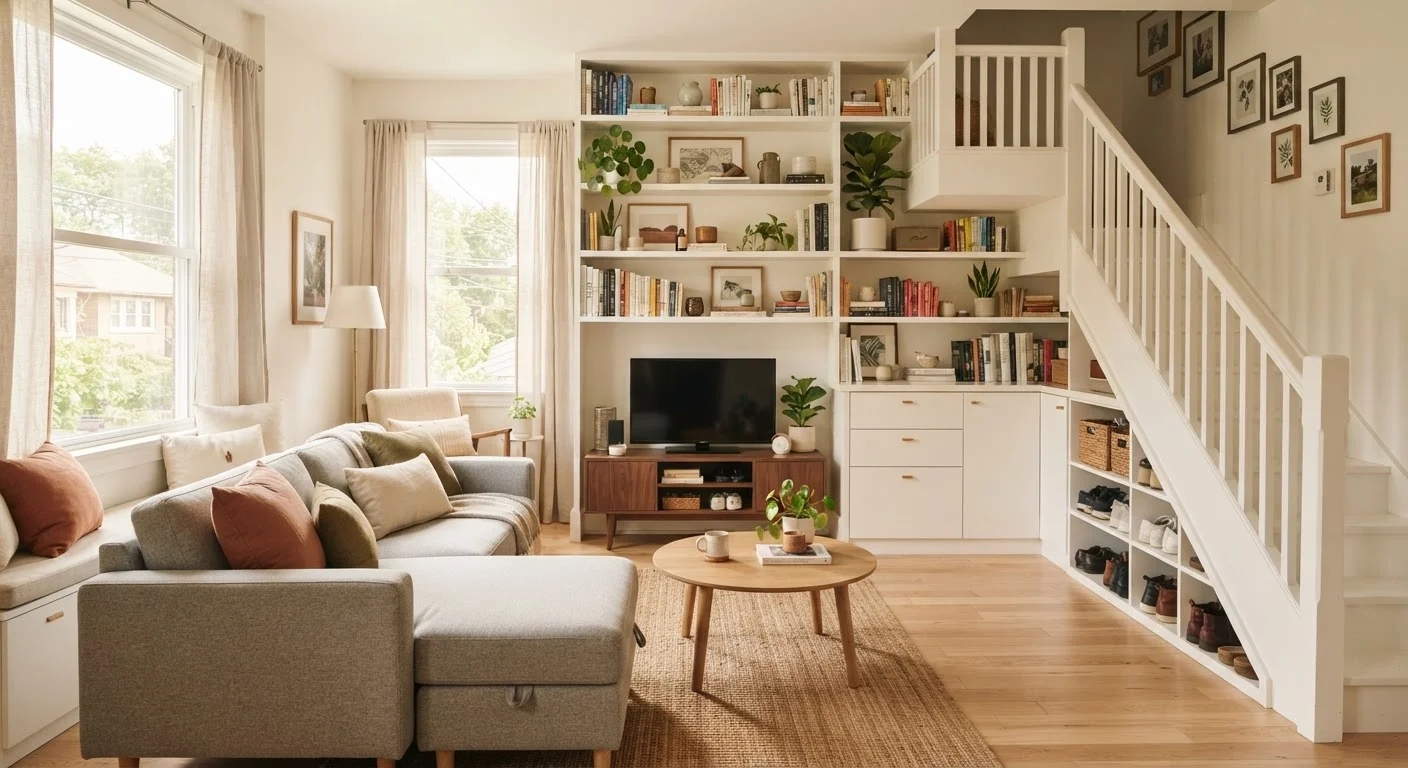
Photo credit: ProximityFinds.com | One-stop Reading Source
In this article
Living in a small home or apartment doesn't mean living in clutter. Explore practical strategies for squeezing more function out of tight spaces.
Key Takeaways
- Vertical wall space is often the most underused storage opportunity in small homes.
- Multi-functional furniture can eliminate the need for separate storage pieces entirely.
- Consistent organization systems matter more than the amount of storage you have.
- Dead zones - under beds, above cabinets, inside doors - can become valuable storage real estate.
- Decluttering before adding storage prevents new solutions from simply hiding old clutter.
Why small spaces demand smarter systems
Living in a compact apartment or a modest house doesn't require owning less - it requires storing more intentionally. The difference between a small home that feels cluttered and one that feels calm usually comes down to systems, not square footage. When every surface has a purpose and every item has a place, even a studio apartment can function like a well-organized home.
The strategies below are practical, low-cost, and adaptable to renters and owners alike. Whether you're organizing a single room or rethinking your entire floor plan, these approaches address the most common small-space pain points: not enough surface area, too much stuff, and unclear storage systems.
Start with one room, not the whole house
Tackling small-space storage room by room prevents overwhelm and helps you see results quickly. Begin with the space that causes the most daily frustration - often the kitchen or an entryway - then apply what works to the rest of the home. For a structured room-by-room approach, see Room-by-Room Home Organization: A Complete Walkthrough.
Six strategies for maximizing every square foot
Go vertical with wall-mounted shelving
Most small-space dwellers fill floor area to the limit while the wall space above eye level remains completely bare. Installing shelves from mid-wall to near the ceiling takes advantage of every inch without shrinking your floor footprint. Use upper shelves for rarely accessed items - seasonal décor, extra linens, archive boxes - and keep lower shelves for everyday essentials. Floating shelves work well in living rooms and kitchens; adjustable bracket systems adapt easily as your storage needs change.
Upper wall space is prime real estate that most homeowners never think to use.
Choose furniture that doubles as storage
Every piece of furniture in a small home should earn its place. Ottomans with interior compartments, platform beds with built-in drawers, dining benches with hinged lids, and coffee tables with lower shelves all provide hidden or accessible storage without adding bulk. When shopping, measure your space carefully and look for pieces scaled to smaller rooms - oversized storage furniture can visually crowd a room even if it holds more.
In a small home, furniture that doesn't offer storage is a missed opportunity.
Exploit dead zones: under beds, above cabinets, inside doors
Dead zones are the spaces most people ignore: the 12-inch gap above kitchen cabinets, the cavity under a bed frame, and the back surface of cabinet and closet doors. Flat storage bins slide under beds to hold off-season clothing or extra bedding. Decorative baskets on top of kitchen cabinets keep bulky appliances corralled. Over-the-door organizers - pockets, hooks, racks - can hold everything from shoes and cleaning supplies to pantry items. Identifying and activating these zones often reveals surprising capacity.
The space behind a door or under a bed can hold more than most people realize.
Use drawer dividers and container systems
A disorganized drawer effectively holds less than an organized one - items pile up, overlap, and become inaccessible. Simple dividers, bins, and trays within drawers and cabinets compartmentalize contents so you can find things quickly and fit more in. This principle applies to kitchen utensil drawers, bathroom vanities, home office desks, and bedroom dressers alike. For a deeper comparison of organizational approaches, see Vertical Space, Drawer Dividers, and Hidden Storage: Which Approach Works Best?.
An organized drawer holds more and functions better than an unorganized one of the same size.
Declutter before you add storage
Adding more storage to a cluttered space doesn't solve the underlying problem - it just relocates it. Before investing in shelves, bins, or organizers, sort through what you own and remove anything broken, duplicated, or no longer used. Donation, recycling, and disposal reduce the volume you need to store in the first place. This step makes every subsequent storage improvement more effective. If you'd like to explore this idea further, Does Minimalism Actually Make Homes Easier to Organize? offers a balanced perspective.
Reducing what you own is the only storage solution that works in every home.
Create dedicated zones for every category
When items don't have a designated home, they migrate to flat surfaces and create visual clutter. Assign a specific zone to each category - mail, charging cables, reusable bags, cleaning supplies - and return items to that zone after every use. Label shelves and bins if that helps household members (including children) maintain the system. Consistent zones reduce search time, prevent pile-ups, and make it easier for multiple people to keep shared spaces tidy. For shared living situations, Organizing a Shared Space When You and Your Partner Have Different Habits covers strategies for building systems everyone can follow.
Every item needs a home - otherwise it ends up on a counter or a chair.
Storage and home improvement overlap
Some storage upgrades - such as built-in cabinetry, closet systems attached to walls, or structural shelving - may require permits or professional installation depending on your local building codes and whether you rent or own. Always check with your landlord or local permitting office before making permanent modifications. The Home Improvement hub covers a range of upgrade considerations for homeowners.
Putting it all together
Maximizing a small space is less about finding a single magic solution and more about layering several modest improvements. Going vertical adds capacity. Multi-use furniture eliminates redundancy. Activating dead zones recovers space you already own. Consistent organizational systems keep everything accessible. None of these changes requires a renovation - most can be implemented over a weekend with basic tools.
If your storage challenges extend to closets specifically, Closet Organization: Open Shelving vs. Enclosed Storage breaks down the trade-offs between visibility and containment. And if you're working with outdoor square footage too, Container Gardening: Growing Outdoors When Space Is Limited shows how the same space-efficiency mindset applies to balconies and patios.
Start small, stay consistent, and revisit your systems as your needs evolve - effective storage is a habit, not a one-time project.

Author
Home Editorial Team
Home Editorial Team is the collective byline for our editorial team and contributor network. Articles published under this byline or an editorial pen name are researched, written, and reviewed according to our editorial standards for clarity, consistency, and independence before publication.
View all articles →