
Getting Started When Your Home Feels Completely Disorganized
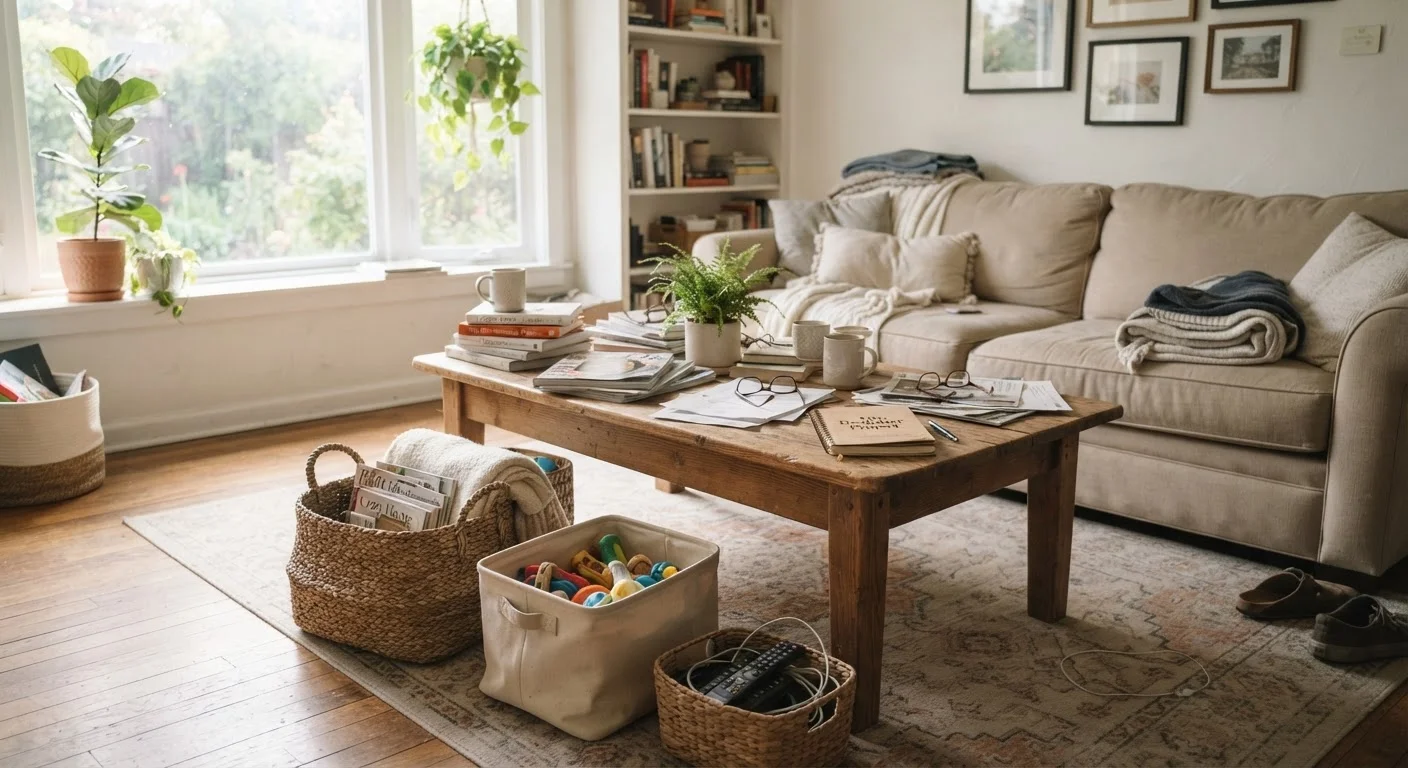
Photo credit: ProximityFinds.com | One-stop Reading Source
In this article
If you don't know where to begin, this beginner's guide breaks home organization into manageable steps — no experience needed.
Key Takeaways
- Decluttering before organizing is the single most important step most beginners skip.
- Starting with one small, high-traffic area builds momentum faster than tackling everything at once.
- A good organization system matches how you actually live, not how you wish you lived.
- Maintenance habits - not a perfect setup - are what keep spaces tidy long-term.
- You don't need bins and labels to begin; clarity about what you own comes first.
Why Getting Started Feels So Hard
Standing in the middle of a disorganized home, the sheer volume of stuff can make the whole project feel impossible before you've touched a single item. That paralysis is normal - and it has nothing to do with your ability to get organized.
The problem is usually one of scale. When every room feels like a problem, there's no obvious first move. The solution isn't motivation or willpower; it's a smaller scope. You don't need to fix everything - you need to fix one thing well enough to build confidence for the next.
It also helps to understand that disorganization rarely happens because of laziness. It happens because homes accumulate things faster than systems are put in place to handle them. That's a solvable process problem, not a character flaw.
The One Rule: Declutter Before You Organize
If there's a single principle that separates lasting organization from temporary tidying, it's this: you must reduce before you arrange. Organizing items you don't need just moves the problem around.
Many beginners skip this step and go straight to buying bins and labels. The result is a neatly packaged home full of things that weren't worth keeping. See our guide to decluttering before you organize for a detailed walkthrough of why sequence matters.
A practical decluttering framework: touch everything in a given area and ask whether it's used regularly, irreplaceable, or genuinely loved. If it doesn't meet any of those criteria, it's a candidate to leave. Sort into four categories - keep, donate, recycle, and trash - before a single item goes into a storage container.
How to Choose Where to Begin
The best starting point isn't the biggest mess - it's the space that affects your daily life most. High-friction zones are where clutter costs you time and stress every single day. Common first candidates include:
- Entryways: Where items pile up the moment you walk in. A functional landing zone sets the tone for the whole home. Our article on setting up a functional entryway covers this in depth.
- Kitchen counters: Surfaces used constantly that become default drop zones for unrelated items.
- A single drawer or shelf: If the whole room is daunting, a drawer is a 15-minute win that feels genuinely satisfying.
Choose one zone. Finish it completely - declutter, assign homes, contain what remains - before moving on. Partial progress across many spaces is harder to maintain than complete progress in one.
Building a System That Actually Holds
An organization system fails when it asks more of you than your actual daily habits can sustain. A good system makes the tidy choice the easy choice - things go back where they belong because that location makes sense.
Three principles guide durable systems:
- Proximity: Store things as close as possible to where they're used. Coffee mugs belong near the coffee maker, not across the kitchen.
- Visibility: If you can't see something, you'll forget it's there. Open shelving, clear containers, and labeled bins reduce the mental load of remembering where things live.
- Friction reduction: The fewer steps required to put something away, the more likely it will happen. Lids on bins add a step; open-top containers don't.
Homes where two people share space need systems that account for two sets of habits. Our article on organizing a shared space with different habits addresses that specific challenge.
For insights into why even well-designed systems can unravel, see why organized spaces stop working within weeks.
Moving Forward Room by Room
Once you've completed your first zone, you have a template. Repeat the same process - declutter, assign, contain - in the next space. Over time, the whole home becomes a series of solved problems rather than one giant unsolved one.
Our room-by-room home organization walkthrough gives you a practical sequence and specific strategies for every major space, from the kitchen junk drawer to the bedroom closet.
If you're also setting up a new home from scratch, pairing your organization work with a functional tech setup makes everyday life smoother. Our guide to building a home tech setup is a useful complement once the physical spaces are in order.
Organization is not a one-time project - it's an ongoing practice. Scheduling a brief weekly reset (10-15 minutes per room) prevents gradual drift back to chaos. The goal isn't a perfect home; it's a home that works consistently for the people living in it.
Frequently Asked Questions

Author
Home Editorial Team
Home Editorial Team is the collective byline for our editorial team and contributor network. Articles published under this byline or an editorial pen name are researched, written, and reviewed according to our editorial standards for clarity, consistency, and independence before publication.
View all articles →