
Setting Up a Functional Entryway That Actually Stays Tidy
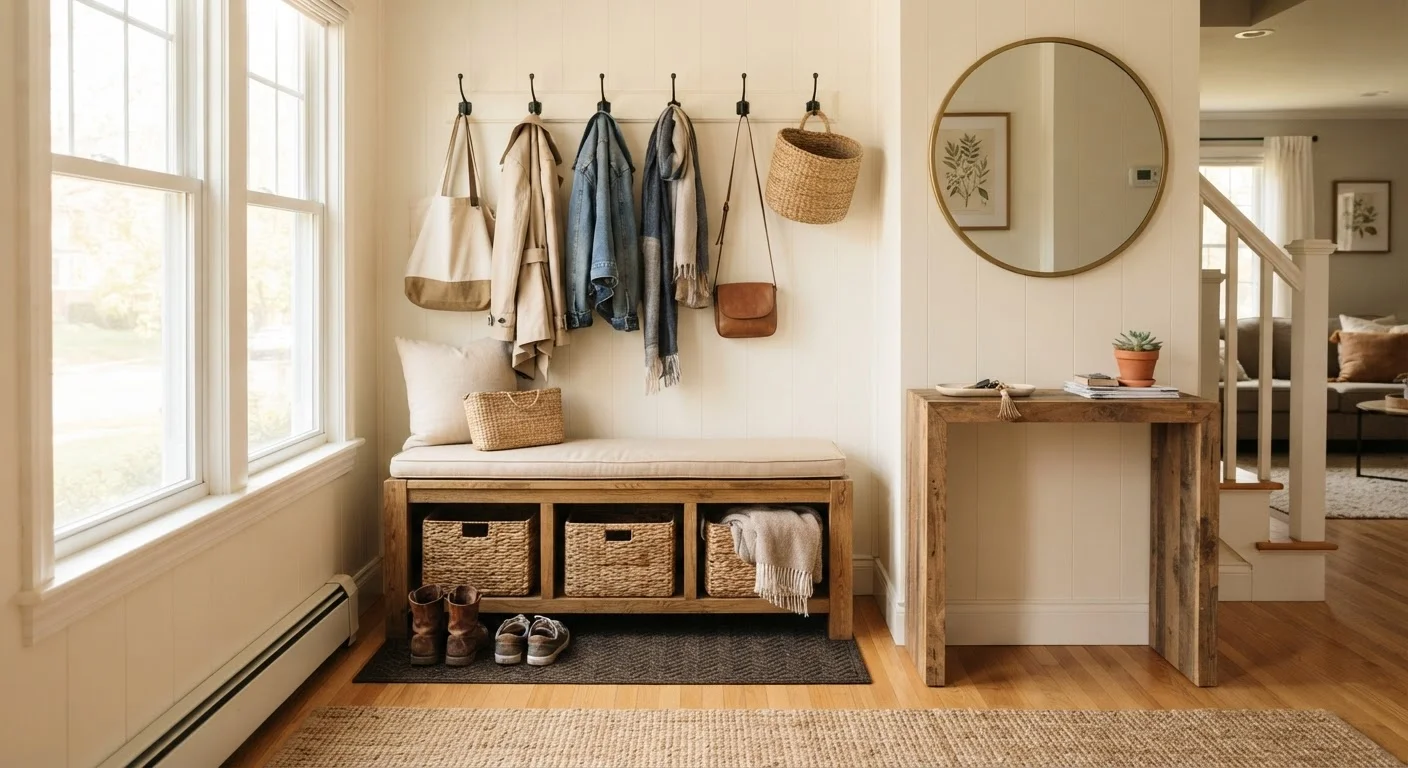
Photo credit: ProximityFinds.com | One-stop Reading Source
In this article
The entryway sets the tone for your whole home. Here's how to design and maintain a landing zone that prevents clutter from spreading indoors.
Key Takeaways
- Every entryway needs a dedicated spot for keys, shoes, bags, and outerwear to prevent clutter.
- Hooks, trays, and benches are the three workhorses of a functional landing zone.
- Decluttering before you organize is critical - storage solutions can't fix too much stuff.
- Consistent drop-zone habits prevent the entryway from becoming a dumping ground.
- Even small entryways can be organized effectively with vertical storage and slim furniture.
Why the Entryway Deserves Your Attention First
The entryway is the first space you enter and the last you pass through - which makes it uniquely prone to becoming a catch-all for shoes, mail, reusable bags, and whatever else people shed the moment they walk in. When it's disorganized, that disorder tends to migrate deeper into your home.
If you're working through a broader home organization project, the entryway is an ideal starting point. It's typically small, yields fast results, and establishes habits that carry room to room. For a full-home approach, see our room-by-room organization walkthrough.
Before adding any storage furniture or baskets, you need to clear out what's already there. Organizing over clutter just buries the problem. Our guide on decluttering before you organize explains why that sequence matters so much.
What you will need
What You'll Need
You don't need to spend a lot to create an effective entryway. The goal is to match storage solutions to the specific items your household actually brings through the door - not to recreate a catalog photo.
Wall-mounted coat hooks
Provide a consistent, designated spot for coats, bags, and hats at eye level.
Entry bench or shoe rack
Gives household members a place to sit while removing shoes and keeps footwear off the floor.
Small tray or bowl
Corrals keys, sunglasses, and small everyday items so they're easy to find on the way out.
Baskets or bins
Contain miscellaneous items like dog leashes, reusable bags, or sports accessories.
Slim console table
Provides a surface for a tray and mail sorting without consuming too much floor space.
Over-door organizer
Adds storage vertically on the back of a door in entryways too narrow for furniture.
Step-by-Step: Building Your Entryway System
Follow these steps in order. Skipping ahead to storage shopping before you've assessed what you need is one of the most common organizing mistakes.
Empty and assess the space
Remove everything from the entryway - shoes, coats, bags, stray mail, everything. Lay it out in a nearby room and sort it into categories: outerwear, footwear, bags, everyday carry items (keys, wallets), mail and paperwork, and miscellaneous.
This audit tells you exactly how much storage you need and what types. Most entryways serve far more categories than homeowners realize until they see them all at once.
Purge items that don't belong there
From your sorted piles, remove anything that isn't used near the door regularly. Seasonal coats that haven't been worn in months, shoes that live in closets, old mail - relocate or discard them.
If you find this step challenging, the decluttering-first guide walks through the decision-making process in detail.
Install wall hooks at the right height
Hooks are the backbone of any entryway. Mount a row at adult shoulder height for coats and bags, and add a lower row (or individual hooks) at child height if needed. Use a level to keep them straight, and anchor into wall studs or use appropriate wall anchors for your wall type.
As a general rule, allow at least one hook per regular household member plus one or two for guests.
Add a shoe solution at the door
Choose a shoe storage method based on your household's volume: a simple tray or mat for two people who leave one or two pairs by the door, or a bench with under-seat storage for larger families. Limit the number of pairs allowed at any time - typically one active pair per person - and establish that the rest go in a closet.
Create a dedicated spot for everyday carry items
Keys, wallets, sunglasses, and transit cards need a fixed home near the door. A small tray, bowl, or wall-mounted key organizer works well. The rule is simple: these items always go in one place, every single time.
If your entryway has room, a slim console table provides both a surface for a tray and space below for baskets.
Handle mail and paper at the door
Mail dropped on a console table becomes a pile within days. Add a small wall-mounted mail sorter or a single designated tray for incoming paper. Establish a rule: mail gets sorted the day it arrives - recycling junk immediately, filing or acting on the rest. Don't let the entryway become a paper archive.
Vertical Space Is Your Best Friend
Narrow entryways can still be highly functional if you think vertically. Wall hooks, over-door organizers, and floating shelves take advantage of height without eating into floor area. Even a 24-inch-wide entry nook can accommodate a hook rail, a small shelf, and a shoe tray if planned well.
Keeping It Tidy Long-Term
The hardest part of entryway organization isn't the setup - it's the maintenance. Every system eventually drifts if no one actively resets it. The fix is making the tidy behavior easier than the messy one.
Give every item a dedicated home and make sure all household members know where that home is. If someone consistently drops their bag in the wrong spot, the solution is usually that the right spot is inconvenient - adjust the system, not the person.
Overfilling Storage Defeats the Purpose
When hooks are always packed with coats or bins overflow with miscellaneous items, household members stop using the system - there's no room. Build in a small buffer: hooks should never be at 100% capacity. Seasonal coats, for example, belong in a closet, not the everyday entryway rotation.
For households where partners or roommates have different tidiness habits, the shared-space organizing guide offers practical strategies for building consensus. And to prevent clutter from quietly creeping back after your setup is done, the one-in-one-out rule guide covers the daily habits that make the difference.

Author
Home Editorial Team
Home Editorial Team is the collective byline for our editorial team and contributor network. Articles published under this byline or an editorial pen name are researched, written, and reviewed according to our editorial standards for clarity, consistency, and independence before publication.
View all articles →