
International Roaming, Local SIMs, and eSIM Travel Plans: A Traveler's Overview
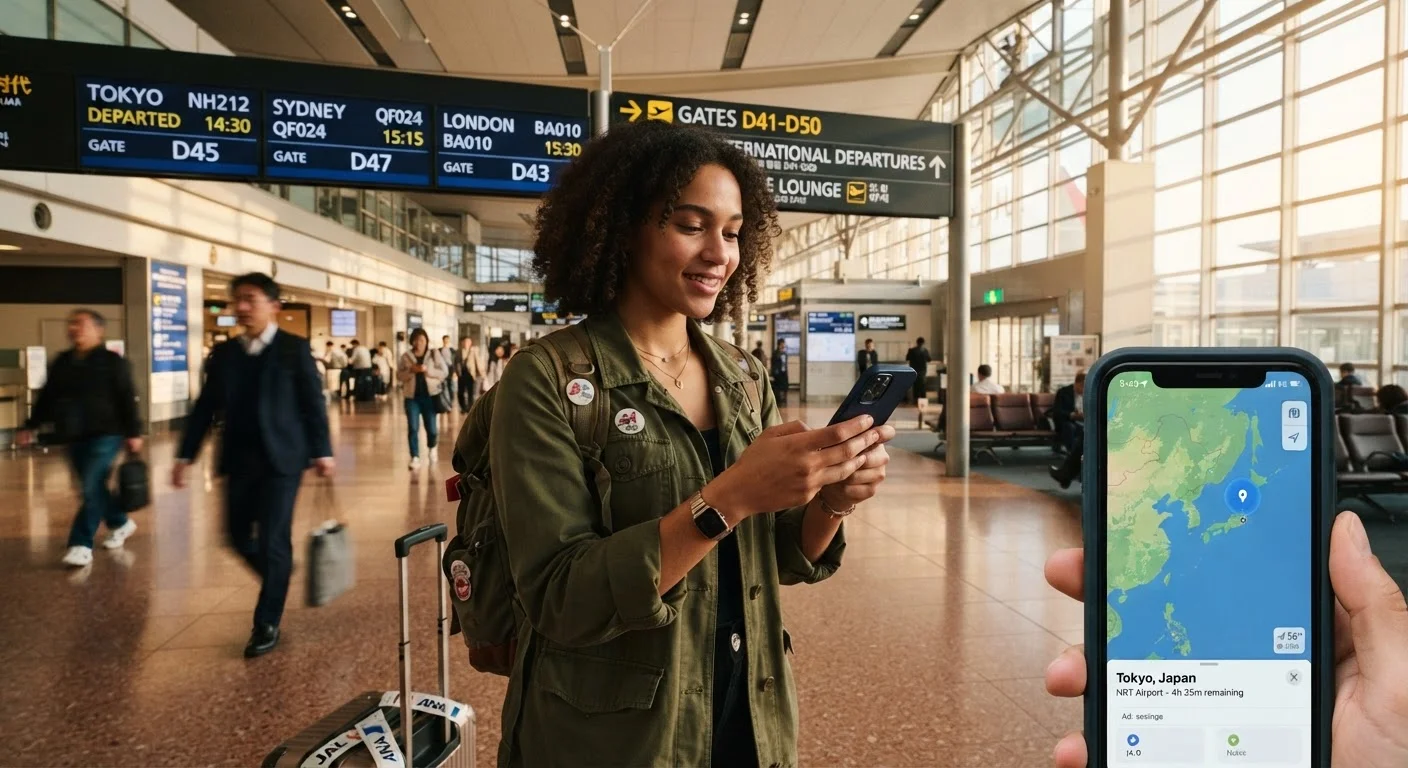
Photo credit: ProximityFinds.com | One-stop Reading Source
In this article
Understand your options for staying connected abroad—roaming plans, local SIM cards, and travel eSIMs—and what each one actually costs you.
Key Takeaways
- International roaming is the most convenient option but often the most expensive per megabyte.
- Local SIM cards offer the best value on longer trips but require an unlocked phone.
- Travel eSIMs combine convenience and reasonable pricing without swapping physical cards.
- Your home carrier's plan tier heavily influences which option makes financial sense.
- Always verify your phone is unlocked and eSIM-compatible before departure.
Why Your Default Carrier Plan May Not Cut It Abroad
Most Americans don't think about international connectivity until they land and see a roaming charge notification. Understanding your options before departure - not after - is what separates a manageable phone bill from a genuinely unpleasant surprise. See our detailed breakdown of roaming versus local SIM options for a deeper cost comparison across trip types.
The three main approaches - carrier roaming plans, local SIM cards, and travel eSIMs - each involve real trade-offs across cost, convenience, and coverage. The right choice depends on your destination, trip length, phone model, and how much friction you're willing to accept.
| International Roaming | Local SIM Card | Travel eSIM | |
|---|---|---|---|
| Setup required | Minimal - auto-activates | Moderate - buy on arrival | Low - download before departure |
| Typical cost (1 week) | High ($70-$140+) | Low ($10-$30) | Moderate ($20-$60) |
| Keeps US number active | Yes | No | Yes (dual SIM) |
| Phone unlock required | No | Yes | Varies by device |
| Multi-country support | Yes, via carrier partners | Requires new SIM per country | Yes, regional plans available |
| Best trip length | 1-3 days | 7+ days, single country | Any length, multi-country |
| Data speed reliability | Often throttled abroad | Full local network speeds | Varies by provider |
International Roaming: Convenient but Watch the Fine Print
Roaming through your home carrier means your existing US number works abroad - calls, texts, and data flow through partner networks in the destination country. Major US carriers offer international day passes or monthly add-ons that activate automatically when you land.
The appeal is obvious: no new SIM, no configuration, your existing contacts and apps work immediately. The downside is cost. Day-pass structures typically charge a flat fee per 24-hour period regardless of how much data you actually use. On a two-week trip, those daily charges stack up considerably.
Roaming Charges Can Accumulate Silently
Background app activity - email syncing, app updates, cloud backups - continues consuming data even when you're not actively using your phone. Without a capped roaming plan, these background processes can generate unexpected charges. Enable data roaming manually only when needed, or set your phone to Wi-Fi only mode when not actively navigating or communicating.
Coverage quality also varies. Your carrier's roaming partner in a given country may not be the strongest local network, so speeds can disappoint even when a signal exists. For travelers on premium unlimited plans, roaming data is often throttled to lower speeds after a set threshold.
Roaming works best for trips of three days or fewer, or for travelers whose employer reimburses the cost. If you're spending more than a week abroad, the math typically favors an alternative.
Local SIM Cards: Best Value, Most Setup Required
Purchasing a prepaid SIM from a local carrier at your destination gives you a local phone number and access to that country's domestic data rates - which are almost always dramatically cheaper than US roaming rates. A week of data that costs $70-$100 via roaming might run $10-$20 on a local prepaid SIM.
The conditions: your phone must be unlocked, meaning your US carrier hasn't software-restricted it to their own network. Many phones sold on installment plans remain locked until fully paid off. Understanding what unlocked status actually means is essential before assuming this option is available to you.
Check Unlock Status Before You Pack
Contact your US carrier at least a week before departure to confirm your phone's unlock status. If your device is still locked, carriers are generally required to unlock it once you've met their eligibility criteria - but processing can take several business days. A locked phone eliminates both the local SIM and some eSIM options entirely.
In most major international airports and city centers, local SIM cards are sold at carrier stores, convenience shops, and kiosks. Activation is usually straightforward, though documentation requirements vary by country - some require a passport scan. Your US number becomes temporarily unreachable while the local SIM is active, which matters if contacts or two-factor authentication codes are tied to that number.
Local SIMs make the most sense for trips lasting a week or longer in a single country, particularly in regions where prepaid mobile infrastructure is robust.
Travel eSIMs: The Flexible Middle Ground
An eSIM (embedded SIM) is a digital SIM built into compatible smartphones that can be programmed with a carrier profile without inserting a physical card. Travel eSIM services let you purchase a data plan for a specific country or region, download it to your phone before departure, and activate it when you land - all without touching a SIM tray.
This approach addresses two friction points at once: you don't need to find a SIM vendor after a long flight, and your physical SIM slot remains free for your US SIM, keeping your home number reachable simultaneously. Pricing sits between roaming add-ons and local SIMs - typically more affordable than carrier roaming but not quite as cheap as a locally purchased prepaid card.
50+
Countries with broad eSIM support
eSIM-compatible devices and carrier infrastructure are now available in more than 50 countries, with coverage expanding rapidly across Europe, Asia, and the Americas.
~70%
Travelers who face unexpected roaming charges
Industry surveys have consistently found that a significant majority of international travelers encounter unexpectedly high mobile bills after trips abroad.
eSIM compatibility is a real constraint. Not all phones support it, and some US carrier-sold devices have eSIM functionality locked or limited. Check your specific model's specs and your carrier's eSIM policies before planning around this option. Understanding how MVNO networks operate can also clarify why some travel eSIM providers may offer stronger coverage in certain regions than others.
Multi-country eSIM plans are increasingly common, making this the strongest option for travelers moving across several destinations on a single trip. For the broader context of international trip preparation, the complete international travel planning roadmap covers connectivity alongside visas, currency, and logistics.
Making the Right Call for Your Trip
The practical decision comes down to a few key variables: trip length, number of countries visited, your phone's lock status and eSIM support, and your tolerance for setup steps. Solo travelers navigating unfamiliar arrivals may find a pre-loaded eSIM worth any price premium simply for the peace of mind. See our honest look at solo international travel logistics for a broader view of the planning considerations involved.
Regardless of which connectivity method you choose, a few habits apply universally: download offline maps before departure, enable Wi-Fi calling as a backup, and confirm that any two-factor authentication linked to your US number is handled before you switch active SIMs. Connectivity planning pairs naturally with other pre-departure prep - managing your payment cards abroad is an equally important step that travelers often overlook until it's inconvenient.

Author
Technology Editorial Team
Technology Editorial Team is the collective byline for our editorial team and contributor network. Articles published under this byline or an editorial pen name are researched, written, and reviewed according to our editorial standards for clarity, consistency, and independence before publication.
View all articles →