
Why Your Debit Card Could Cost You Overseas - and What to Do About It
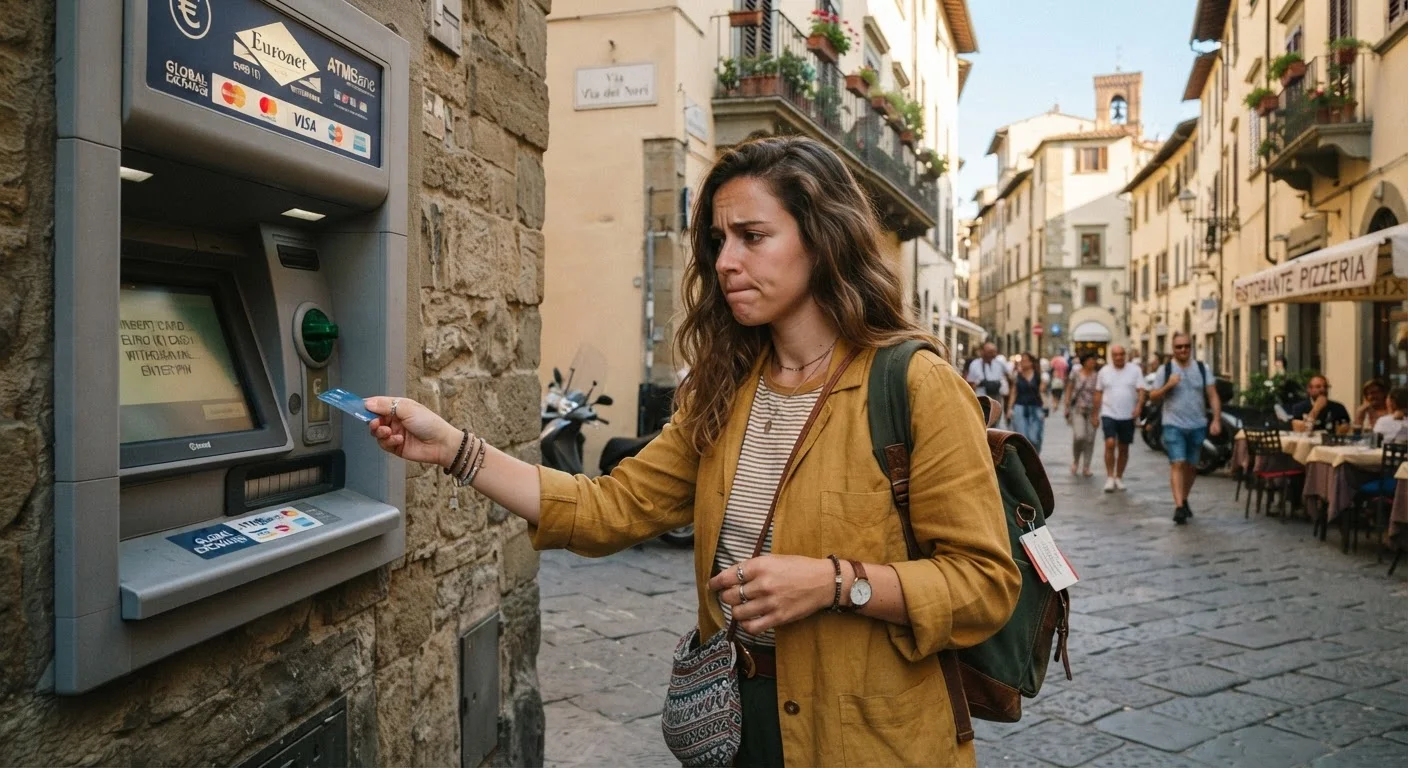
Photo credit: ProximityFinds.com | One-stop Reading Source
In this article
Foreign transaction fees, poor exchange rates, and blocked cards are common traps. Here's how international banking actually works when you're abroad.
Key Takeaways
- Foreign transaction fees and poor exchange rates can silently add 5-8% to every purchase abroad.
- Banks routinely freeze debit cards flagged for unusual foreign activity - notify your bank before you travel.
- Dynamic currency conversion at checkout almost always costs more than paying in local currency.
- ATM withdrawals abroad often carry both your bank's fees and the local machine operator's surcharge.
- Some checking accounts waive international ATM fees entirely - it pays to check before departure.
The Hidden Price of Swiping Abroad
Your debit card works perfectly at home, so it's natural to assume it'll work just as smoothly in Paris, Tokyo, or Cancún. Unfortunately, the international banking system layers on costs that most travelers never see until their statement arrives. Understanding these charges - and the simple steps to sidestep them - can save a meaningful chunk of your travel budget.
The most common charge is the foreign transaction fee, typically 1-3% of every purchase or ATM withdrawal. Your card network (Visa or Mastercard) usually takes a cut, and then your own bank often adds its own percentage on top. Spend $2,000 on a two-week trip and you could silently lose $40-$100 in fees alone. For a deeper look at where exchange-related costs hide, see Currency Exchange Myths That Cost American Travelers Money.
1-3%
Typical foreign transaction fee per purchase
Card network and bank fees combined commonly range from 1% to 3% of each transaction, according to general industry disclosures from major U.S. banks.
$5-$8
Common ATM operator surcharge abroad
Independent ATM operators, particularly in airports and tourist areas, frequently charge access fees in addition to any fees your home bank applies.
Common Mistakes - and How to Avoid Each One
Most debit card problems overseas trace back to a handful of predictable errors. Knowing what they are puts you firmly in the driver's seat.
Failing to notify your bank before international travel.
Why it happens: Many travelers assume their card will simply work anywhere. Banks, however, flag sudden foreign transactions as potential fraud and can freeze your account within hours of your first overseas swipe.
Accepting dynamic currency conversion (DCC) at the point of sale.
Why it happens: Merchants and ATMs abroad often offer to charge you in U.S. dollars instead of local currency, framing it as a convenience. In reality, the merchant sets the exchange rate - and it's nearly always worse than your bank's rate.
Using airport or hotel ATMs without checking the operator fee.
Why it happens: Travelers are tired, in a hurry, or simply unaware that independent ATM operators (especially in airports) charge access fees of $3-$8 on top of any bank fees.
Relying solely on a debit card without a backup payment method.
Why it happens: It's easy to underestimate how often cards get blocked, lost, or damaged abroad - and how difficult it can be to resolve a freeze from another time zone.
Making frequent small ATM withdrawals instead of fewer larger ones.
Why it happens: Travelers try to avoid carrying too much cash, so they withdraw small amounts repeatedly. But each withdrawal triggers a new round of fixed fees.
Beyond banking fees, international trips carry other overlooked costs. Our guide to hidden costs that derail travel budgets covers resort fees, airport transfers, and more charges that sneak up on unprepared travelers.
Smarter Ways to Handle Money Abroad
A little pre-trip homework goes a long way. Start by reviewing your checking account's fee schedule - some accounts, particularly those from online banks and credit unions, reimburse all international ATM fees each month. If your current account charges heavily, consider opening a fee-friendly account before your trip; just make sure it's funded and activated well in advance.
Never Accept a Card Freeze Without a Backup Plan
A frozen debit card in a foreign country can leave you without access to funds for hours or even days while your bank investigates. Always travel with a secondary payment method - a separate card stored in a different bag - and have your bank's international customer service number saved in your phone before you leave home.
When withdrawing cash, use ATMs attached to major local banks rather than standalone kiosks in tourist corridors or airports - the latter tend to charge higher operator fees and sometimes offer worse exchange rates. Withdraw larger amounts less frequently to minimize per-transaction charges.
Finally, consider pairing your debit card with a no-foreign-transaction-fee credit card for larger purchases. Credit cards generally offer stronger fraud protection than debit cards, and many travel-oriented cards convert at the same interbank rate your debit card uses - minus an extra fee. While you're planning, don't forget that staying connected matters just as much as managing money: Roaming vs. Local SIM vs. International Data Plans breaks down how to stay online without a shocking bill.
This article is for general informational purposes only and does not constitute financial or legal advice. Fees, policies, and account features vary by institution and change over time - verify current terms directly with your bank before traveling.

Author
Travel Editorial Team
Travel Editorial Team is the collective byline for our editorial team and contributor network. Articles published under this byline or an editorial pen name are researched, written, and reviewed according to our editorial standards for clarity, consistency, and independence before publication.
View all articles →