
Currency Exchange Myths That Cost American Travelers Money
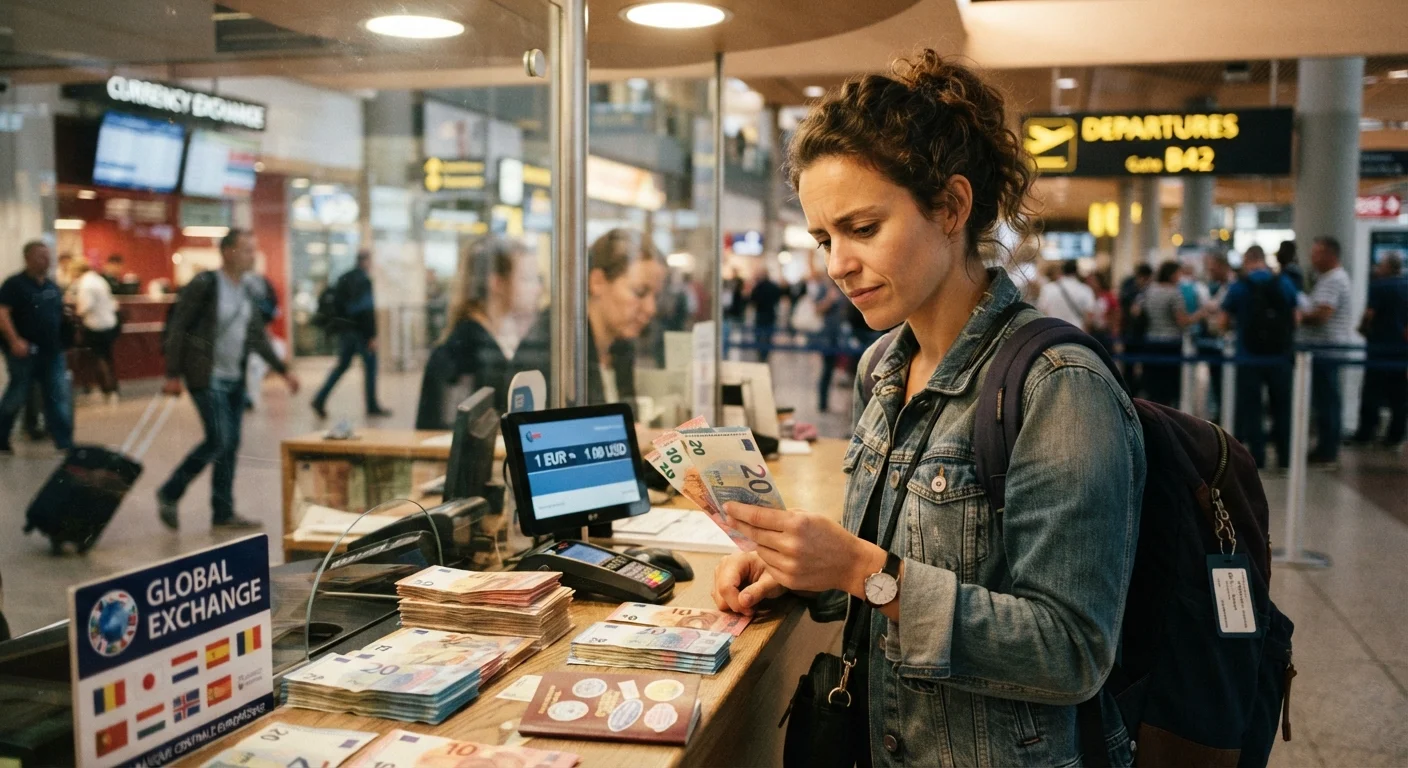
Photo credit: ProximityFinds.com | One-stop Reading Source
Airport kiosks, hotel desks, and prepaid currency cards all promise convenience — but the math often tells a different story. Know the facts before you exchange.
Key Takeaways
- Airport and hotel currency exchange kiosks typically offer the worst exchange rates available to travelers.
- Using a local ATM abroad often delivers better rates than pre-exchanging cash at home.
- Foreign transaction fees and ATM surcharges can stack up and erase any rate advantage.
- Carrying only local cash is not required - card acceptance is widespread in most destinations.
- Dynamic currency conversion at the point of sale almost always costs you more than paying in local currency.
Why Currency Exchange Myths Are So Expensive
When Americans plan international trips, they often spend hours comparing flight prices and accommodation - then lose a surprising chunk of their budget to avoidable currency exchange mistakes. The good news: the math isn't complicated once you understand what's actually happening at each exchange point.
These myths persist because airports, hotels, and exchange kiosks profit from your uncertainty. Knowing the facts before you leave home is one of the smartest moves you can make. See how currency fees fit into the bigger picture with our guide to hidden travel costs that derail budgets.
Myth
Exchanging currency at the airport before your flight is the safest and most convenient option.
Fact
Airport kiosks and exchange booths routinely offer margins significantly above the mid-market rate, making them one of the most expensive places to exchange money.
The convenience of airport currency exchange is real - the value is not. Exchange providers in airports pay premium rent and know travelers are time-pressured, which is reflected in the spread between the rate they advertise and the actual interbank (mid-market) rate. That gap can commonly range from 5% to 15% above the baseline rate, meaning a $1,000 exchange could cost you $50-$150 more than necessary. If you need a small amount of local currency for immediate transport costs, exchanging a minimal sum is understandable - just don't exchange your entire trip budget there.
Myth
Prepaid travel currency cards always save money because the rate is locked in.
Fact
Prepaid currency cards can carry loading fees, reload fees, inactivity fees, and ATM withdrawal fees that erode any locked-in rate advantage.
The "locked-in rate" pitch sounds reassuring, but the fine print on many prepaid travel cards reveals a fee structure that nibbles away at the benefit. Loading the card, withdrawing cash abroad, and even leaving unused funds on the card at the end of your trip can all generate charges. Some cards also apply a margin above the mid-market rate when you load currency in the first place. Read the full fee schedule of any prepaid card product carefully before assuming it will save you money compared to other options.
Myth
Your home bank is always the best place to order foreign currency before you travel.
Fact
Home-bank ordering rates vary widely; some are competitive, but many apply a significant markup plus a delivery or handling fee.
Some banks and credit unions do offer reasonable rates for ordering foreign currency, especially for popular currencies like euros, pounds, and yen. Others apply markups comparable to airport kiosks. It's worth checking the rate your bank quotes against a mid-market reference (many finance websites publish the interbank rate) to see how large the spread is. Ordering currency from your home bank can still make sense if you want some local cash on hand the moment you land - just compare the actual all-in cost rather than assuming it's the default best option.
Myth
When a merchant abroad offers to charge you in US dollars, that's a helpful service.
Fact
Dynamic currency conversion - being charged in your home currency - almost always applies a worse exchange rate than paying in the local currency and letting your card handle the conversion.
Dynamic currency conversion (DCC) is a fee-generating service for the merchant and their payment processor, not a favor to you. When a card terminal or ATM abroad asks "Would you like to pay in USD?" and you say yes, the conversion rate applied is set by the merchant's processor - typically several percentage points worse than the rate your card network would apply. The consistent, well-documented advice from consumer finance researchers is to always choose to pay in the local currency and decline DCC every time it's offered.
Myth
You need to carry plenty of cash abroad because cards aren't widely accepted.
Fact
Card acceptance has expanded dramatically in most popular travel destinations; cash remains important for specific situations, but it is rarely your only option.
In major cities across Europe, Asia, Latin America, and beyond, credit and debit cards are accepted at hotels, restaurants, shops, and transit systems. That said, smaller vendors, rural areas, local markets, and certain transportation modes (like some regional buses or taxis) may still be cash-only. A reasonable approach is to arrive with a modest amount of local currency for immediate needs and withdraw more if necessary - rather than converting large sums upfront based on the assumption that cards won't work.
What Smart Travelers Actually Do
Once you strip away the myths, a clearer strategy emerges. Most experienced international travelers rely on a combination of approaches: withdrawing modest amounts of local currency from reputable in-network ATMs upon arrival, paying by card wherever it's accepted, and always declining dynamic currency conversion when prompted at checkout.
5-15%
Typical airport exchange markup above mid-market rate
Consumer financial education sources consistently note that airport and hotel currency exchange providers apply margins well above the interbank rate, sometimes exceeding 10%.
$1 in $12
Estimated share of travel budget lost to avoidable fees
Various travel finance analyses suggest that travelers who don't optimize currency exchange and card choices can lose roughly 8-10% of spending money to fees and poor rates.
Before any trip, it's worth calling your bank or credit union to understand their specific international fee structure - some accounts reimburse ATM fees abroad, which changes the calculus significantly. For a deeper look at how your cards behave when you cross a border, check out why your debit card could cost you overseas.
Currency confusion is just one category of travel myth worth busting. If you're also planning domestic travel, road trip myths that lead travelers astray covers equally costly misconceptions closer to home. And before you even book your flight, it pays to read up on common myths about booking flights that bleed money from budgets at the very first step.
Always Decline Dynamic Currency Conversion
At ATMs and payment terminals abroad, you may be asked whether you want the transaction processed in USD or the local currency. Always choose the local currency. Accepting the USD option activates dynamic currency conversion, which applies an exchange rate controlled by the merchant's processor - typically several percentage points worse than your card network's rate. This single habit can save a noticeable amount across a multi-week trip.

Author
Travel Editorial Team
Travel Editorial Team is the collective byline for our editorial team and contributor network. Articles published under this byline or an editorial pen name are researched, written, and reviewed according to our editorial standards for clarity, consistency, and independence before publication.
View all articles →