
Mobile Virtual Network Operators Explained
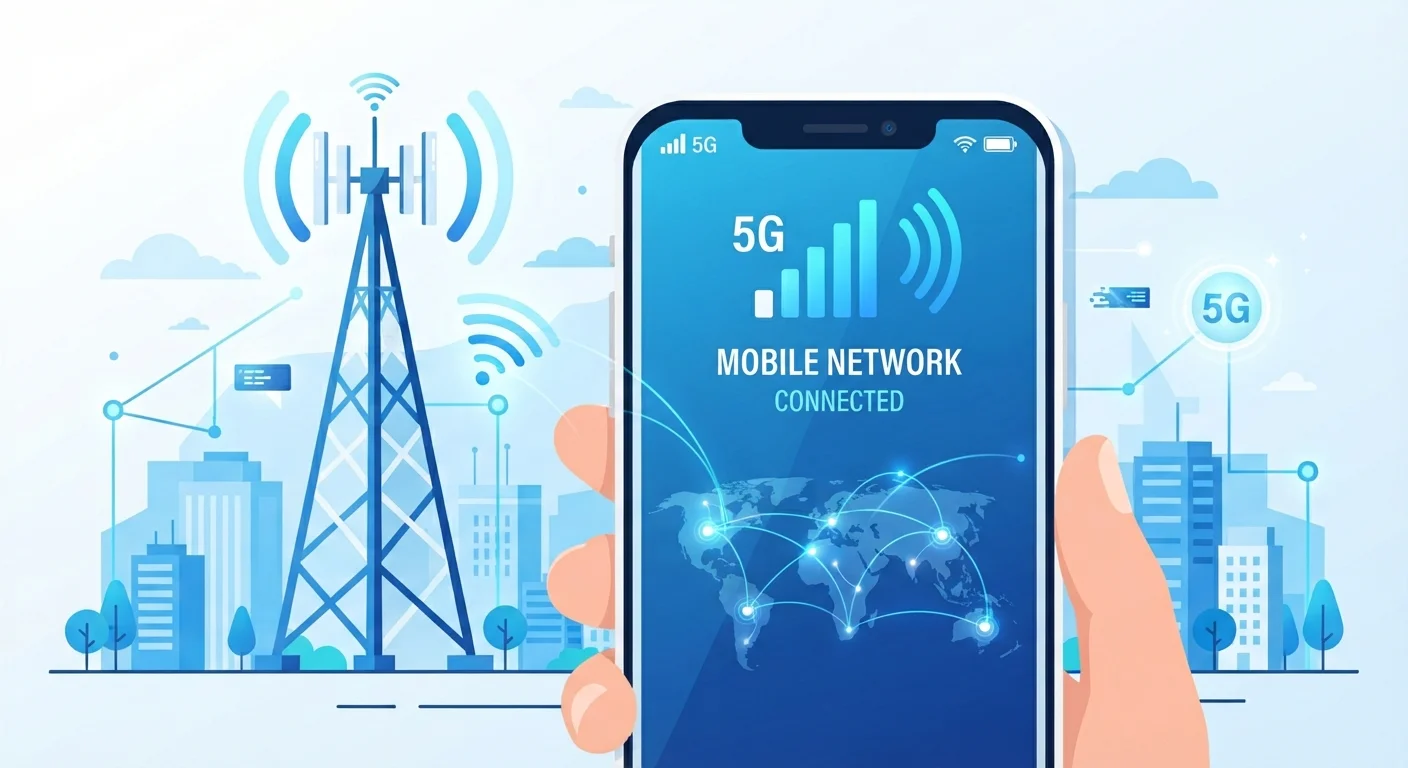
Photo credit: ProximityFinds.com | One-stop Reading Source
In this article
MVNOs like Mint, Cricket, and Visible run on the same towers as major carriers. Learn how they work, what they cost, and where they fall short.
Key Takeaways
- MVNOs use the same towers as major carriers but charge less by buying network access wholesale.
- During network congestion, MVNO customers are typically deprioritized below the host carrier's own subscribers.
- Most MVNOs operate on prepaid, no-contract plans, which means no credit checks and no cancellation fees.
- International roaming options on MVNOs are often more limited than on the major carriers directly.
- Bringing an unlocked phone to an MVNO is the most cost-effective way to use one.
How MVNOs Actually Work
Major carriers - AT&T, T-Mobile, and Verizon - have spent tens of billions of dollars building and maintaining the physical infrastructure that powers wireless service in the US: towers, fiber backhaul, and licensed spectrum. MVNOs don't touch any of that hardware. Instead, they negotiate contracts to buy network capacity in bulk, then package and resell it under their own brand with their own pricing, plans, and customer service.
The arrangement works because major carriers generate revenue from wholesale agreements without needing to compete directly at every price tier. MVNOs, in turn, can focus entirely on customer experience, pricing strategy, and niche markets - without the overhead of running a physical network.
From a technical standpoint, when you make a call or load a webpage on an MVNO SIM, your signal still travels through the host carrier's towers. The MVNO's systems handle authentication, billing, and data throttling on the backend, but the radio path is identical to what a direct subscriber would use.
MVNO Host Network Transparency
Most MVNOs disclose their host network in their coverage FAQ or terms of service. Before signing up, it's worth confirming which underlying network your MVNO uses - and checking that carrier's coverage map for your specific area. An MVNO running on a network with weak coverage in your region won't improve that situation.
The Real Cost Difference - and Why It Exists
MVNOs consistently undercut the major carriers on price, sometimes dramatically. The reason is structural: MVNOs carry none of the capital costs associated with building or maintaining infrastructure, and many operate with leaner customer service operations. Those savings get passed to subscribers, often in the form of lower monthly rates for similar data allotments.
That said, not everything is equal. The savings come with trade-offs that matter in specific situations.
~50+
Active MVNOs operating in the US market
The US MVNO market includes dozens of operators across all three major host networks, ranging from large national brands to niche regional providers.
20-50%
Typical monthly savings vs. major carrier plans
Industry analysts generally observe MVNO pricing running 20-50% lower than comparable major carrier postpaid plans, depending on data tier and features included.
Deprioritization is the most consequential. When a cell tower is congested - during a crowded event, rush hour, or a network outage - the host carrier's own subscribers get bandwidth first. MVNO customers sit lower in the queue, which can mean noticeably slower speeds precisely when reliable service matters most.
For light to moderate users who primarily use their phones in uncongested areas, deprioritization rarely surfaces as a real problem. For heavy data users in dense urban environments, it's worth weighing carefully. Our overview of prepaid vs. postpaid plans covers how this trade-off plays out across plan structures more broadly.
Where MVNOs Fall Short
Beyond deprioritization, there are several areas where MVNOs consistently lag behind direct carrier service.
- International roaming: Many MVNOs offer limited or no international roaming, and those that do may charge more per day than their domestic plan savings justify. If you travel internationally with any regularity, review the MVNO's roaming policy before committing. Our article on international roaming options outlines the alternatives worth considering.
- 5G access tiers: Some MVNOs restrict access to faster 5G bands - particularly mmWave - even if the host carrier supports them. Sub-6GHz 5G is broadly available on most MVNOs, but premium 5G speeds may require a direct carrier plan.
- Customer support: MVNOs typically rely on online support portals and chat rather than physical retail locations. If you prefer in-person service, this is a meaningful gap.
- Device compatibility: MVNOs don't sell subsidized phones on installment plans the way major carriers do. You'll generally need to bring an unlocked device. Our piece on unlocked phone trade-offs explains what to verify before making the move.
Check Band Compatibility Before Switching
Before joining an MVNO, verify that your current phone supports the host carrier's primary frequency bands - especially for 5G. Most unlocked phones sold in the US after 2020 are broadly compatible, but phones purchased outside the US or locked to a specific carrier may lack key bands. The MVNO's website should list compatible devices or provide a IMEI compatibility checker.
Who MVNOs Are Best Suited For
MVNOs make the most sense for a defined set of users. If you use moderate amounts of data, primarily in suburban or urban areas with strong host-network coverage, and you don't rely on international roaming or premium 5G speeds, an MVNO can deliver essentially equivalent day-to-day service at a significantly lower monthly cost.
They're also well-suited for families looking to reduce per-line costs on secondary lines, or for anyone who dislikes long-term contracts and wants month-to-month flexibility. Because most MVNOs are prepaid, there's no credit check and no cancellation penalty - you can leave whenever you want.
Heavy data users, frequent international travelers, and anyone in a rural area where coverage is already thin on the host network should evaluate the trade-offs more carefully before switching. For a broader look at how to assess what a plan actually needs to include, our complete guide to cell phone plans is a useful starting point.
“The MVNO model fundamentally decouples the cost of building a network from the cost of serving a customer - and that gap is where consumer savings live.”
— Telecom industry analyst, Senior analyst, US wireless market research
Frequently Asked Questions

Author
Technology Editorial Team
Technology Editorial Team is the collective byline for our editorial team and contributor network. Articles published under this byline or an editorial pen name are researched, written, and reviewed according to our editorial standards for clarity, consistency, and independence before publication.
View all articles →