
Prepaid vs. Postpaid Phone Plans: What Actually Changes
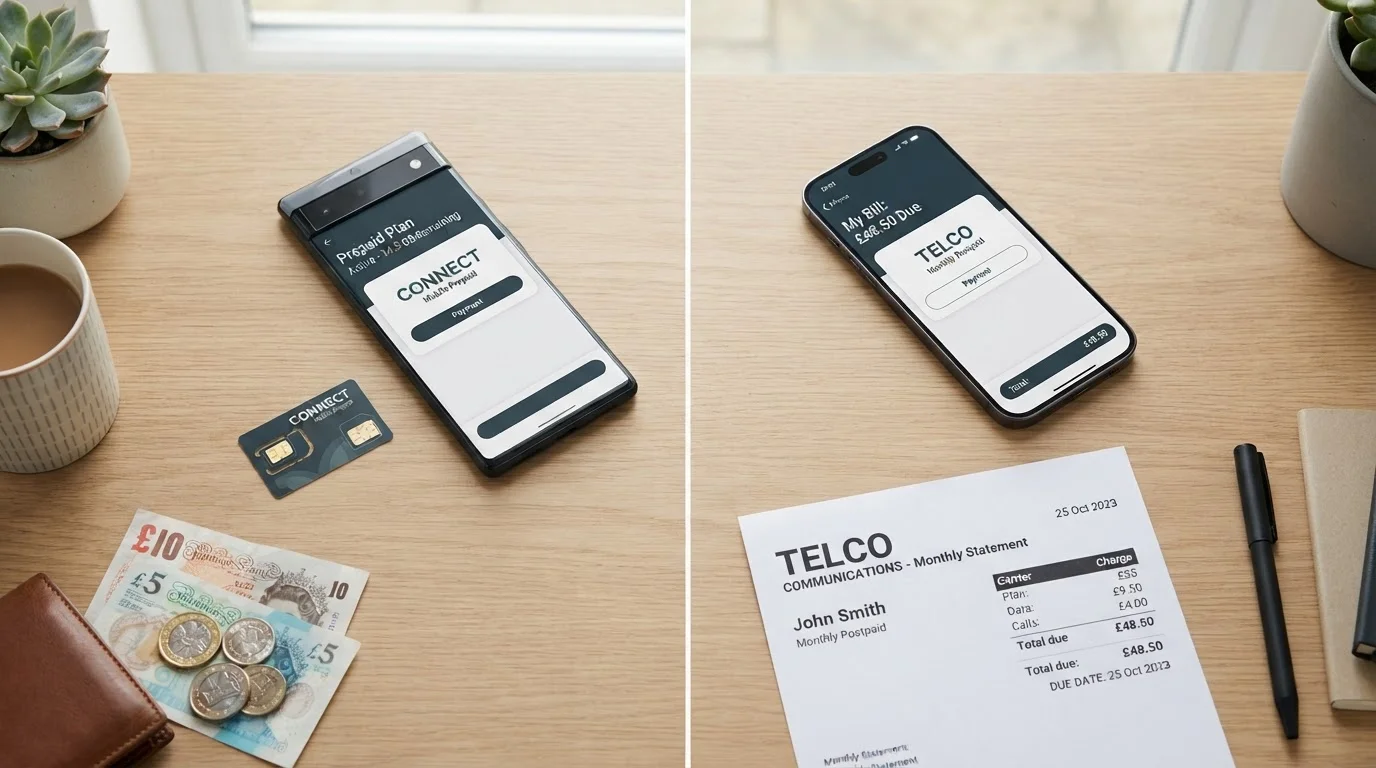
Photo credit: ProximityFinds.com | One-stop Reading Source
In this article
Understand the real differences between prepaid and postpaid cell plans—coverage, cost structure, credit checks, and who each suits best.
Key Takeaways
- Prepaid plans require upfront payment and no credit check; postpaid plans bill after usage and typically require a credit review.
- Postpaid customers often receive higher network priority during congestion, which can affect real-world speeds.
- Prepaid plans are frequently cheaper month-to-month, but may lack some premium features like hotspot data or international options.
- Most prepaid carriers are MVNOs that run on the same physical towers as major networks.
- Neither plan type is universally better - the right choice depends on your usage habits, credit situation, and budget.
How Each Plan Type Actually Works
The core difference is timing of payment. With a prepaid plan, you pay for service before you use it - loading a balance or purchasing a monthly bundle upfront. When that allocation runs out, service pauses until you reload. There's no bill at month's end, no contract, and no credit check required.
With a postpaid plan, the carrier extends you a line of credit, tracks your usage, and sends a bill after the billing cycle closes. Because the carrier is essentially lending you service, most postpaid accounts require a credit check during signup. Deposits may be required if your credit history is thin or unfavorable.
For a broader foundation on how carrier plans are structured overall, see our complete guide for first-time plan shoppers.
| Criterion | Prepaid | Postpaid |
|---|---|---|
| Payment timing | Pay before use | Pay after billing cycle |
| Credit check required | No | Yes, typically |
| Contract or commitment | None | Often month-to-month, but financing ties you in |
| Network priority | Lower (deprioritized) | Higher priority |
| Device financing | Rarely available | Commonly offered |
| Monthly cost | Generally lower | Generally higher |
| International roaming | Limited options | Broader coverage available |
| Bundled perks | Minimal | Streaming, cloud storage common |
Coverage, Speed, and Network Priority
One of the most misunderstood aspects of this comparison is network priority. Prepaid customers - particularly those on MVNO services - are frequently deprioritized on the network during peak congestion. That means postpaid customers on the host carrier's own plans may experience faster speeds at busy times, even if both groups technically have access to the same towers.
To understand why this matters, it helps to know how MVNOs operate. Many prepaid plans are sold by companies that lease capacity from the major networks rather than owning infrastructure. Our article on how mobile virtual network operators work explains this in detail, including where they compete well and where they fall short.
~40%
US wireless subscribers on prepaid plans
CTIA's annual wireless industry survey has consistently reported that roughly four in ten US mobile lines are prepaid, reflecting their mainstream adoption.
3-4x
Potential speed gap during peak congestion
Independent network testing has documented scenarios where deprioritized prepaid users experience speeds several times slower than postpaid users on congested networks.
In rural or lower-traffic areas, deprioritization rarely causes a noticeable difference. In dense urban environments or at crowded events, the gap between postpaid and prepaid performance can be meaningful.
Cost Structure and Hidden Variables
Prepaid plans are almost always cheaper on a per-month basis when comparing similar data allotments. However, the comparison isn't always apples-to-apples. Postpaid plans often bundle perks - streaming subscriptions, cloud storage, or international calling - that factor into their higher sticker price.
Postpaid accounts also make device financing straightforward. If you want to pay for a new phone over 24 or 36 months instead of upfront, that's overwhelmingly a postpaid feature. Prepaid plans generally require you to own your device outright. If you're considering buying an unlocked phone to use with a prepaid plan, our guide on unlocked phone trade-offs covers the compatibility and warranty considerations worth reviewing first.
Watch for Advertised vs. Actual Pricing
Many postpaid plans advertise per-line prices that assume a multi-line family account. A single-line postpaid plan often costs significantly more than the advertised rate. Always calculate the total monthly cost - including taxes, fees, and autopay discounts - before comparing against a prepaid alternative.
Taxes and fees also deserve attention. Prepaid plans often advertise all-in pricing, while postpaid plans may list base rates that climb once carrier fees and government taxes are added at billing.
Which Plan Fits Your Situation
There's no single correct answer here - the better fit depends on a few concrete factors. If predictable spending, no credit exposure, and month-to-month flexibility matter most, prepaid delivers on all three. If you prioritize device financing, network priority during congestion, or robust international options, postpaid is typically the more capable structure.
If you travel internationally, it's also worth understanding that both plan types have different implications for staying connected abroad. See our overview of international roaming and travel eSIM options for a look at how your plan type affects your choices when crossing borders.
The carrier landscape has also narrowed the gap somewhat. Major carriers now offer their own prepaid sub-brands, giving prepaid users access to the same physical network with fewer perks and lower prices - a pragmatic middle ground for many consumers.

Author
Technology Editorial Team
Technology Editorial Team is the collective byline for our editorial team and contributor network. Articles published under this byline or an editorial pen name are researched, written, and reviewed according to our editorial standards for clarity, consistency, and independence before publication.
View all articles →