
Renting vs. Buying a Home: Understanding the Real Trade-Offs
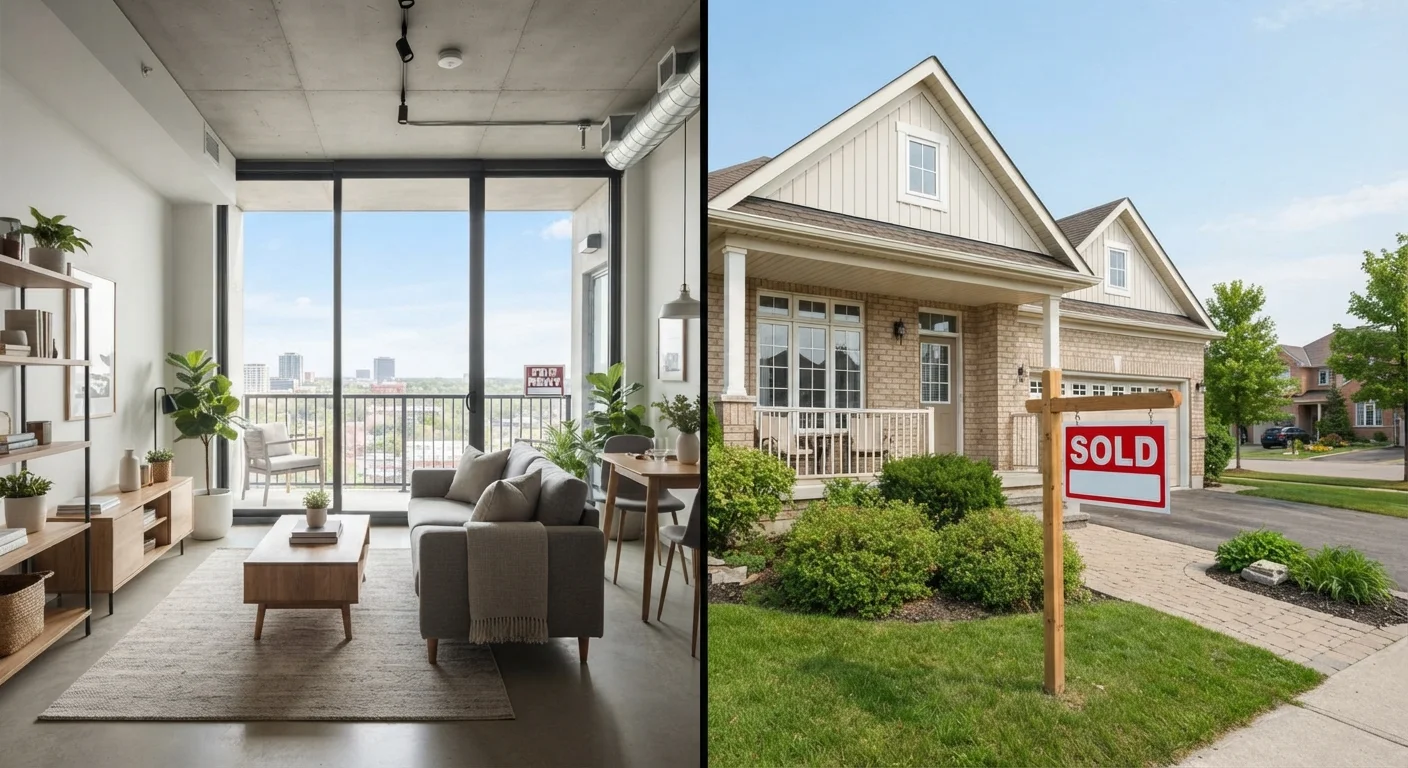
Photo credit: ProximityFinds.com | One-stop Reading Source
In this article
The rent-vs-buy decision involves more than monthly payments. This overview covers equity, flexibility, costs, and financial context to consider.
Key Takeaways
- Buying builds equity over time but requires substantial upfront capital and ongoing ownership costs.
- Renting offers geographic and financial flexibility that homeownership cannot easily provide.
- The better choice depends on your local market, financial stability, and how long you plan to stay.
- Neither option is universally superior - both carry real financial and lifestyle trade-offs.
- Hidden costs on both sides - maintenance for buyers, annual rent increases for renters - often go underestimated.
Builds equity and long-term wealth
Monthly mortgage payments reduce loan principal, and property appreciation can significantly grow net worth over time - unlike rent, which yields no ownership stake.
Payment stability with a fixed-rate mortgage
A fixed-rate loan locks in your principal and interest amount for the full loan term, protecting you from the rent increases that tenants regularly face.
Freedom to customize your living space
Owners can renovate, repaint, or structurally alter their property without landlord approval, allowing the home to be tailored to specific needs and preferences.
Protection from lease non-renewal
Owners cannot be displaced by a landlord's decision not to renew a lease, providing long-term residential security that renting does not guarantee.
Potential tax benefits
Mortgage interest and property taxes may be deductible under certain conditions, though the benefit depends on individual tax circumstances and should be verified with a tax professional.
Significant upfront capital required
Down payments, closing costs, inspections, and moving expenses can easily total tens of thousands of dollars before a buyer moves in, creating a high barrier to entry.
Full responsibility for maintenance and repairs
Unlike renters, homeowners bear the entire cost of repairs - from a broken water heater to a new roof - which can be unpredictable and expensive.
Limited geographic flexibility
Selling a home takes time and incurs transaction costs typically ranging from 6% to 10% of the sale price, making it costly to relocate within a short timeframe.
Exposure to market value decline
Property values can fall, and homeowners who need to sell during a downturn may receive less than they paid, potentially resulting in a financial loss.
Wealth concentrated in a single illiquid asset
A home is difficult to partially liquidate, meaning owners whose wealth is heavily tied to their property face concentration risk that renters can more easily avoid.
Why This Decision Is More Complex Than It Looks
The question of whether to rent or buy a home is one of the most consequential financial decisions most Americans will face. Popular wisdom often frames ownership as the obvious goal - a milestone of financial maturity. But that framing glosses over a wide range of variables that make renting the smarter move for many households at many points in their lives.
For a rigorous, individualized look at how to weigh these factors against your own circumstances, see how to think through the rent-vs.-buy decision honestly. This article focuses on the core trade-offs each path carries.
This Is General Information, Not Personal Advice
The rent-vs.-buy calculation depends heavily on local market conditions, individual credit profiles, income stability, tax situations, and personal goals. The trade-offs outlined here are educational in nature. Before making a housing decision, consult a licensed real estate professional and a financial adviser who can evaluate your specific circumstances.
The Case for Buying
Homeownership offers a set of financial and personal benefits that renting structurally cannot replicate.
Builds equity and long-term wealth
Monthly mortgage payments reduce loan principal, and property appreciation can significantly grow net worth over time - unlike rent, which yields no ownership stake.
Payment stability with a fixed-rate mortgage
A fixed-rate loan locks in your principal and interest amount for the full loan term, protecting you from the rent increases that tenants regularly face.
Freedom to customize your living space
Owners can renovate, repaint, or structurally alter their property without landlord approval, allowing the home to be tailored to specific needs and preferences.
Protection from lease non-renewal
Owners cannot be displaced by a landlord's decision not to renew a lease, providing long-term residential security that renting does not guarantee.
Potential tax benefits
Mortgage interest and property taxes may be deductible under certain conditions, though the benefit depends on individual tax circumstances and should be verified with a tax professional.
Equity accumulation is the most cited advantage. Each mortgage payment reduces principal, and over time - particularly if the property appreciates - owners build a tangible asset. That asset can later be leveraged, sold, or passed on. Mortgage interest and property taxes may also be deductible depending on your tax situation; consult a tax professional for guidance specific to you.
Stability matters too. Owning removes the risk of a landlord choosing not to renew your lease, and in most cases, a fixed-rate mortgage locks your principal and interest payment for the loan's life. For more on mortgage structures, see fixed-rate vs. adjustable-rate mortgages. When you're ready to explore the full purchase process, The Home-Buying Process, Start to Finish walks through every stage.
The Case for Renting
Renting is frequently undervalued in public conversation, yet it provides advantages that ownership cannot match in certain life stages or markets.
Significant upfront capital required
Down payments, closing costs, inspections, and moving expenses can easily total tens of thousands of dollars before a buyer moves in, creating a high barrier to entry.
Full responsibility for maintenance and repairs
Unlike renters, homeowners bear the entire cost of repairs - from a broken water heater to a new roof - which can be unpredictable and expensive.
Limited geographic flexibility
Selling a home takes time and incurs transaction costs typically ranging from 6% to 10% of the sale price, making it costly to relocate within a short timeframe.
Exposure to market value decline
Property values can fall, and homeowners who need to sell during a downturn may receive less than they paid, potentially resulting in a financial loss.
Wealth concentrated in a single illiquid asset
A home is difficult to partially liquidate, meaning owners whose wealth is heavily tied to their property face concentration risk that renters can more easily avoid.
Flexibility is renting's defining strength. Tenants can relocate for jobs, family needs, or changing preferences without the time and cost of selling a property. In markets where purchase prices are extremely high relative to comparable rents - a ratio tracked by analysts as the price-to-rent ratio - renting frees up capital that could be deployed in other ways.
Renters are also insulated from maintenance costs and market downturns. A landlord bears the expense of a failed HVAC system or a leaking roof. And unlike a homeowner whose net worth may be heavily concentrated in a single illiquid asset, a renter can maintain a more diversified financial position. For context on how asset diversification works more broadly, see what stocks and bonds each represent.
Understanding your rights and options as a renter also matters. Common myths about renting covers misconceptions that can cost both tenants and landlords. If you're evaluating lease structures, month-to-month vs. fixed-term leases explains the practical differences.
Costs That Often Go Overlooked
Both sides of this decision carry costs that aren't always visible in a surface-level comparison.
2%-5%
Typical closing cost range for home buyers
The Consumer Financial Protection Bureau notes that closing costs generally fall between 2% and 5% of the loan amount, on top of the down payment.
1%-2%
Annual home maintenance cost estimate
A commonly cited industry guideline suggests homeowners budget roughly 1% to 2% of their home's value each year for maintenance and repairs, though actual costs vary.
5-7 years
Minimum ownership horizon often cited for buying to break even
Many housing analysts suggest buyers generally need to remain in a home at least five to seven years to recoup transaction costs through appreciation and equity gains.
For buyers: Beyond the down payment - typically 3% to 20% of the purchase price - closing costs commonly add another 2% to 5%. Ongoing ownership includes property taxes, homeowners insurance, HOA fees where applicable, and maintenance. Industry estimates generally suggest budgeting 1% to 2% of a home's value annually for upkeep, though actual costs vary widely.
For renters: Annual rent increases are a real and recurring cost. In markets with limited supply, increases can erode the affordability advantage that attracted renters in the first place. Renters also build no equity through their payments, meaning housing expense is entirely a consumption cost rather than partly an investment.
Thinking about how these trade-offs apply if you eventually become a landlord yourself? Being a first-time landlord covers what new property owners should expect. And if homeownership eventually makes sense, the Buying a Home hub is a useful starting point.
This article provides general financial and real estate information for educational purposes only and does not constitute personalized financial, legal, or investment advice. Consult a licensed financial adviser or real estate professional before making housing decisions.

Author
Real Estate Editorial Team
Real Estate Editorial Team is the collective byline for our editorial team and contributor network. Articles published under this byline or an editorial pen name are researched, written, and reviewed according to our editorial standards for clarity, consistency, and independence before publication.
View all articles →