
OLED, QLED, and LED: What the TV Panel Labels Actually Mean
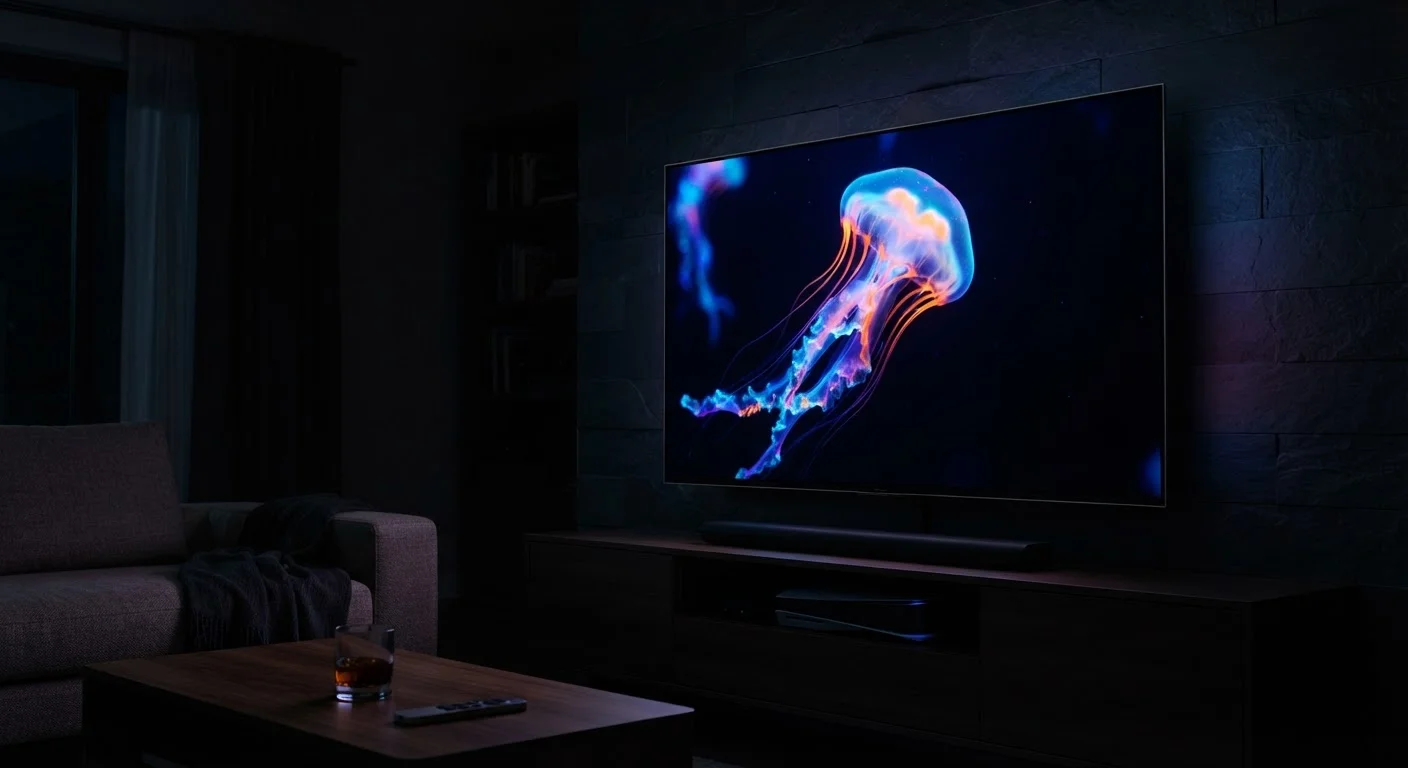
Photo credit: ProximityFinds.com | One-stop Reading Source
In this article
TV shopping gets confusing fast. Here's a plain-English breakdown of OLED, QLED, and LED display technologies and what each means for your viewing experience.
Key Takeaways
- LED is the foundational technology; most affordable TVs use it.
- QLED adds a quantum dot filter to an LED backlight, boosting color range and brightness.
- OLED pixels emit their own light, enabling perfect blacks and superior contrast.
- Each panel type involves real trade-offs between price, brightness, and longevity.
- Room lighting and typical viewing content matter when choosing between panel types.
LED: The Baseline Most TVs Still Use
Standard LED televisions use a liquid crystal display (LCD) panel illuminated by a layer of light-emitting diodes behind the screen. The LEDs supply the backlight; the liquid crystal layer controls which pixels let that light through; a color filter layer produces the final image.
Because the backlight is always on to some degree, pure blacks are difficult to achieve - dark scenes often appear slightly gray or washed out, a phenomenon called backlight bleed. More advanced LED sets use local dimming, which divides the backlight into independently controlled zones. More zones generally means better contrast, though it adds cost.
LED TVs cover the widest price range in the market and remain the most common panel type in American homes. They perform especially well in bright rooms, where their high peak brightness helps images stay visible against ambient light. For a broader look at how display specs interact, see our TV spec glossary.
Mini-LED: A Sub-Category Worth Knowing
Mini-LED is a variant of LED backlighting that uses thousands of much smaller LEDs to create a greater number of dimming zones. This narrows the contrast gap between standard LED and OLED without using organic pixel technology. Mini-LED sets are increasingly common at mid-to-upper price points and represent a meaningful improvement over older full-array local dimming designs.
QLED: Quantum Dots on Top of LED
QLED is essentially an LED TV with an additional layer of quantum dots - microscopic semiconductor particles that emit precise colors when struck by the backlight. This quantum dot filter allows the panel to produce a significantly wider color gamut and higher peak brightness than conventional LED panels.
Because QLED still uses a conventional backlight behind an LCD layer, it shares some of LED's limitations: contrast isn't as absolute as OLED, and blacks depend on the quality of the local dimming system. Where QLED excels is in raw brightness - it can reach very high nit levels, making it well-suited to HDR content and rooms that receive significant daylight.
1,000+ nits
Typical peak brightness of premium QLED panels
High-brightness QLED sets can exceed 1,000 nits of peak luminance, compared to 150-300 nits for standard LED TVs, according to display specification data compiled by consumer electronics review organizations.
~8.5 million
Self-lit pixels in a 4K OLED panel
A 4K OLED display contains approximately 8.3-8.5 million individually controlled pixel elements, each capable of turning fully off to produce absolute black.
The term QLED originated as a marketing label and is used by multiple manufacturers, though the implementations differ in quality. Not all products carrying the label are equivalent - panel construction, local dimming zone count, and processing all vary significantly between price tiers.
OLED: Every Pixel Is Its Own Light Source
OLED - Organic Light-Emitting Diode - takes a fundamentally different approach. Each pixel in an OLED panel is made of organic compounds that produce light when electricity is applied. When a pixel needs to display black, it simply turns off completely, producing a true black rather than a dimmed backlight. This pixel-level control is what gives OLED its hallmark contrast ratio.
The visual result is striking in dark rooms: shadow detail is preserved, color pops against genuine black, and viewing angles are wide because light isn't passing through multiple filtering layers. These traits make OLED a popular choice for cinematic content and gaming in controlled-light environments.
Evaluate OLED in a Controlled Environment
When evaluating OLED TVs, ask to see them demonstrated in a dimmed showroom setting rather than under bright retail lighting. OLED's contrast and black-level advantages are most apparent in lower-light conditions, and a bright showroom floor undersells these strengths. If possible, use your own content - showroom demo reels are specifically curated to flatter the display.
The trade-offs are real, however. OLED panels generally achieve lower peak brightness than high-end QLED sets, which can limit perceived HDR impact in bright rooms. They also carry a higher price at equivalent screen sizes, and the organic materials are subject to gradual luminance degradation over time, though panel lifespans have improved considerably on modern televisions.
If your setup includes audio considerations as well, our soundbar breakdown covers how to complement your display with better TV audio.
Choosing the Right Panel for Your Situation
The right panel type depends on your viewing environment and priorities rather than a universal hierarchy. Here's how to think through the decision:
- Bright living rooms: LED or QLED panels maintain visibility better under ambient light. Peak brightness is a genuine advantage here.
- Dark home theaters: OLED's perfect blacks and wide viewing angles deliver a more immersive picture where the panel's contrast strengths are most visible.
- Mixed use and sports: High-brightness QLED panels handle fast motion and varied lighting well, and local dimming has improved significantly on premium LED sets.
- Budget-conscious buyers: Well-specified LED TVs with local dimming offer strong performance per dollar. The gap between panel types narrows considerably in real-world use.
Panel type is also just one factor among many. Refresh rate, HDR format support, processing quality, and audio all shape the overall experience - much like how smartphone buyers weigh a range of specs simultaneously. Our guide to decoding smartphone specs shows how similar trade-off thinking applies across consumer electronics.
For context on why a showroom TV looks different from the same model in your living room, this explainer on streaming picture quality walks through how demo calibration and streaming compression affect what you actually see at home.
Frequently Asked Questions

Author
Technology Editorial Team
Technology Editorial Team is the collective byline for our editorial team and contributor network. Articles published under this byline or an editorial pen name are researched, written, and reviewed according to our editorial standards for clarity, consistency, and independence before publication.
View all articles →