
Smartphone Specs Decoded: A Field Guide to the Numbers That Matter
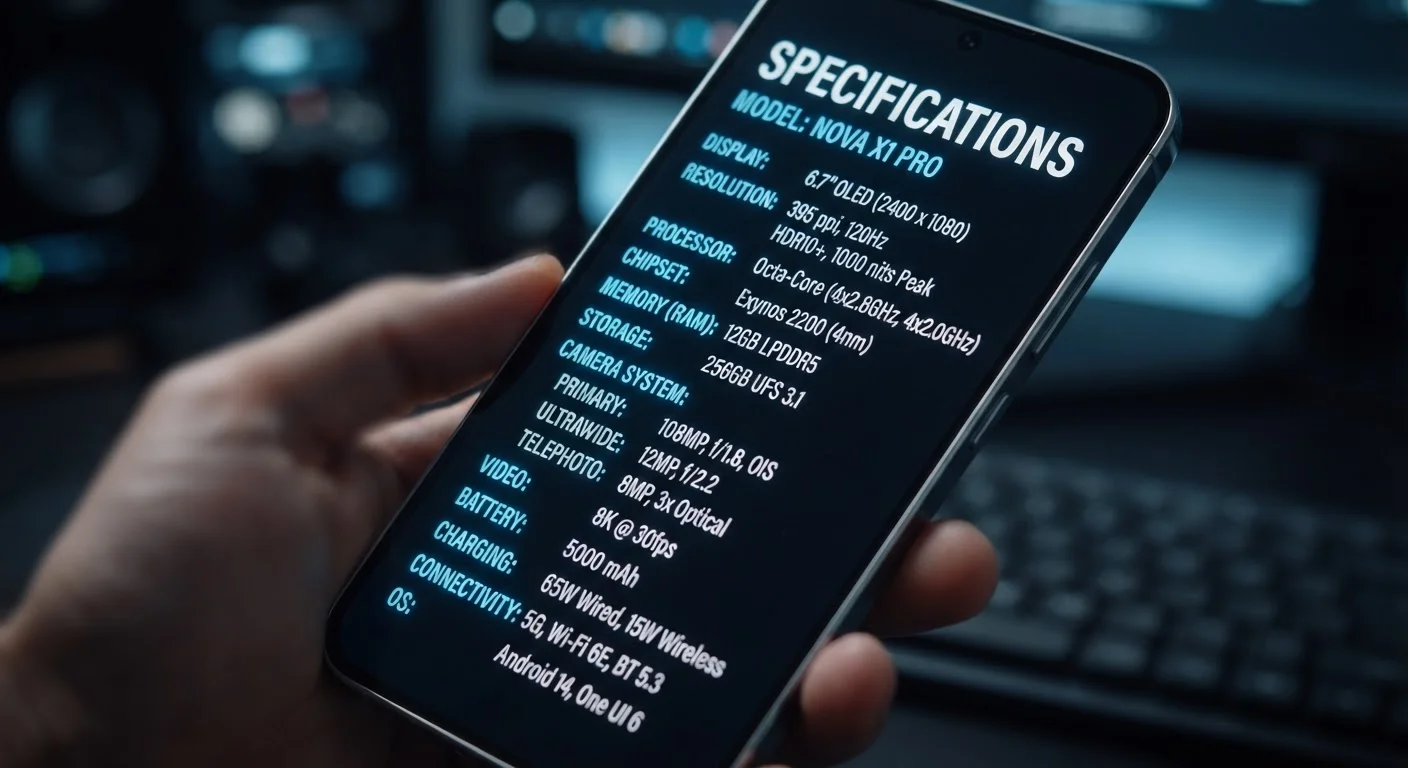
Photo credit: ProximityFinds.com | One-stop Reading Source
In this article
RAM, refresh rate, nits, mAh—this reference guide explains what each smartphone spec actually does and which ones are worth paying attention to.
Why Specs Are Confusing (and Why They Don't Have to Be)
Smartphone listings are dense: RAM measured in gigabytes, processors clocked in gigahertz, displays rated in nits and hertz, batteries in milliamp-hours. Marketing teams lean heavily on bigger numbers - but a higher number doesn't always translate to a better experience. This reference guide breaks down the specs that appear most often on US retail listings and explains what each one actually controls in daily use.
For a deeper look at how misleading some common assumptions are - like whether megapixels determine photo quality - see our companion piece on common smartphone myths.
| Typical RAM range (modern phones) | 6 GB - 16 GB |
| Common display refresh rates | 60 Hz, 90 Hz, 120 Hz |
| Outdoor-readable brightness threshold | 1,000+ nits |
| Typical OS/pre-installed app storage use | 15-20 GB |
| Pixel density threshold (perceived sharpness ceiling) | ~400 PPI |
| Wi-Fi standard for congested networks | Wi-Fi 6 (802.11ax) |
Processor and RAM: The Performance Core
The processor (also called the chipset or SoC - System on a Chip) handles every computation your phone performs. Chip speed matters less than architecture: a newer-generation chip at a lower clock speed will generally outperform an older chip clocked higher. Manufacturers don't always disclose benchmark data, so generation and manufacturing process (measured in nanometers - smaller is generally more efficient) are better guides than raw GHz figures.
RAM (Random Access Memory) determines how many apps and processes the phone can hold in active memory at once. More RAM reduces the frequency with which the system has to reload background apps - important for multitaskers and mobile gamers. For most everyday users, 6-8 GB is functional; power users may notice benefits above that threshold.
SoC (System on a Chip)
An integrated circuit that combines the processor, graphics unit, modem, and other components onto a single chip. The SoC is the primary driver of a phone's speed, efficiency, and capability.
RAM
Random Access Memory - temporary, fast-access memory the phone uses to run active apps and processes. More RAM allows more apps to stay loaded simultaneously without needing to reload.
Refresh Rate (Hz)
The number of times per second a display redraws its image. Higher refresh rates (90 Hz, 120 Hz) produce smoother motion during scrolling and video playback.
Nits
A unit of luminance measuring screen brightness. Higher nit values allow the display to remain visible in brighter ambient environments, including direct sunlight.
mAh (Milliamp-Hours)
A unit of electrical charge used to express battery capacity. A higher mAh rating indicates more stored energy, though real-world battery life also depends on software and screen efficiency.
PPI (Pixels Per Inch)
A measure of display sharpness that accounts for both resolution and screen size. Higher PPI means finer detail; most users cannot perceive improvements beyond approximately 400 PPI.
Optical Image Stabilization (OIS)
A hardware mechanism in a camera that physically adjusts the lens or sensor to compensate for hand movement, reducing blur in photos and video.
Aperture (f-stop)
A measure of how wide a camera lens opens to admit light. A lower f-number (e.g., f/1.8) indicates a wider aperture and better performance in low-light conditions.
Display: Resolution, Refresh Rate, and Brightness
Display specs have the most direct impact on what you see every day. Three numbers dominate:
- Resolution is measured in pixels (e.g., 2400×1080). What matters more than raw resolution is pixel density - pixels per inch (PPI). Higher PPI on a smaller screen produces sharper text and images. Anything above roughly 400 PPI is difficult for most eyes to distinguish from higher values.
- Refresh rate (Hz) controls how many times per second the display updates. A 60 Hz screen redraws 60 times per second; 120 Hz feels noticeably smoother for scrolling and gaming. Many phones now offer variable refresh rates that step down when showing static content to save battery. The same metric applies to TV panels - for that comparison, see our TV spec glossary.
- Peak brightness (nits) determines how visible the screen is in bright outdoor light. A display rated at 1,000+ nits is generally readable in direct sunlight; below 500 nits can be a struggle outdoors.
120 Hz
Refresh rate now common on mid-range phones
A feature once limited to flagship devices, 120 Hz displays have become widely available across mid-tier smartphone categories.
~400 PPI
Pixel density where sharpness gains plateau
Human visual acuity at typical viewing distances makes PPI improvements above this threshold imperceptible for most people.
15-20 GB
Storage consumed before first app download
Operating systems and pre-installed software on modern smartphones typically occupy this amount of internal storage out of the box.
Storage, Battery, and Connectivity
Internal storage (measured in GB) holds your apps, photos, videos, and system software. The operating system and pre-installed apps consume a portion immediately - commonly 15-20 GB. If you shoot a lot of video or download media offline, storage fills faster than most people expect. Our dedicated breakdown of phone storage tiers can help you estimate what you actually need.
Battery capacity is listed in milliamp-hours (mAh). A larger number means more stored energy - but screen size, processor efficiency, software optimization, and 5G use all affect real-world drain. mAh is a useful rough comparison between phones with similar screen sizes, not an absolute predictor of hours of use.
Connectivity specs include Wi-Fi standard (Wi-Fi 6 / 802.11ax handles congested networks better than older standards), Bluetooth version, and cellular generation (4G LTE vs. 5G). For a plain-English explanation of what 5G actually changes day-to-day, see what 5G means for everyday use.
Specs on Paper vs. Real-World Performance
Manufacturers optimize software and hardware together, meaning two phones with identical specs on paper can perform quite differently in practice. Battery life in particular is shaped by screen-on time, background sync behavior, and signal strength - not just mAh. Whenever possible, look for standardized real-world tests alongside spec sheet numbers.
Camera Specs: What the Numbers Actually Tell You
Camera marketing tends to lead with megapixels - the total pixel count of a photo. A 108 MP sensor sounds far superior to a 12 MP sensor, but sensor size, aperture (f-stop), pixel size (measured in microns), and computational processing have a larger impact on low-light performance and dynamic range than megapixel count alone.
Key camera specs worth examining: aperture (lower f-number = wider opening = better low-light intake), optical zoom (uses physical lens movement, retains quality) versus digital zoom (crops and enlarges, reduces quality), and sensor size (larger sensors capture more light). Optical image stabilization (OIS) reduces blur from hand movement - especially valuable for video. If you're evaluating phones across different stages of life, our article on smartphone ownership across life stages explores how camera needs shift by user.

Author
Technology Editorial Team
Technology Editorial Team is the collective byline for our editorial team and contributor network. Articles published under this byline or an editorial pen name are researched, written, and reviewed according to our editorial standards for clarity, consistency, and independence before publication.
View all articles →