
Your Car's Cooling System: Why Engines Don't Overheat
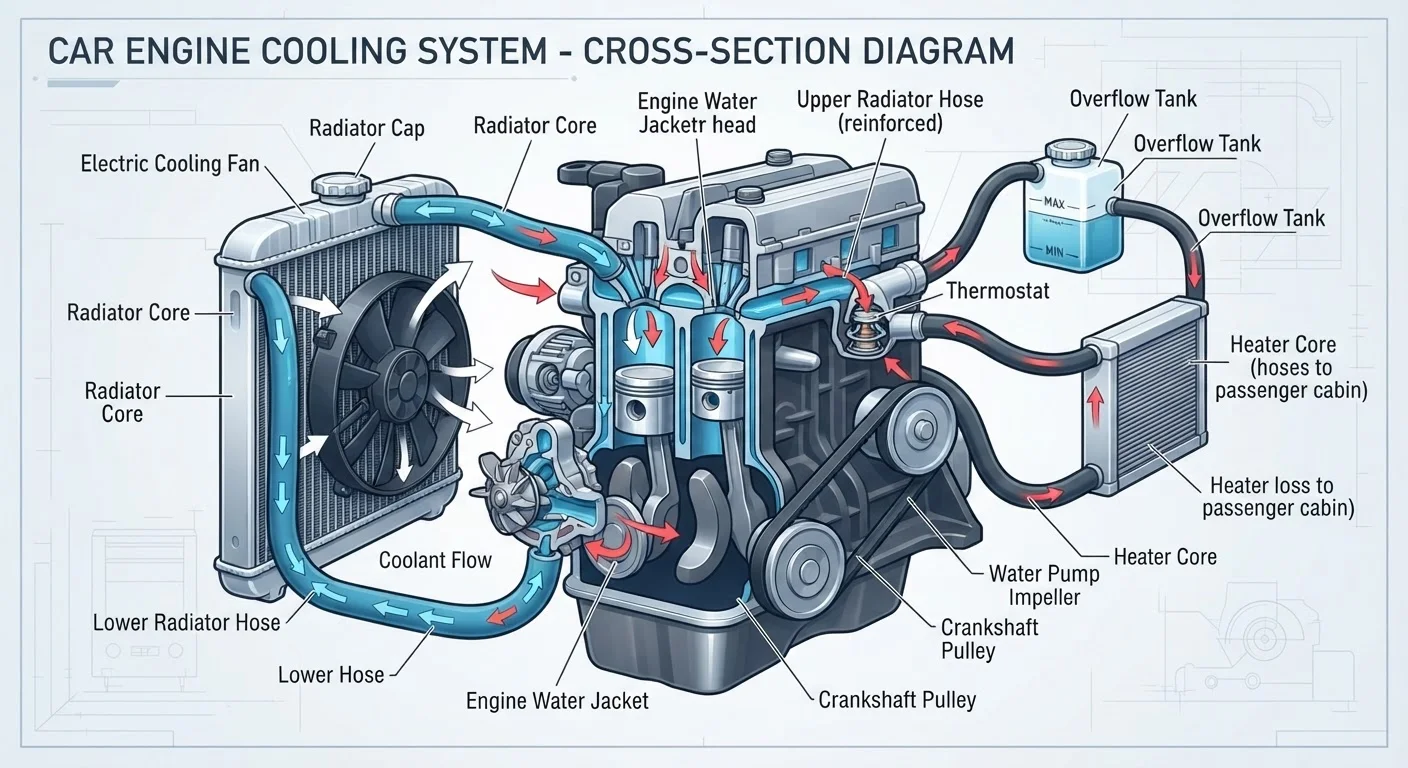
Photo credit: ProximityFinds.com | One-stop Reading Source
In this article
Understand how coolant, the radiator, water pump, and thermostat work together to keep your engine at a safe temperature.
Key Takeaways
- Coolant absorbs engine heat and releases it through the radiator - it does both jobs.
- The water pump keeps coolant moving; without it, the system stops working immediately.
- The thermostat regulates engine temperature by controlling when coolant flows to the radiator.
- Low coolant is one of the most common causes of engine overheating.
- Coolant should be flushed and replaced on a regular schedule - not just topped off.
The Four Main Players in Your Cooling System
Your engine burns fuel to generate power, and that combustion process creates enormous heat - enough to destroy metal components if left unchecked. The cooling system exists to manage that heat constantly, not just occasionally. It does this through four closely connected components.
Coolant is the working fluid. It's a mixture of antifreeze and water that absorbs heat from the engine block and carries it away. It also contains corrosion inhibitors that protect metal surfaces inside the system. As part of a broader look at vehicle fluids, our article on understanding your car's fluid systems covers how coolant fits alongside brake fluid, transmission fluid, and others.
The water pump is the engine behind the engine - it circulates coolant through the entire system continuously while the car is running. It's typically driven by the serpentine belt or timing belt. If the pump fails, coolant stops moving and temperatures spike quickly.
The thermostat acts as a gatekeeper. When the engine is cold, the thermostat stays closed, keeping coolant in the engine to help it reach operating temperature faster. Once the engine warms up to its target range - typically around 195-220°F - the thermostat opens and allows hot coolant to flow toward the radiator.
The radiator is where heat is released. Hot coolant flows through a grid of small tubes, and air passing through the fins surrounding those tubes carries the heat away. The cooled fluid then cycles back to the engine to start the process again.
Never Open a Hot Radiator Cap
The cooling system runs under pressure, and a hot radiator cap can release scalding steam and coolant if opened. Always let the engine cool completely - at least 30 minutes after shutting it off - before checking or adding coolant. This is one of the most preventable causes of burn injuries in home vehicle maintenance.
How It All Works Together
Think of the cooling system as a loop with a heat-exchange job at each end. The engine side picks up heat; the radiator side dumps it. The water pump keeps the loop moving, and the thermostat decides when the radiator gets involved.
A coolant expansion tank (sometimes called the overflow reservoir) is part of this loop too. As coolant heats up it expands, and excess fluid moves into the reservoir. When the system cools down, that fluid gets drawn back in. This is why the reservoir level rises and falls slightly - that's normal.
The cooling fan also plays a role, especially at low speeds or when idling. At highway speeds, airflow through the grille cools the radiator passively. At a standstill, an electric or belt-driven fan keeps air moving across the radiator to prevent heat buildup.
Coolant Color Doesn't Always Signal Quality
Coolant comes in green, orange, pink, yellow, and other colors depending on the additive formula. The color is mostly a dye - it doesn't reliably indicate whether the fluid is still effective. The only reliable way to check coolant condition is with an inexpensive test strip or by following your vehicle's recommended replacement schedule.
Because the system is pressurized, it can manage higher coolant temperatures without boiling - pressure raises the boiling point. That's why a cracked hose or leaking radiator cap is a real problem: it drops system pressure and can cause the coolant to boil even at temperatures that would otherwise be safe.
What Goes Wrong - and What to Watch For
Most cooling system failures trace back to a handful of causes: low coolant, a stuck thermostat, a failing water pump, a clogged radiator, or a deteriorating hose. Low coolant is the most common - either from a leak or from not keeping up with maintenance.
Watch your temperature gauge regularly. A needle that creeps higher than usual - even before it reaches the danger zone - is an early warning worth taking seriously. A sudden spike, visible steam, or a sweet smell (coolant has a distinctive odor) means stop the vehicle promptly.
Routine maintenance matters too. Coolant doesn't last forever; its protective additives break down over time and the fluid can become acidic. Our seasonal car maintenance guide explains how extreme temperatures stress the cooling system specifically and what to check before summer and winter arrive.
For drivers comfortable doing basic checks at home, our piece on safe DIY maintenance tasks walks through what's reasonable to handle yourself - including checking the coolant reservoir - and what's better left to a professional. Tasks involving the pressurized cooling system, like replacing hoses under pressure or a water pump, typically fall in the second category.
~195-220°F
Normal engine operating temperature range
Most gasoline passenger car engines are designed to run efficiently within this temperature window, as noted in standard automotive engineering references.
50/50
Recommended antifreeze-to-water mix ratio
Most vehicle manufacturers recommend a 50% antifreeze, 50% distilled water blend for year-round protection in typical North American climates.
15-18 psi
Typical cooling system operating pressure
Pressurizing the system raises the boiling point of coolant, allowing it to absorb more heat before vaporizing - a key factor in preventing overheating.
Frequently Asked Questions

Author
Automotive Editorial Team
Automotive Editorial Team is the collective byline for our editorial team and contributor network. Articles published under this byline or an editorial pen name are researched, written, and reviewed according to our editorial standards for clarity, consistency, and independence before publication.
View all articles →