
Disc Brakes vs. Drum Brakes: What Sets Them Apart
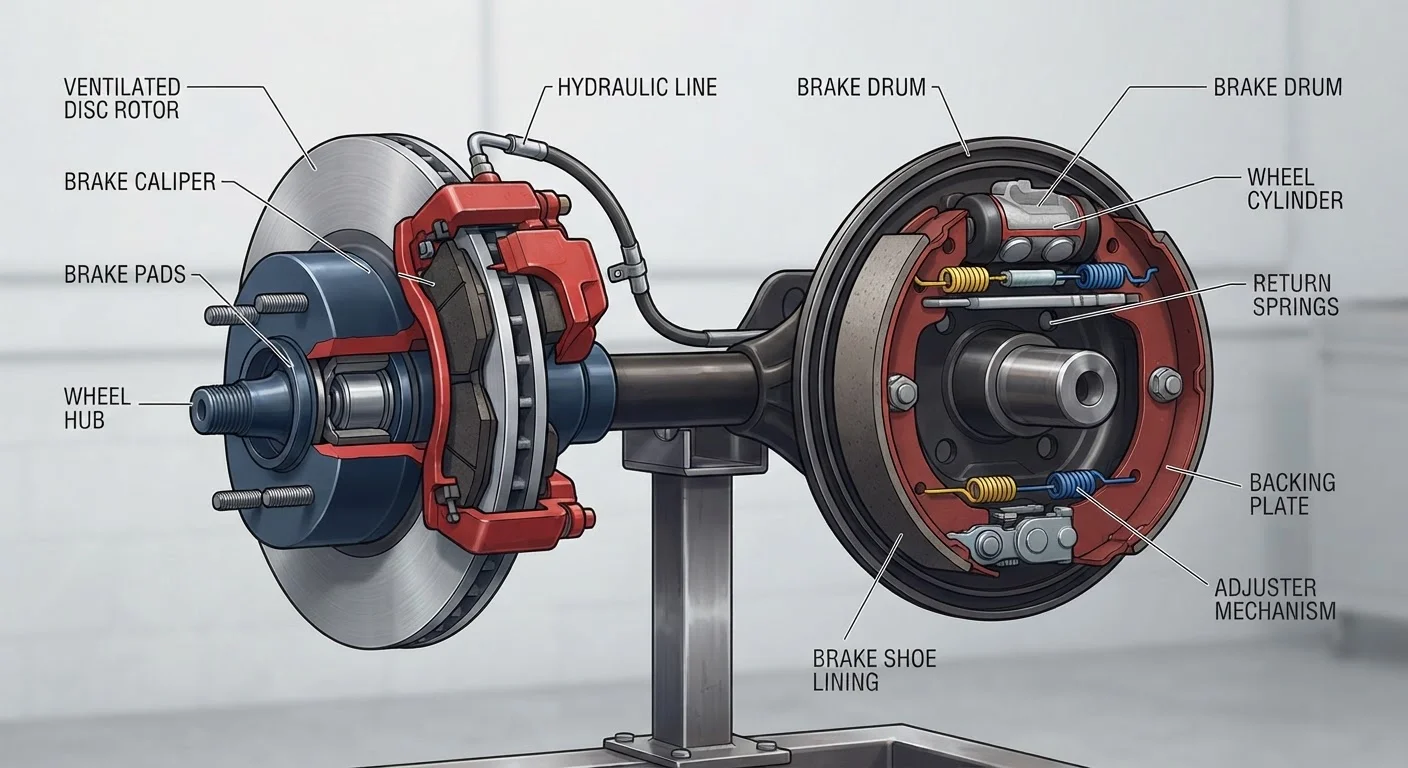
Photo credit: ProximityFinds.com | One-stop Reading Source
In this article
See how disc and drum brake designs differ in stopping power, heat management, maintenance, and where each is typically used.
Key Takeaways
- Disc brakes use a rotor and caliper; drum brakes use shoes pressed outward inside a hollow drum.
- Disc brakes dissipate heat faster, which helps maintain consistent stopping power under repeated use.
- Most modern vehicles use disc brakes on front wheels; drums may still appear on rear wheels of economy cars.
- Drum brakes can double as a mechanical parking brake, which influences where automakers place them.
- Both types require regular inspection - worn brakes are a safety risk regardless of design.
How Each Brake System Works
Understanding the difference starts with knowing what each system is actually doing when you press the brake pedal.
Disc brakes consist of a flat, circular metal rotor that spins with the wheel. When you brake, hydraulic pressure pushes a caliper - a clamp-like device - to squeeze brake pads against both sides of that rotor. The friction slows the rotor, which slows the wheel.
Drum brakes work differently. Instead of a rotor, there's a hollow metal drum that rotates with the wheel. Inside that drum sit curved brake shoes lined with friction material. When you apply the brakes, hydraulic pressure pushes the shoes outward so they press against the inner surface of the spinning drum, creating friction that slows the vehicle.
Both systems rely on the same fundamental principle - friction converts kinetic energy (motion) into heat energy - but the geometry and exposure to air make a significant practical difference in how they perform.
| Criterion | Disc Brakes | Drum Brakes |
|---|---|---|
| Key components | Rotor, caliper, brake pads | Drum, wheel cylinder, brake shoes |
| Heat dissipation | Excellent - open to airflow | Limited - heat trapped in drum |
| Fade resistance | Higher | Lower under repeated hard stops |
| Typical placement | Front wheels; all corners on many vehicles | Rear wheels on economy/light vehicles |
| Parking brake integration | Requires separate mechanism | Naturally accommodated by design |
| Ease of visual inspection | Easier - components visible | Harder - enclosed by drum |
| Manufacturing cost | Higher | Lower |
Heat Management and Fade Resistance
The biggest performance gap between disc and drum brakes is how each handles heat. Braking generates a lot of it, and heat buildup is the enemy of consistent stopping power.
Disc brake rotors are exposed directly to airflow around the wheel. That open design allows heat to dissipate quickly between stops. Many rotors are also vented - they have internal channels that pull air through the rotor itself, accelerating cooling further.
Drum brakes trap heat inside the drum housing. Under repeated, hard stops - think a long downhill grade or spirited driving - that heat accumulates. When brake components get too hot, the friction material becomes less effective, a condition called brake fade. Drum brakes are more susceptible to fade than discs for this reason.
For everyday suburban driving with typical stop-and-go traffic, drum brakes on rear wheels rarely reach temperatures that cause problems. But if you frequently drive in hilly terrain or tow a trailer, the heat management advantage of disc brakes becomes meaningful. Driving conditions also affect how hard your brakes work - wet roads and steep grades push any brake system harder.
60-70%
Braking load handled by front brakes
Weight transfer under braking shifts load forward, making front brake performance critical on all vehicle types.
~400°F+
Typical rotor temperature under hard braking
Brake components regularly reach high temperatures during aggressive use; disc brake design helps shed this heat before it causes fade.
Where Each Type Is Used - and Why
Today's vehicles use a mix of both designs based on engineering trade-offs rather than one being universally superior.
Front brakes do roughly 60-70% of a vehicle's total braking work because weight shifts forward during deceleration. That's why virtually all modern passenger cars use disc brakes up front - the performance and heat-management advantages matter most there.
Rear brakes carry lighter loads, which is why you still find drum brakes on rear axles of many economy cars and light trucks. They're cheaper to produce and perfectly adequate for the demands placed on them. Some automakers also prefer rear drums because the design integrates a mechanical parking brake naturally and compactly.
Higher-end vehicles, trucks rated for heavier payloads, and performance cars typically run disc brakes at all four corners for maximum consistency and fade resistance.
Your vehicle's drivetrain can also influence brake sizing - AWD and 4WD vehicles managing power to all wheels often benefit from larger, disc-based setups at every corner.
What About Disc-Drum Hybrid Rear Setups?
Some vehicles use a design that combines a disc rotor for normal braking with a small drum mechanism built into the rear hub solely for the parking brake. This gives the performance benefits of disc brakes while keeping the parking brake simple and mechanically reliable. If your rear rotors look unusually thick at the center, that's likely what you're seeing.
Maintenance Differences to Know
Both brake types wear out and need periodic attention, but they age a bit differently.
Disc brake pads are straightforward to inspect - a mechanic (or a careful look through the wheel spokes) can see pad thickness directly. When pads wear down, replacement is relatively simple. Rotors can warp from heat or develop deep grooves and may need resurfacing or replacement at service intervals.
Drum brake shoes are enclosed, making visual inspection harder without removing the drum. Brake dust and debris can accumulate inside, and the self-adjusting hardware that keeps shoes properly positioned can seize or wear over time. Rear drum brakes often last a long time because they do less work, but that can lead drivers to overlook them.
Regardless of which type your vehicle has, warning signs like squealing, grinding, or a pulling sensation should never be ignored. Driving habits like hard braking also accelerate wear on both systems. When in doubt about brake condition, have a qualified mechanic inspect them - brakes are not a component to defer.

Author
Automotive Editorial Team
Automotive Editorial Team is the collective byline for our editorial team and contributor network. Articles published under this byline or an editorial pen name are researched, written, and reviewed according to our editorial standards for clarity, consistency, and independence before publication.
View all articles →