
Teen Drivers Face a Uniquely Dangerous First Year-Here's Why
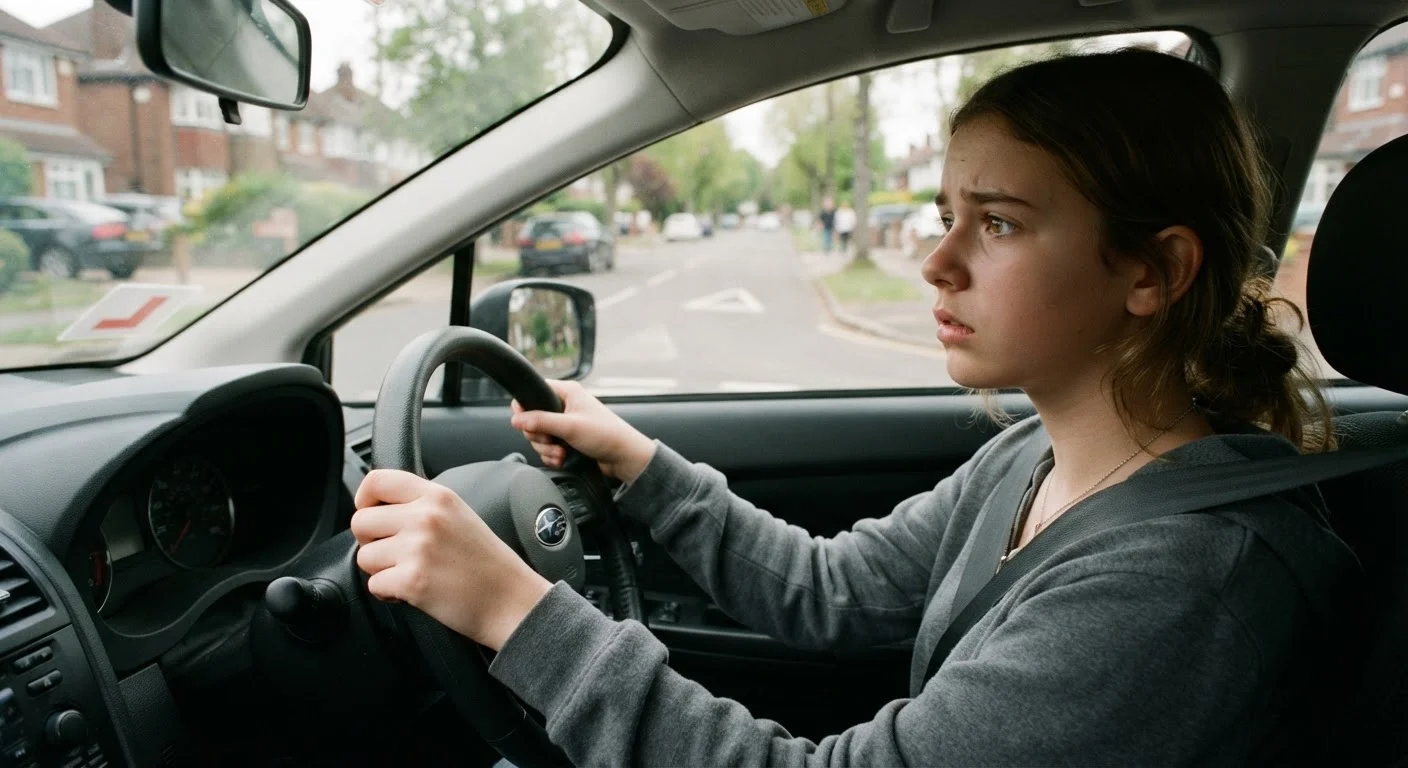
Photo credit: ProximityFinds.com | One-stop Reading Source
In this article
New teen drivers are overrepresented in crash statistics. This breakdown explains the cognitive and experiential factors behind the risk.
Key Takeaways
- Teen drivers are overrepresented in crash statistics compared to their share of licensed drivers.
- The adolescent brain's prefrontal cortex - responsible for risk assessment - isn't fully developed until the mid-20s.
- Peer passengers, nighttime driving, and phone distractions amplify crash risk for teens.
- Graduated Driver Licensing (GDL) laws exist specifically to reduce exposure during the highest-risk period.
- Crash rates for teen drivers drop substantially after the first year of independent driving.
The Numbers Behind the Risk
According to the Centers for Disease Control and Prevention (CDC), motor vehicle crashes are a leading cause of death among teenagers in the United States. Drivers aged 16-19 are nearly three times more likely to be involved in a fatal crash per mile driven than drivers aged 20 and older. That gap is wide enough to be treated as a public health concern - not just a parenting worry.
What makes this especially striking is that it isn't simply about being new to driving. Adults who learn to drive later in life show elevated crash rates early on, too. But teen drivers combine inexperience with developmental factors that make the challenge distinctly harder.
3x
Fatal crash rate vs. drivers 20+
According to the CDC, drivers aged 16-19 have roughly three times the fatal crash rate per mile driven compared to drivers 20 and older.
~50%
Crash rate drop after first year
Research on novice drivers indicates crash rates can fall by roughly half after completing the first year of independent driving.
2x
Crash risk increase with teen passenger
Studies on teen driving behavior have found that carrying even one teenage passenger approximately doubles crash risk for a teen driver.
Brain Development Plays a Bigger Role Than Most People Realize
The prefrontal cortex - the part of the brain responsible for evaluating risk, suppressing impulsive responses, and making decisions under pressure - doesn't fully mature until the mid-20s. For a 16-year-old behind the wheel, this means the cognitive infrastructure for sound, split-second judgment is still a work in progress.
This isn't a character flaw or a lack of effort. It's biology. A teen driver may know the rules of the road perfectly and still struggle to accurately gauge the speed of an oncoming car, correctly judge a safe gap in traffic, or override an impulsive lane change. The gap between knowing and executing reliably under real conditions is exactly where many crashes happen.
“Adolescents are not simply inexperienced adults. The developing brain responds differently to risk and reward in ways that directly affect driving behavior - not through recklessness alone, but through genuine limitations in hazard perception and decision-making under pressure.”
— National Academies of Sciences, Engineering, and Medicine, Review of adolescent brain development and driving risk research
Experience - Not Just Age - Is the Key Deficit
Hazard perception is a skill built through accumulated exposure to driving situations. Experienced drivers process threats earlier and more automatically, allowing them to react with less conscious effort. New teen drivers haven't yet built that library of pattern recognition.
Research on hazard perception testing consistently shows that new drivers - regardless of how well they perform on written tests - take longer to identify developing hazards in traffic. They tend to focus on immediate, obvious threats rather than scanning for situations that are about to become dangerous. This is why complex environments like city traffic can overwhelm a new teen driver even when they feel confident at lower speeds.
Practice High-Demand Scenarios Deliberately
Supervised practice hours should include more than easy, familiar routes. Deliberately practicing merging onto highways, navigating busy intersections, and driving in light rain helps teens build the hazard recognition library that only comes from exposure. Supervised experience in these environments is far safer than encountering them alone for the first time.
Behavioral and Social Factors That Compound the Risk
Teen crash risk doesn't exist in isolation - it's shaped by context. Three factors consistently appear in crash data involving teen drivers:
- Peer passengers: The presence of other teenagers in the car is associated with increased crash risk. Attention shifts toward social interaction, and risk-taking behavior tends to increase in front of peers.
- Nighttime driving: Reduced visibility and fatigue demand more from a driver's hazard detection system - exactly the system still being built. Night driving carries its own set of compounding hazards that hit new drivers hardest.
- Phone use and distraction: Teen drivers show higher rates of distracted driving involving phones. Many distraction myths give drivers false confidence - hands-free use, for instance, still impairs cognitive attention significantly.
These factors don't just add risk - they multiply it when they occur together.
What Graduated Licensing Is Designed to Do
Most U.S. states use some form of Graduated Driver Licensing (GDL) - a tiered system that limits driving privileges during the highest-risk learning window. Typical restrictions include supervised driving requirements, nighttime curfews, and limits on teen passengers during the intermediate stage.
GDL programs are specifically designed to reduce exposure to high-risk scenarios before skills and judgment have had time to develop. The evidence supporting their effectiveness is substantial - states with stricter GDL laws generally see lower teen crash fatality rates.
New teen drivers can also build stronger habits from the start. Consistent safe driving habits compound over time into a meaningfully safer record. And building basic vehicle knowledge early - like understanding routine car maintenance - reduces the chance that a mechanical issue catches a new driver off guard on the road.
This article is for general informational purposes. Drivers should consult state-specific licensing requirements and traffic safety resources for guidance applicable to their situation.
Frequently Asked Questions

Author
Automotive Editorial Team
Automotive Editorial Team is the collective byline for our editorial team and contributor network. Articles published under this byline or an editorial pen name are researched, written, and reviewed according to our editorial standards for clarity, consistency, and independence before publication.
View all articles →