
City Driving vs. Highway Driving: The Safety Risks That Differ Between Both
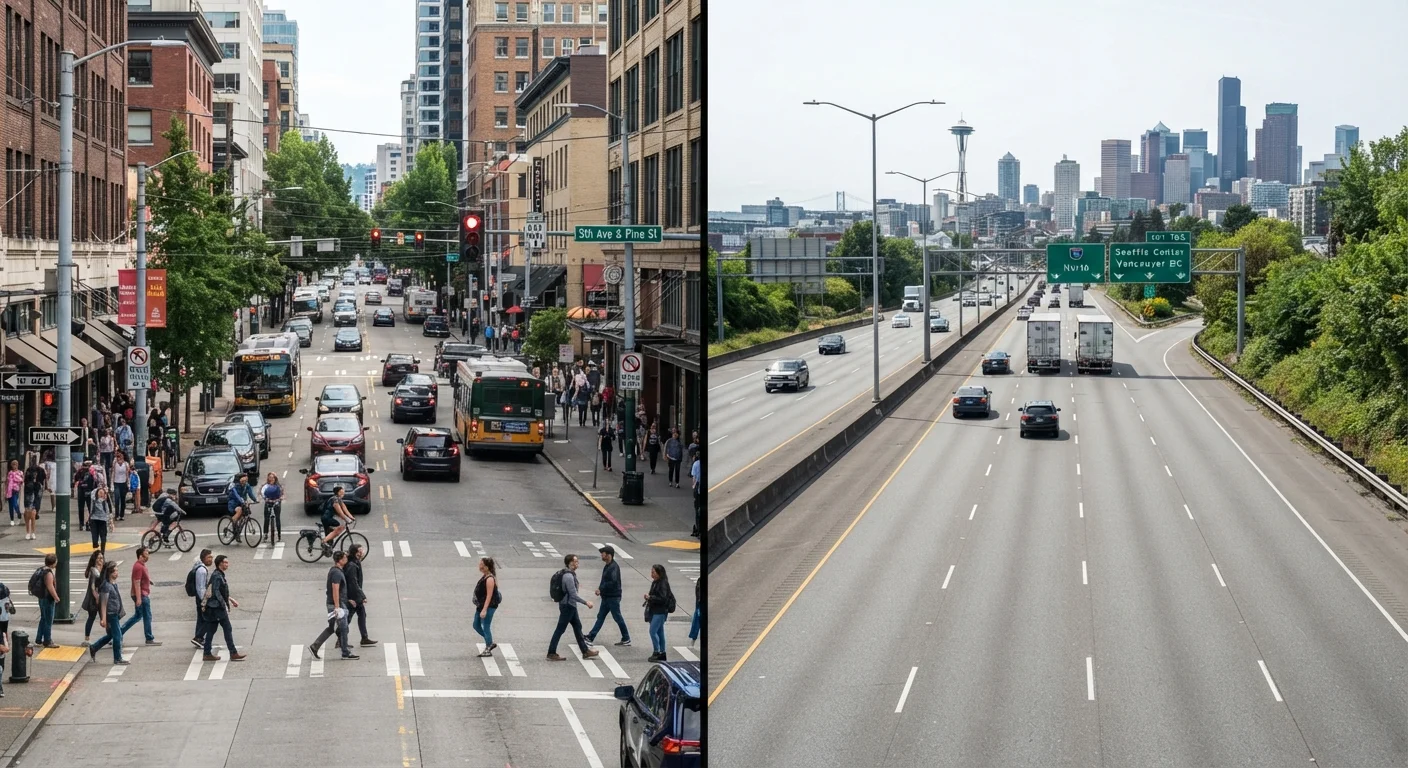
Photo credit: ProximityFinds.com | One-stop Reading Source
In this article
Urban streets and interstates each come with their own hazards. Understanding how the risks differ helps you stay alert to the right threats.
Key Takeaways
- City driving produces more crashes overall due to intersections, pedestrians, and frequent stops.
- Highway crashes are less frequent but far more likely to be fatal, largely due to high speeds.
- Distraction is dangerous in both environments but plays out very differently depending on road type.
- Fatigue is primarily a highway risk; pedestrian and cyclist hazards are primarily a city risk.
- Adjusting your mental approach - not just your speed - is the key to staying safe on either road.
The Core Difference: Frequency vs. Severity
When comparing city and highway driving, the most important distinction isn't which is "safer" in a general sense - it's understanding that each carries different types of risk. City driving produces a higher number of crashes per mile. Highway driving produces fewer crashes but far deadlier ones when they do occur.
According to the National Highway Traffic Safety Administration (NHTSA), the majority of traffic crashes happen on surface streets, not interstates. But fatality rates per mile traveled are significantly higher on rural highways and interstates, where speeds are elevated and emergency response times are longer. In short: you're more likely to get into a fender-bender on city streets, but more likely to be seriously injured or killed in a highway crash.
Understanding this split helps you calibrate the right kind of attention for whichever road you're on.
City Driving: Where Complexity Creates Hazard
Urban environments are defined by unpredictability. Stop signs, traffic signals, crosswalks, cyclists, parked cars, and delivery trucks all compete for space and attention within short distances. The sheer density of interactions is what makes city driving challenging.
Intersections
A disproportionate share of city crashes happen at intersections - including T-bones and rear-end collisions at traffic lights. Running red lights and misjudging turning gaps are common contributing factors. Our related article on roundabouts vs. traditional intersections explores how intersection design affects crash outcomes.
Vulnerable Road Users
Pedestrians and cyclists share city streets in ways they rarely do on highways. Drivers must account for people stepping off curbs, cyclists merging into traffic, and children near schools and parks. This demands constant, active scanning of the full environment - not just the vehicle ahead.
Distraction at Low Speed
City driving involves frequent stops, which can tempt drivers to glance at phones or adjust navigation. Even at 25 mph, a two-second distraction covers roughly 73 feet - enough to miss a pedestrian stepping into the street.
Stay Ahead of City Intersections
Before entering any intersection - even on a green light - briefly scan left and right for drivers who may be running a late yellow or red. This half-second habit costs you nothing and can prevent a serious side-impact collision. Keeping your foot hovering over the brake as you approach signals also shortens your reaction distance.
Highway Driving: Where Speed Changes the Stakes
On the interstate, the hazards are fewer in number but higher in consequence. The absence of cross-traffic, pedestrians, and stop signals can create a false sense of safety - but the physics of high-speed travel leave little margin for error.
Crash Severity at Speed
At 70 mph, a vehicle travels roughly 103 feet per second. Reaction time, braking distance, and impact forces all increase dramatically compared to city speeds. A crash that might be a minor bump at 20 mph can be catastrophic at freeway speeds.
Driver Fatigue
Monotonous highway environments are a leading contributor to drowsy driving. Straight roads, consistent speeds, and low cognitive demand can make a driver's attention drift or cause microsleep - brief lapses in consciousness that last a few seconds but cover hundreds of feet. This risk compounds on long trips. See our companion piece on night driving hazards, which are especially pronounced on highway stretches after dark.
Lane Changes and Merging
Multi-lane highway driving introduces risks around blind spots, improper merging, and sudden braking in fast-moving traffic. Our detailed guide on merging and lane-change safety covers the habits that cause the most highway crashes and how to avoid them.
Don't Let Highway Monotony Fool You
A calm, straight highway can mask serious fatigue until it's too late. If you notice lane drift, difficulty focusing on the road ahead, or heavy eyelids, treat it as an emergency - pull off at the next safe exit or rest area. Cracking a window or turning up the radio provides only temporary relief and should not replace stopping to rest.
How to Adjust Your Mindset for Each Environment
The practical takeaway isn't that one road type demands more caution - it's that each demands different caution.
| City Driving | Highway Driving | |
|---|---|---|
| Crash frequency | Higher - more interactions per mile | Lower - fewer conflict points |
| Crash severity | Lower - reduced speeds limit impact force | Higher - speed amplifies injury risk |
| Primary hazards | Intersections, pedestrians, cyclists | Fatigue, speeding, lane-change errors |
| Distraction risk | High - frequent stops tempt phone use | High - monotony causes attention drift |
| Fatigue risk | Low - constant stimulation keeps drivers alert | High - repetitive environment promotes drowsiness |
| Required driver focus | Active scanning of complex environment | Sustained alertness over long distances |
In the city, active scanning - frequently checking mirrors, anticipating pedestrian movements, watching for cyclists - is your most valuable habit. Keep a generous following distance even at low speeds, and treat every intersection as a potential conflict point regardless of who has the right of way.
On the highway, your biggest tools are spacing and alertness management. Maintain at least three to four seconds of following distance, take breaks every two hours on long drives, and stay engaged by varying speed or changing radio inputs to counteract the monotony. Aggressive driving behaviors - tailgating, weaving through traffic - are especially dangerous at speed. For more context, see our piece on aggressive driving and road rage.
Road conditions add another layer to both environments. Wet pavement, fog, and ice affect braking and handling differently depending on speed. Our guide on driving in adverse weather explains how to adjust for each condition. And if you're working on building long-term habits that hold up across both road types, safe driving habits that compound over time is worth reading.

Author
Automotive Editorial Team
Automotive Editorial Team is the collective byline for our editorial team and contributor network. Articles published under this byline or an editorial pen name are researched, written, and reviewed according to our editorial standards for clarity, consistency, and independence before publication.
View all articles →