
Distracted Driving Myths That Give Drivers a False Sense of Safety
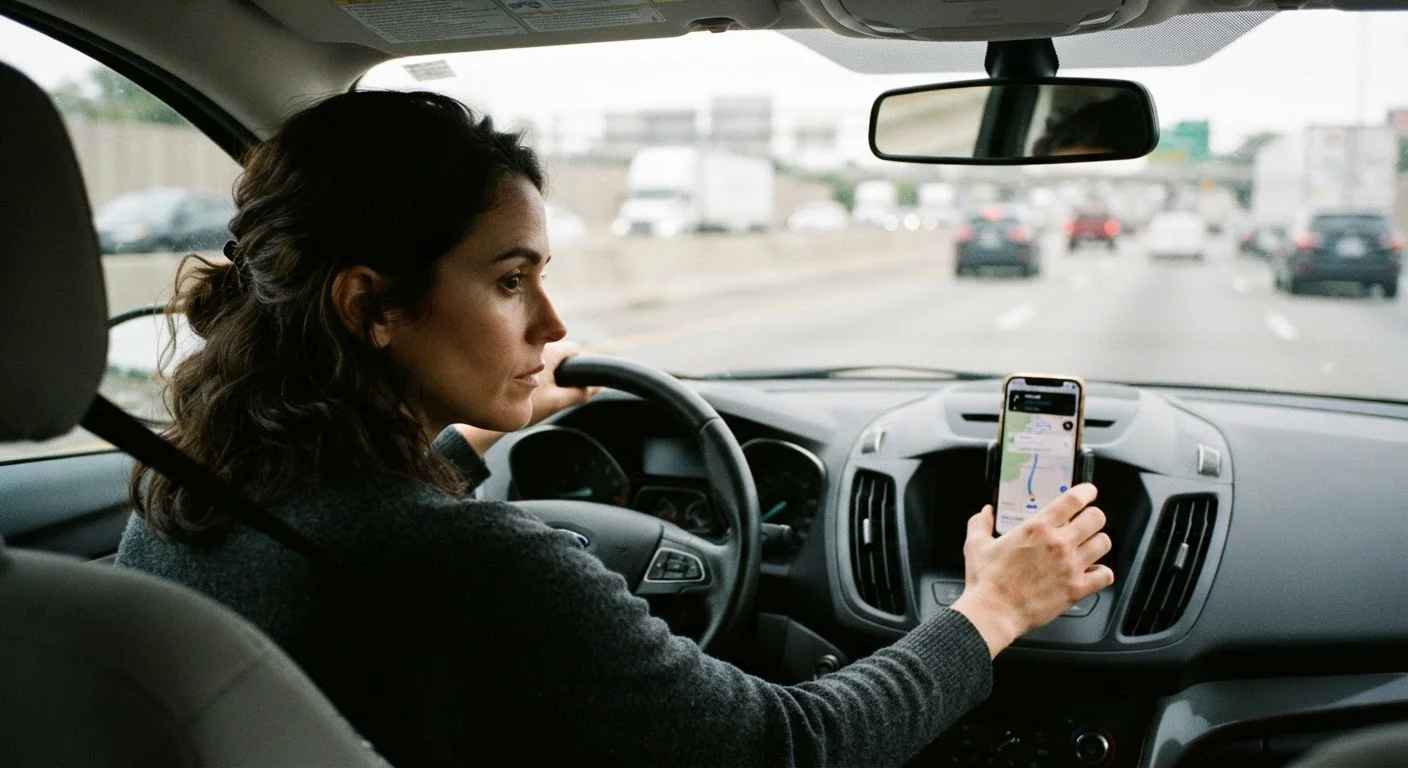
Photo credit: ProximityFinds.com | One-stop Reading Source
Hands-free isn't risk-free. Separating fact from fiction about phone use, multitasking, and attention on the road.
Key Takeaways
- Hands-free phone calls still significantly impair driving performance compared to no phone use.
- Multitasking behind the wheel is a cognitive illusion - the brain switches tasks, it doesn't split attention evenly.
- Voice-to-text and navigation apps create mental distraction even when your hands stay on the wheel.
- Short glances at a phone add up to seconds of blindness at highway speeds.
- Experienced drivers are not meaningfully protected from the cognitive effects of distraction.
Why These Myths Are So Persistent
Distracted driving is one of the most studied safety problems on American roads, yet a surprising number of drivers still operate under false assumptions about when it's safe to use a phone or divide their attention. These myths persist partly because they feel true - multitasking seems possible, a quick glance seems harmless, and a hands-free call feels fundamentally different from holding a phone. Research consistently shows otherwise.
The gap between perception and reality matters. Overconfidence in our ability to multitask translates directly into risky decisions. Understanding where that confidence comes from - and why it's misplaced - is the first step toward safer habits on every road you drive.
For a broader look at how attention and risk interact, see our safe driving habits guide covering the small behaviors that have outsized long-term effects.
Myth
Hands-free phone calls are safe because both hands stay on the wheel.
Fact
Hands-free calls are cognitively distracting in ways that measurably impair driving performance, even with hands on the wheel.
The physical act of holding a phone is only one part of the distraction problem. Research from the National Safety Council and academic driving simulation studies consistently shows that the mental load of a phone conversation - tracking a dialogue, formulating responses, processing emotional content - reduces the brain's capacity to scan the road, detect hazards, and react in time. This is sometimes called cognitive distraction. A driver on a hands-free call can look directly at a hazard and fail to consciously register it, a phenomenon researchers call inattention blindness. Talking with a passenger tends to be less dangerous partly because passengers naturally pause conversation during complex driving moments - phone callers don't have the same situational awareness and won't.
Myth
Experienced drivers can handle distractions better than new drivers.
Fact
Experience does not meaningfully protect drivers from the cognitive impairment caused by distraction.
Experienced drivers have automated many mechanical aspects of driving - steering, braking, checking mirrors - and it's tempting to assume that automation leaves extra mental bandwidth for other tasks. But the demands that distractions compete with aren't the mechanical ones; they're the higher-order functions like hazard detection, judgment, and prediction. Those remain cognitively expensive regardless of how many years you've been driving. Studies examining reaction times and hazard response under distraction show similar degradation across experience levels. Overconfidence rooted in experience may actually make some veteran drivers more likely to engage in distracting behaviors because they trust themselves too much.
Myth
A quick glance at your phone only takes your eyes off the road for a second - that's not enough to matter.
Fact
At highway speeds, a two-second glance means traveling roughly the length of a basketball court without watching the road.
At 55 mph, a vehicle covers about 80 feet per second. A glance that lasts just two seconds - quick by most people's estimation - means traveling more than 160 feet essentially blind. Texting, which typically takes an average of five or more seconds to read or compose, covers an even greater distance. The problem is compounded by the fact that drivers tend to underestimate how long their eyes were off the road. What feels like a one-second glance is often longer. On roads where traffic patterns or road conditions change rapidly, that gap in attention is where crashes happen.
Myth
Voice-to-text is safe because you never look at your phone.
Fact
Voice-to-text still creates significant cognitive distraction and does not eliminate crash risk.
Voice-to-text removes the visual component of texting but preserves the cognitive load. Composing a message - deciding what to say, listening to playback, correcting errors - occupies meaningful mental resources. Research funded by the AAA Foundation for Traffic Safety found that some voice-to-text systems actually increased cognitive workload compared to simply talking because of the extra steps involved in correcting errors and navigating the interface. The hands stay on the wheel, but the mind is still divided. This is one of the harder myths to shake because the technology feels like a responsible compromise.
Myth
If traffic is moving slowly, it's safe to check your phone.
Fact
Low-speed environments like traffic jams and parking lots are common sites of phone-related collisions.
Slow-moving traffic creates a false sense of safety because the consequences of a collision seem smaller. But fender-benders in congested traffic are frequent outcomes of phone distraction, and pedestrians, cyclists, and children on foot are disproportionately present in the lower-speed environments where drivers feel most comfortable checking their phones. A distracted driver in a parking lot poses a serious risk to pedestrians crossing behind the vehicle. Maintaining attention at low speeds is just as important - and arguably requires more active scanning, not less.
The Real Picture of Driver Distraction
Distraction isn't limited to phones. Eating, adjusting the radio, a heated conversation with a passenger, and even daydreaming all pull cognitive resources away from driving. But phone use - particularly texting - represents a uniquely concentrated risk because it combines visual, manual, and cognitive distraction simultaneously.
~3,500
U.S. deaths annually linked to distracted driving
According to National Highway Traffic Safety Administration (NHTSA) data, thousands of people are killed each year in crashes reported to involve a distracted driver.
5 sec
Average time eyes leave road to send a text
The NHTSA estimates that sending or reading a text takes an average of five seconds of eye contact away from the road.
4x
Increased crash risk while using a handheld phone
Research published in peer-reviewed traffic safety literature estimates that using a handheld phone while driving increases crash risk approximately four times compared to undistracted driving.
Teen drivers and new drivers face compounded risk because they have less experience to draw on when something unexpected happens. Our article on why teen drivers face a dangerous first year breaks down the cognitive and experiential factors at play.
Distraction also interacts with other risky behaviors. A driver who is following too closely and glancing at a phone has almost no margin for error. Our piece on why tailgating is more dangerous than most drivers realize explains how stopping distances shrink that margin to near zero. Similarly, cognitive impairment from fatigue compounds distraction risk - what happens to your body during driver fatigue is worth reading alongside this article.
No App or Setting Eliminates Distraction Risk
Do Not Disturb modes, mounting holders, and voice assistants reduce certain types of distraction but do not eliminate cognitive load from phone interaction. The safest approach while driving is to place the phone out of reach and out of sight before starting the vehicle. If a call or message genuinely can't wait, pull over safely and park before engaging with your phone.
The practical takeaway is straightforward: when you're driving, driving should be the only task. Phones on silent, navigation set before you leave, and conversations kept light are all evidence-backed steps - not overcaution.

Author
Automotive Editorial Team
Automotive Editorial Team is the collective byline for our editorial team and contributor network. Articles published under this byline or an editorial pen name are researched, written, and reviewed according to our editorial standards for clarity, consistency, and independence before publication.
View all articles →