
Consumer Electronics from Purchase to Disposal: Understanding the Full Lifecycle
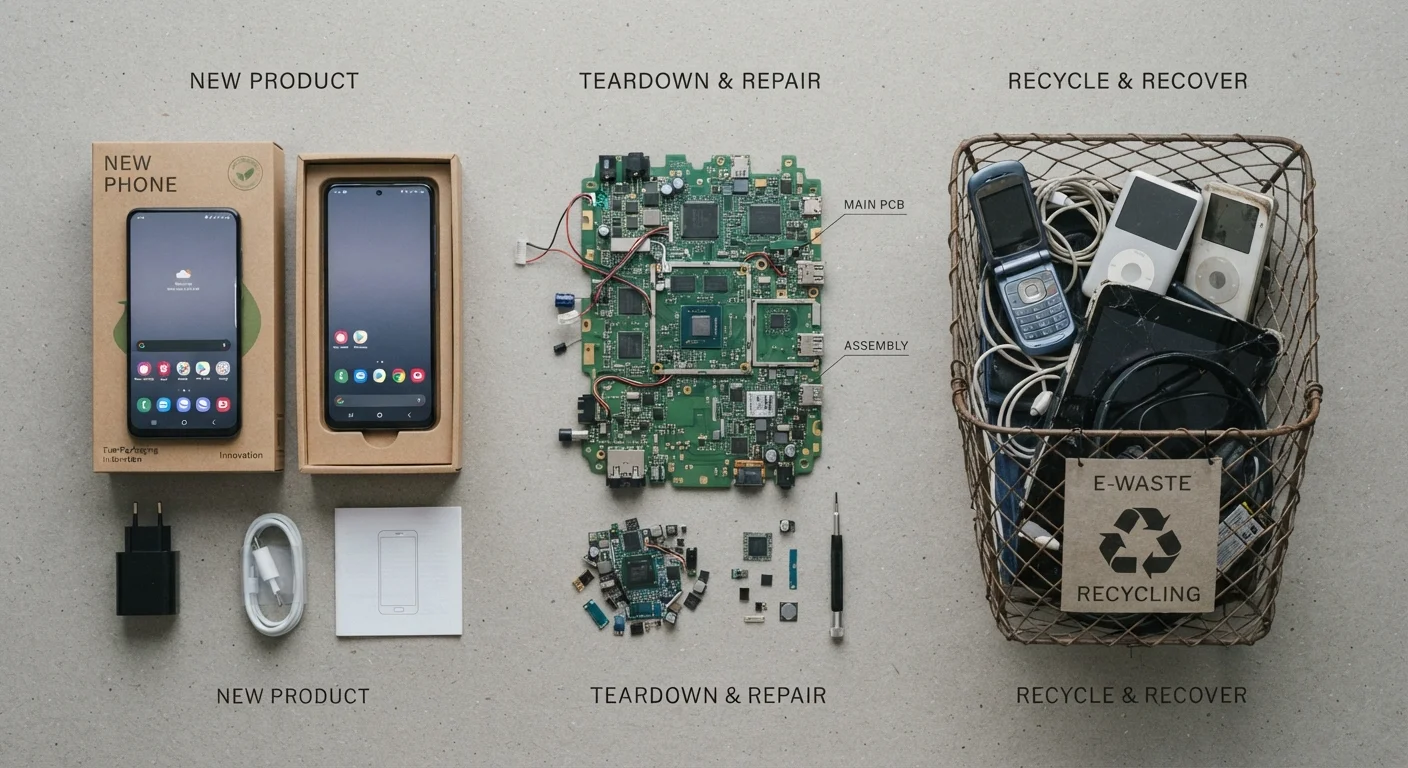
Photo credit: ProximityFinds.com | One-stop Reading Source
In this article
Electronics don't just appear on shelves. This guide traces the journey from manufacturing and retail to daily use, repair, and responsible e-waste disposal.
Key Takeaways
- Electronics involve complex global supply chains before they ever reach a store shelf.
- Software updates and battery health are the two largest factors in how long a device stays useful.
- Repair and resale markets can meaningfully extend a device's useful life and reduce environmental impact.
- E-waste is the fastest-growing solid waste stream in the world; responsible recycling options exist in every US state.
- Understanding the full lifecycle helps consumers make smarter, less wasteful purchasing decisions.
How Electronics Are Made and Sourced
A smartphone or laptop contains hundreds of components sourced from dozens of countries. Rare earth elements - minerals like cobalt, lithium, and neodymium - are mined primarily in regions including the Democratic Republic of Congo, Chile, and China. These raw materials are refined, processed into chips and components, and assembled in large-scale manufacturing facilities before the finished product enters the global distribution chain.
This supply chain complexity has real consequences for consumers. Production decisions made years before a product launches - around chip architecture, material sourcing, and factory capacity - directly influence device availability, pricing, and even repairability. Understanding that electronics reflect a long chain of decisions helps set realistic expectations about cost and longevity.
50M+
Metric tons of e-waste generated globally per year
According to the UN Global E-waste Monitor, annual e-waste generation has surpassed 50 million metric tons and continues to grow.
~80%
Battery capacity retained after 500 charge cycles
Apple, among other manufacturers, publicly documents that lithium-ion batteries are designed to retain up to 80% capacity after 500 complete charge cycles under normal conditions.
17+
Rare earth elements in a typical smartphone
Research from the Royal Society of Chemistry estimates that a modern smartphone contains more than 17 rare earth elements sourced from multiple continents.
The Retail and Purchase Phase
By the time a device reaches a store shelf or online listing, it has passed through importers, regional distributors, and retail or carrier channels. In the US market, smartphones are often sold subsidized through carrier agreements, which can affect which software is pre-installed and whether the device is unlocked for use on other networks.
When evaluating a purchase, focus on specifications that affect everyday performance - processor generation, RAM, storage capacity, and camera system - rather than headline marketing claims. Warranty terms and the manufacturer's stated software support window are equally important signals of long-term value. For a fuller look at how needs shift over a lifetime of device ownership, see how smartphone needs evolve across life stages.
Check the manufacturer's committed software support window before purchasing - a device with five or more years of guaranteed OS updates provides substantially more long-term security and usability than one with two years.
Security patches address newly discovered vulnerabilities. Devices that stop receiving updates become progressively more exposed over time, which is a practical concern beyond just feature access.
Ask whether a device is 'carrier-unlocked' before buying, especially if you travel internationally or anticipate switching carriers.
Carrier-locked devices restrict which network SIMs will work, limiting flexibility. Unlocked devices give consumers more control over plan and carrier choices without hardware replacement.
Daily Use, Updates, and Performance Over Time
Most consumer electronics perform best in the first one to two years of use. Battery capacity degrades with each charge cycle - lithium-ion batteries, the standard in phones, tablets, and laptops, typically retain around 80% of original capacity after 500 full charge cycles. Software updates introduce new features but can also increase processing demands, which may slow older hardware.
Two habits significantly extend useful life: keeping software updated (for security patches) while monitoring whether updates noticeably affect performance, and avoiding heat exposure, which accelerates battery degradation. If you're building out a broader home tech setup for the first time, this guide to setting up home electronics from scratch covers practical priorities.
Maximize Battery Life With One Simple Habit
Avoid charging your lithium-ion device to 100% and depleting it fully on a regular basis. Most battery engineers recommend keeping charge levels between roughly 20% and 80% for everyday use. Many modern devices include settings that cap charging automatically to support this approach.
Repair, Resale, and Extending Device Life
The repair economy for consumer electronics has grown substantially. Several US states have passed or are considering right-to-repair legislation that requires manufacturers to make parts, tools, and repair documentation available to consumers and independent shops. Screen replacements, battery swaps, and charging port repairs are among the most common and cost-effective fixes that can add one to three years of usable life to a device.
Resale markets - including certified refurbished programs offered by manufacturers - give older devices a second life. A refurbished device that has been inspected and tested can offer comparable performance to a new unit at meaningfully lower cost. The same lithium-ion battery chemistry that powers your phone also drives electric vehicles; how EV battery packs degrade and charge follows very similar principles to what happens inside your smartphone.
Third-Party Repair: Verify Credentials First
Not all independent repair shops use quality parts or employ trained technicians. Before authorizing a repair, ask whether the shop uses manufacturer-certified or OEM-equivalent components. Substandard parts - particularly batteries - can reduce performance or, in rare cases, create safety risks.
E-Waste: Disposal and Responsible Recycling
The United Nations estimates that global e-waste generation exceeds 50 million metric tons annually, making it the world's fastest-growing solid waste stream. Consumer electronics contain hazardous materials - including lead, mercury, and cadmium - that require specialized handling and must not be placed in standard household trash.
In the US, responsible disposal options include manufacturer take-back programs, retailer drop-off points (many large electronics retailers participate), and certified e-recyclers verified through programs such as e-Stewards or R2 (Responsible Recycling). Municipal household hazardous waste events also accept electronics at no cost. Before recycling any device, perform a factory reset to wipe personal data and, where possible, remove the SIM card.
Never Trash Electronics - It's Often Illegal
Disposing of consumer electronics in regular household trash is prohibited in 25 US states, and penalties can apply. Beyond legal risk, improperly discarded devices leach toxic materials into soil and water. Always use a certified recycling or take-back program for any electronic device, regardless of age or condition.
This article is for general informational purposes only. Specific regulations regarding e-waste disposal vary by state and locality; verify requirements with your local waste management authority before disposing of electronics.

Author
Technology Editorial Team
Technology Editorial Team is the collective byline for our editorial team and contributor network. Articles published under this byline or an editorial pen name are researched, written, and reviewed according to our editorial standards for clarity, consistency, and independence before publication.
View all articles →