
Your First Home Repair Toolkit: What Belongs in It
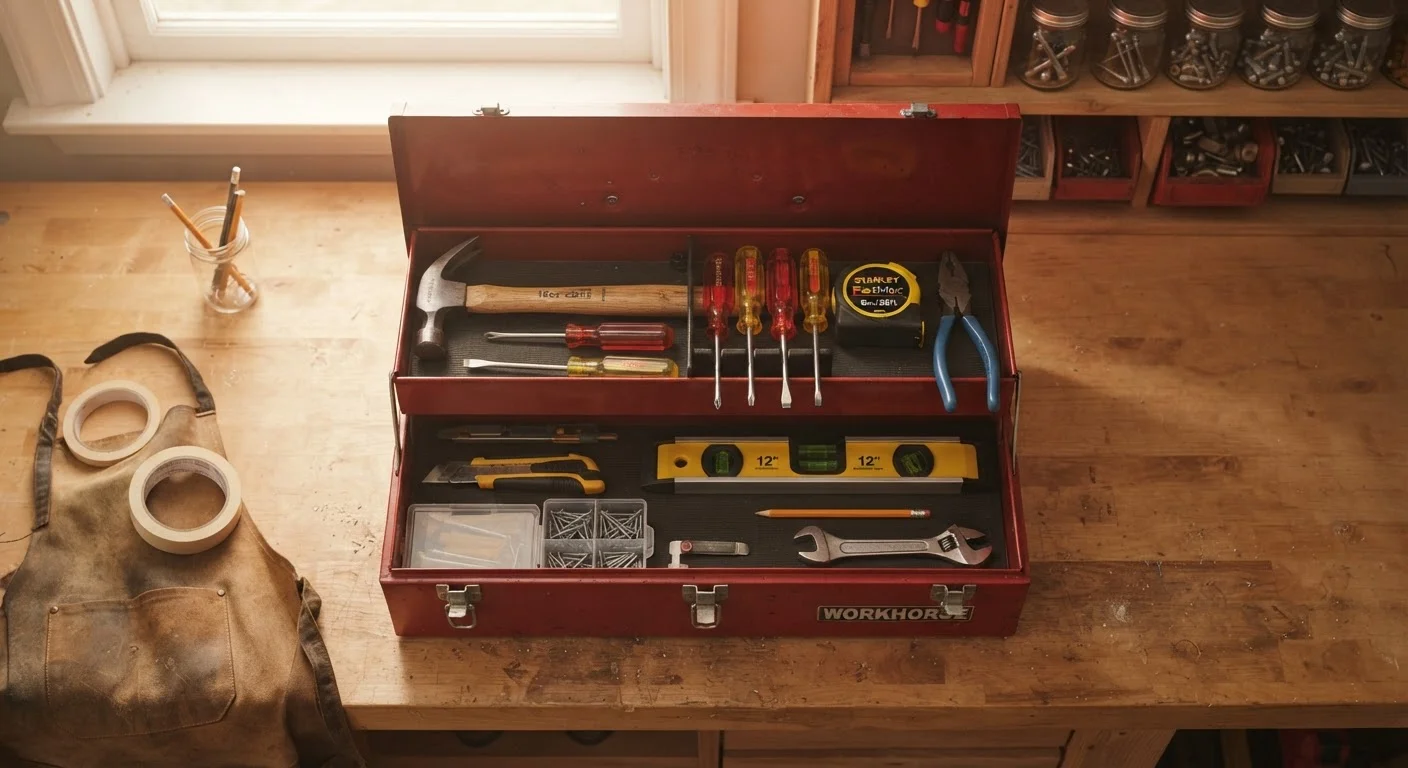
Photo credit: ProximityFinds.com | One-stop Reading Source
In this article
New homeowner or first-time renter tackling repairs? Here's the foundational set of tools that handle the widest range of common household fixes.
Key Takeaways
- A small set of quality hand tools handles the vast majority of everyday household repairs.
- Measuring tools are just as important as hammers and screwdrivers - precision prevents costly mistakes.
- Proper storage keeps tools accessible and prolongs their useful life significantly.
- Safety gear is non-negotiable, even for simple jobs around the house.
- Some repairs require a licensed professional regardless of your toolkit - knowing the difference protects you.
Why a Basic Toolkit Matters
Moving into your first home - whether owned or rented - means inheriting a long list of small jobs that no landlord or contractor will handle for you. A loose door hinge, a picture that needs hanging, a leaky cabinet hinge that needs tightening: these are all fixable in minutes if you have the right tools within arm's reach.
Beyond convenience, having a reliable starter toolkit saves money and gives you real independence over your living space. Just as building good car maintenance habits protects a vehicle investment, a well-stocked toolkit protects your home investment by letting you address small problems before they grow. If you're also navigating the homebuying process, knowing you can handle routine upkeep is a confidence booster from day one.
Load-bearing wall
A wall that supports the structural weight of the building above it. Removing or modifying one without engineering review can compromise the structure's stability.
Stud
A vertical framing member - typically wood - hidden behind drywall. Anchoring into studs provides strong, lasting support for shelves and heavy fixtures.
Drill-driver
A power tool that both drills holes and drives screws. A clutch setting lets you control how deeply a screw is driven so you don't damage surfaces.
Permit
Official approval from a local government agency to perform certain types of construction or repair work. Permits ensure work is inspected and meets safety codes.
Fastener
Any hardware used to join two materials - including screws, nails, bolts, and anchors. Choosing the right fastener for a surface prevents failures over time.
The Essential Hand Tools
These are the workhorses of any starter kit. Each one earns its keep across dozens of repair scenarios:
- Claw hammer: Drives and pulls nails, taps materials into place, and assists with light demolition. A 16-oz. head is the most versatile weight for home use.
- Screwdrivers: Stock both Phillips (#1 and #2) and flathead in medium sizes. A four-in-one or six-in-one interchangeable driver covers most bases economically.
- Adjustable pliers and needle-nose pliers: Grip, bend, and hold small components. Needle-nose pliers reach into tight spaces where standard pliers can't.
- Adjustable wrench: Tightens and loosens nuts and bolts without requiring a full socket set. A 10-inch wrench handles the range of fasteners you'll encounter most often.
- Utility knife: Scores drywall, cuts rope, opens packaging, and trims materials cleanly. Replace blades regularly - a dull blade requires more force and causes more accidents than a sharp one.
- Cordless drill-driver: Drives screws and bores holes far faster than manual tools. Look for variable speed and a clutch setting to avoid overdriving fasteners.
Buy Fewer, Better Tools
Resist the urge to fill a large toolbox all at once. A smaller set of well-made hand tools outperforms a large set of flimsy ones in both durability and ease of use. Start with the essentials listed here and add specialized tools only as a specific job demands them.
Measuring and Marking Tools
Precision tools are the unglamorous backbone of every repair job. Skipping them leads to crooked shelves, misaligned fixtures, and wasted materials.
- Tape measure: A 25-foot retractable tape handles room measurements and furniture placement with ease. Look for a wide blade that stays rigid as it extends.
- Level: A 24-inch bubble level confirms that shelves, towel bars, artwork, and fixtures are truly horizontal or vertical. Even a small degree of tilt is visible to the eye after installation.
- Pencil and chalk line: Mark cut lines, stud locations, and layout guides before you drill or fasten. A chalk line snaps a perfectly straight reference line across longer surfaces.
- Stud finder: Locates the wooden framing behind drywall so you can anchor shelves and heavy fixtures securely. Fastening into bare drywall alone is a frequent cause of wall damage.
With measuring tools in your kit, you'll avoid the most common beginner mistake: measuring once and cutting wrong. The old rule - measure twice, cut once - applies equally whether you're hanging a mirror or cutting a shelf board.
Safety Gear and Storage
Even low-stakes repairs carry real injury risks if approached carelessly. Keep these items in your toolkit alongside your tools:
- Safety glasses: Protect your eyes from debris, dust, and fragments whenever you cut, drill, or drive fasteners overhead.
- Work gloves: Reduce the risk of cuts and abrasions from sharp edges, rough materials, and metal fasteners.
- Dust mask (N95): Essential when sanding, cutting drywall, or disturbing old insulation. Older homes may contain materials that require specific precautions - consult a professional if you suspect hazardous materials.
- Flashlight or headlamp: Illuminates tight spaces behind appliances, inside cabinets, and in utility areas where overhead light doesn't reach.
For storage, a sturdy toolbox with a removable tray keeps hand tools organized and portable. As your collection grows, a wall-mounted pegboard in a garage or utility room makes every tool visible at a glance. Store tools in a dry space - moisture is the primary cause of rust and early tool failure.
Older Homes May Contain Hazardous Materials
If your home was built before 1980, materials like lead paint and asbestos may be present in walls, floors, and insulation. Before sanding, cutting, or disturbing these surfaces, consult a certified inspector. Disturbing hazardous materials without proper precautions poses serious health risks.
Knowing When to Call a Professional
A well-built starter kit empowers you to tackle dozens of common jobs - but knowing its limits is just as valuable as knowing its uses. Certain repairs carry risks that tools alone cannot mitigate:
- Electrical work: Beyond replacing a light switch or outlet cover, most electrical work requires a licensed electrician and often a permit. Errors can cause fire or electrocution.
- Gas lines: Never attempt to repair or extend gas connections yourself. This work is regulated and must be performed by a licensed plumber or gas fitter.
- Structural work: Removing or modifying walls - especially load-bearing walls - requires engineering review and permits in virtually every jurisdiction.
- Major plumbing: Connecting to or modifying supply lines and drain stacks typically requires a permit and a licensed plumber.
When in doubt, contact your local building department to clarify permit requirements before starting any project. A repair done without required permits can complicate home sales and insurance claims later. As you build skills at home, you may find the same methodical, habit-driven mindset applies to setting up other spaces - from planning your first garden to tackling home organization for the first time.
Frequently Asked Questions

Author
Home Editorial Team
Home Editorial Team is the collective byline for our editorial team and contributor network. Articles published under this byline or an editorial pen name are researched, written, and reviewed according to our editorial standards for clarity, consistency, and independence before publication.
View all articles →