
The Anatomy of a Home Electrical Panel, Explained
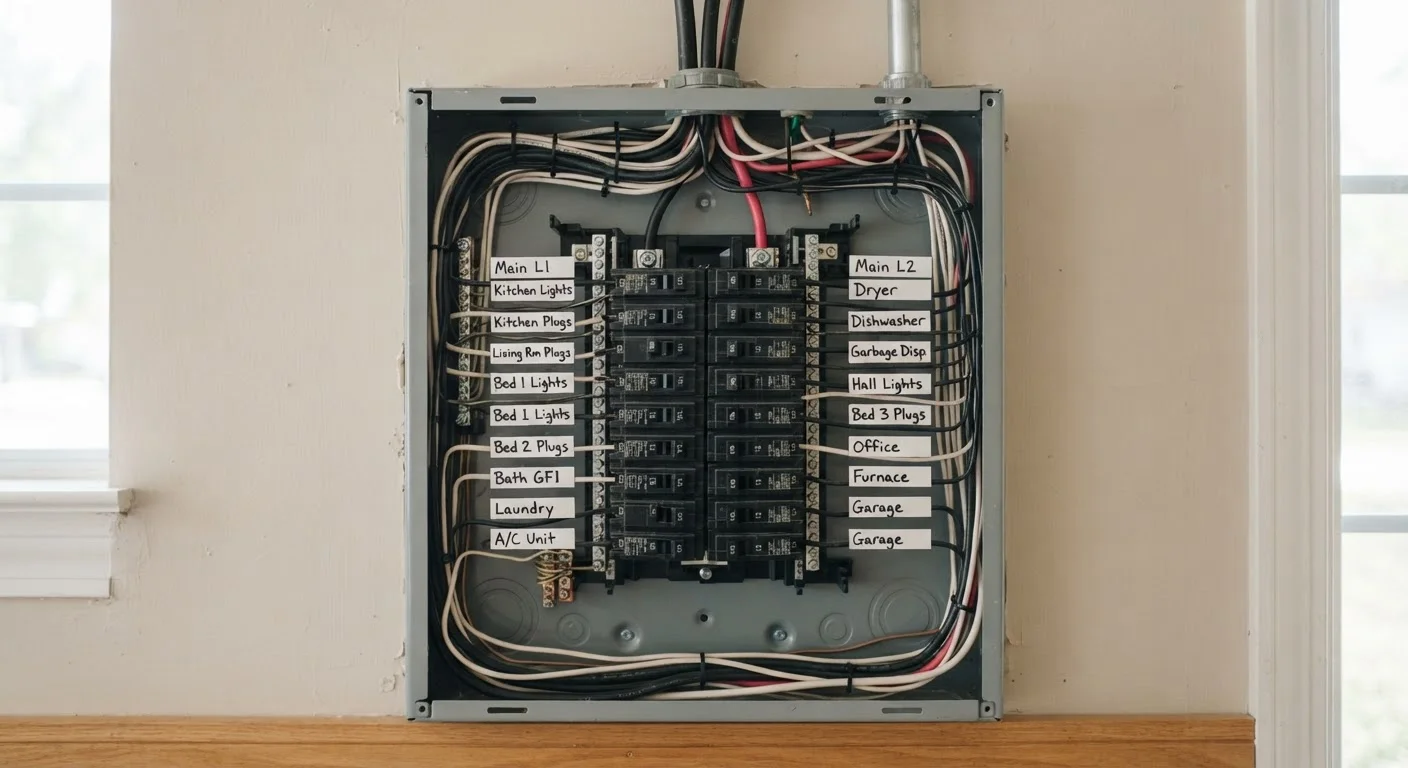
Photo credit: ProximityFinds.com | One-stop Reading Source
In this article
Circuit breakers, amperage, and load balance demystified. Understand what your panel does before deciding whether to call an electrician.
Key Takeaways
- Your electrical panel divides utility power into individual circuits, each protected by a breaker.
- Most modern homes use 200-amp panels; older homes may have 100-amp panels that need upgrading.
- A tripped breaker is a safety signal, not just an inconvenience - repeated trips warrant investigation.
- Double-pole breakers handle 240-volt appliances like dryers, water heaters, and HVAC systems.
- Work inside an electrical panel is dangerous and often code-regulated - consult a licensed electrician for any modifications.
What's Inside the Box
Crack open the door of your breaker box and you'll see a structured system, not a tangle of mystery. Here are the key components:
- Main breaker: The large double-pole breaker at the top (or sometimes bottom) controls power to the entire panel. Switching it off cuts electricity to every circuit in the home - useful during emergencies or major electrical work performed by a licensed pro.
- Bus bars: Two metal bars running down the center of the panel carry the 120-volt hot current. Individual breakers clip onto these bars, drawing power for their assigned circuits.
- Neutral and ground bars: These silver terminal strips connect the white (neutral) wires and bare copper (ground) wires from all circuits back to the panel. They're bonded together at the main panel, providing a return path and a safety fault path.
- Individual circuit breakers: Single-pole breakers handle 120-volt circuits (lighting, outlets, small appliances). Double-pole breakers occupy two slots and supply 240 volts for heavy loads like dryers and HVAC systems.
Open Slots vs. Panel Capacity
Seeing open breaker slots doesn't always mean you have room for high-amperage additions. Each new circuit still adds to the panel's total load, which must not exceed the main breaker's rating. A load calculation, performed by an electrician, is the only reliable way to determine whether your panel can support new circuits.
The breaker slots that aren't yet filled are called open slots - they indicate capacity for future circuits. A panel with no open slots can't be expanded without a subpanel or service upgrade.
Amperage, Capacity, and What It All Means
Every panel has an amperage rating stamped on the main breaker - typically 100A, 150A, or 200A in residential homes. This rating represents the maximum current the service entrance wiring and panel can safely carry at one time.
200A
Standard panel capacity for new construction
The National Electrical Code and most local building departments require 200-amp service for newly built single-family residential homes.
~40%
U.S. homes with panels over 20 years old
The U.S. Energy Information Administration estimates a large share of American housing stock was built before modern electrical standards, meaning many panels may be undersized for today's loads.
A 200-amp panel is standard for most newly built single-family homes because it accommodates modern appliances, EV chargers, and the general growth in household electrical demand. Older homes built before the 1980s may have 100-amp or even 60-amp service, which can struggle to support today's loads.
The load calculation - a process used by electricians - adds up the wattage demands of all circuits to ensure the panel isn't being pushed past its rated capacity. A panel running near its maximum continuously generates excess heat and represents a safety concern. If you're adding an EV charger, a hot tub, or a major home addition, a load calculation should come before any electrical work begins.
Why Breakers Trip and What to Do
A breaker trips - snapping to a middle or OFF position - when the current flowing through its circuit exceeds its rated amperage. There are three main causes:
- Overloaded circuit: Too many devices drawing power from a single circuit simultaneously. Common on kitchen circuits shared by a microwave, toaster, and coffee maker. The fix is redistributing devices to different circuits.
- Short circuit: A hot wire touches a neutral wire inside an outlet, switch, or appliance, causing a sudden surge of current. Short circuits can spark and are more serious than overloads - unplug devices and investigate before resetting.
- Ground fault: A hot wire contacts a grounded surface. GFCI (ground fault circuit interrupter) outlets, required in bathrooms, kitchens, and outdoors, are specifically designed to detect these and shut off within milliseconds.
Label Every Breaker Clearly
Take 20 minutes to map and label each breaker with the room or appliance it controls. Use the index card or label sheet on the inside of the panel door. Accurate labeling speeds up troubleshooting and is essential safety information for any electrician who works on your home.
If a breaker trips repeatedly for the same circuit even after removing load, do not keep resetting it. Repeated tripping signals a wiring fault, a failing breaker, or a defective appliance - any of which should be evaluated by a licensed electrician.
When setting up electronics and home tech that pull significant power - see our guide to building a home tech setup for guidance on realistic load planning - knowing your circuit capacity prevents unexpected outages.
When to Call a Licensed Electrician
Understanding your panel empowers you to reset breakers confidently and recognize warning signs - but the panel itself is not a DIY workspace. The bus bars inside remain energized even when the main breaker is off, carrying enough voltage to cause serious injury or death.
Call a licensed electrician for any of the following:
- Adding, moving, or replacing circuit breakers
- Upgrading from a 100-amp to a 200-amp service
- Installing a subpanel or dedicated circuit for a new appliance
- Burning smell, scorch marks, or buzzing sounds from the panel
- A main breaker that won't reset or stay on
Many electrical panel modifications also require a permit and inspection under local building codes. Unpermitted electrical work can create insurance complications and safety hazards - always verify what's required in your jurisdiction before work begins.
Understanding the line items on a professional estimate - much like reading a mechanic's estimate - helps you ask the right questions and evaluate whether a quoted scope of work is appropriate for your situation.
This article is for general educational purposes only and does not constitute electrical, safety, or professional advice. Always consult a licensed electrician and verify local code requirements before undertaking any electrical work in your home.
Frequently Asked Questions

Author
Home Editorial Team
Home Editorial Team is the collective byline for our editorial team and contributor network. Articles published under this byline or an editorial pen name are researched, written, and reviewed according to our editorial standards for clarity, consistency, and independence before publication.
View all articles →