
Reading a Mechanic's Estimate: What the Line Items Actually Mean
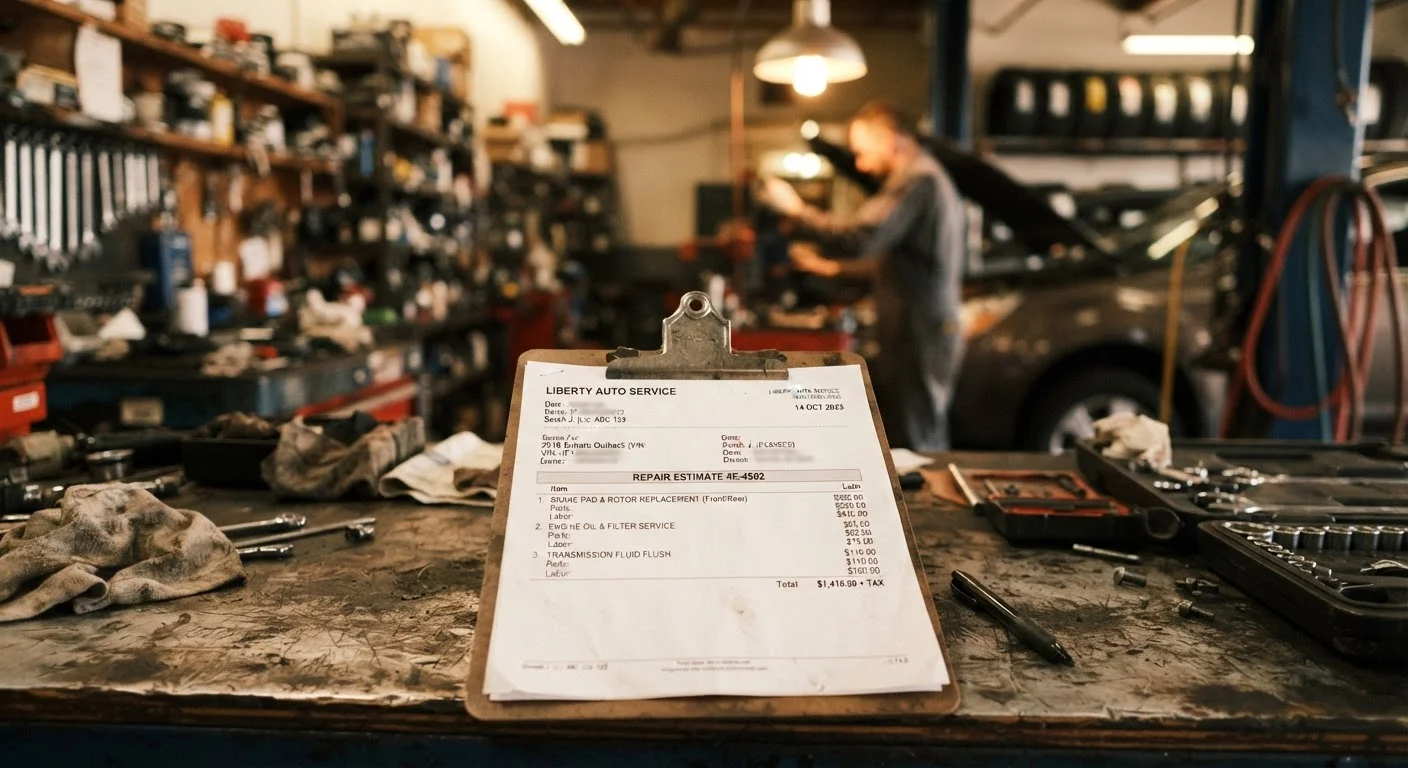
Photo credit: ProximityFinds.com | One-stop Reading Source
In this article
Labor hours, parts markups, fluid flushes — demystifying the terminology on a shop estimate so you can ask better questions.
Key Takeaways
- Labor is billed by the hour using a flat-rate guide, not necessarily actual time spent on your car.
- Parts on an estimate are typically marked up from the shop's cost - this is standard industry practice.
- "OEM" and "aftermarket" parts differ in origin and sometimes quality; ask which one is quoted.
- Fluid flush services listed separately each have their own cost - verify which are actually due.
- You can ask for a revised estimate in writing before authorizing any additional work discovered mid-repair.
The Basic Anatomy of an Estimate
A repair estimate is divided into a few predictable sections. Once you recognize the structure, the document stops feeling like a mystery and starts reading like a receipt you can actually verify.
Labor is almost always the largest line item. Shops charge by the hour using a flat-rate system - published guides (such as those from Chilton or Mitchell) assign a standardized time value to each repair task. A brake pad replacement might be listed as 1.2 hours regardless of how fast the technician works. The hourly rate varies considerably by region and shop type, with dealerships typically higher than independent garages.
Parts appear as individual line items with a price next to each one. That price includes a markup over what the shop paid - usually somewhere between 20% and 50%, though it varies. This is standard practice and how shops make a portion of their profit. What you want to confirm is which type of part is quoted: OEM (made by or for your vehicle's manufacturer) or aftermarket (made by a third party). Both can be legitimate choices depending on the repair and your vehicle's age.
Miscellaneous fees - shop supplies, environmental disposal, and sometimes a hazardous materials charge - often appear near the bottom. These are typically small but worth confirming are itemized, not hidden inside a vague total.
~$100-$175
Typical shop labor rate per hour in the U.S.
Rates vary widely by region, shop type, and vehicle; dealerships generally sit at the higher end of this range.
20-50%
Common parts markup range at repair shops
Parts markups are standard practice and help offset overhead costs; the range varies by shop and part type.
38 states
States with written auto repair estimate laws
Most U.S. states require shops to provide a written estimate above a minimum dollar threshold before beginning work.
Decoding the Most Common Line Items
Some services show up on estimates so regularly that it's worth knowing exactly what they involve before you say yes.
- Diagnostic fee: What you pay for the technician's time to identify a problem. This fee may or may not be applied toward the repair cost if you proceed - ask upfront.
- Flush services (coolant, transmission, brake fluid, power steering): These involve draining old fluid and replacing it with fresh fluid. Each system has a separate interval recommendation in your owner's manual. Not all flushes are due at the same time, so check your manual or maintenance log before approving all of them at once.
- Alignment: Adjusting the angles of your wheels to manufacturer specs. Often recommended after suspension or steering work, or when tires show uneven wear.
- Inspection or courtesy check: Some shops include a multi-point inspection at no charge. The findings may appear as recommended services - these are separate from your original repair request, and you're not obligated to approve them.
For a deeper look at what regular maintenance actually prevents, see how deferred maintenance compounds over time.
Check Your Owner's Manual First
Before approving any fluid flush or interval-based service, look up that service in your vehicle's owner's manual. Manufacturer-recommended intervals are your most reliable guide - and they may be longer than what's listed on the estimate. This one step can prevent you from paying for services you don't yet need.
What to Do Before You Sign
An estimate is a starting point for a conversation, not a take-it-or-leave-it document. A few quick steps before signing can save real money and prevent misunderstandings.
Ask what's urgent vs. advisory. If the estimate includes items beyond what you brought the car in for, ask the tech which repairs are safety-critical now and which can wait. A good shop will be direct about this.
Verify the parts tier. If aftermarket parts are quoted, ask whether OEM is available and what the price difference would be. For older vehicles, aftermarket is often perfectly sensible. For newer cars still under warranty, OEM may be required to preserve coverage.
Confirm the labor rate and flat-rate time. You're not auditing the shop - just making sure the hours listed match what the job typically involves. Most shops are forthcoming when asked politely.
Get revisions in writing. If additional issues are found mid-repair, the shop should call you, explain what was discovered, and get your verbal or written authorization before proceeding. Confirm any change is added to the estimate in writing before work continues.
If you're comfortable handling simpler items yourself, some basic maintenance tasks are genuinely safe for non-mechanics - and removing them from a shop visit can trim the total.
Estimates vs. Final Invoices
The estimate and the final invoice are two different documents. The invoice reflects actual charges after work is complete. In most states, shops cannot exceed the estimated total by more than a specific percentage - often 10% - without prior customer approval. Always compare your invoice against the estimate before paying.
Frequently Asked Questions

Author
Automotive Editorial Team
Automotive Editorial Team is the collective byline for our editorial team and contributor network. Articles published under this byline or an editorial pen name are researched, written, and reviewed according to our editorial standards for clarity, consistency, and independence before publication.
View all articles →