
What the Science Actually Says About Stress and Your Body
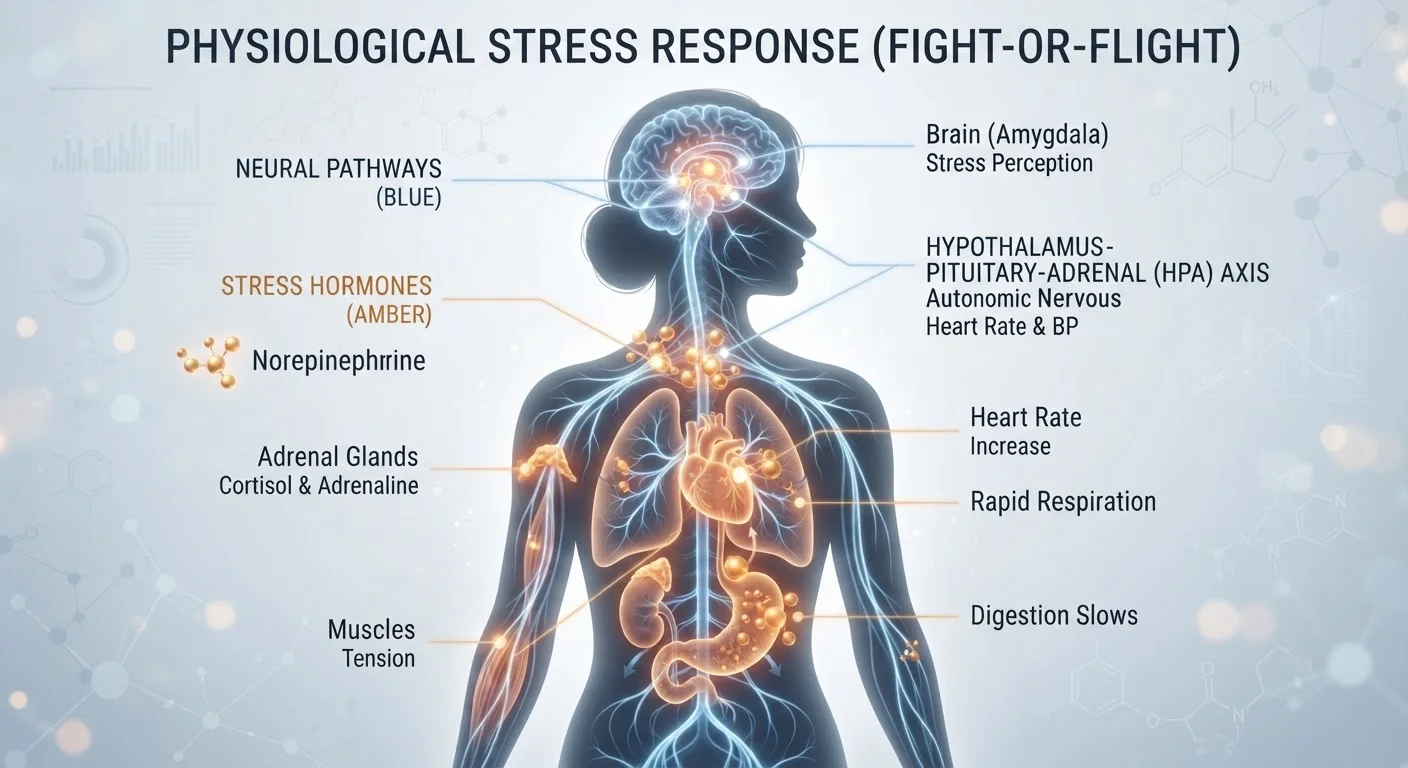
Photo credit: ProximityFinds.com | One-stop Reading Source
In this article
Stress isn't just a feeling — it triggers real physical responses. Here's what research shows about how chronic stress affects health.
Key Takeaways
- Stress triggers real, measurable physical changes - not just emotional discomfort.
- Chronic stress keeps cortisol elevated, which can disrupt sleep, immunity, and heart health.
- Short-term (acute) stress is a normal and even useful survival mechanism.
- Research-backed habits like exercise, sleep, and social connection buffer the body's stress response.
- Persistent or overwhelming stress warrants professional support - not just self-care alone.
How Your Brain Sounds the Alarm
When your brain perceives a threat - whether it's a car cutting you off or a mounting pile of deadlines - a region called the amygdala fires a distress signal. This triggers the hypothalamus to activate the sympathetic nervous system, releasing adrenaline and setting off the classic "fight-or-flight" response: heart rate surges, breathing quickens, muscles tense, and digestion slows. Within minutes, the adrenal glands also release cortisol, the body's primary stress hormone.
This cascade is a sophisticated survival tool. In true emergencies, it can be lifesaving. The problem arises when the threat never fully resolves - a difficult work environment, financial strain, or ongoing relationship conflict - and the alarm stays on indefinitely.
“Stress is not just a psychological experience. It is a full-body biological event, and understanding it as such changes how we approach both prevention and recovery.”
— Robert Sapolsky, Neuroendocrinologist and author of 'Why Zebras Don't Get Ulcers'
What Chronic Stress Does to the Body
Sustained elevation of cortisol and other stress hormones has well-documented effects across multiple body systems:
- Cardiovascular: Chronic stress is associated with increased blood pressure, arterial inflammation, and a higher risk of heart disease. Research published in peer-reviewed cardiology journals links job-related stress to measurable increases in cardiovascular event risk.
- Immune: The immune system is suppressed under prolonged stress, making the body more vulnerable to infections and slowing wound healing. Chronic stress also increases levels of pro-inflammatory cytokines, which are linked to a range of diseases.
- Brain and memory: The hippocampus - a brain region critical for memory - is sensitive to sustained cortisol. Animal and human studies suggest chronic stress can reduce hippocampal volume and impair the ability to form and retrieve memories.
- Digestive system: The gut and brain are in constant communication via the vagus nerve. Stress alters gut motility and microbiome composition, contributing to issues like irritable bowel syndrome.
- Sleep: Elevated cortisol in the evening disrupts the natural drop in arousal needed for restful sleep, creating a feedback loop - poor sleep then amplifies the next day's stress response.
77%
Americans reporting physical stress symptoms
According to the American Psychological Association's Stress in America survey, a large majority of US adults report experiencing physical symptoms they associate with stress.
2x
Increased cardiovascular risk from job strain
A meta-analysis published in The Lancet found that job strain was associated with approximately double the risk of coronary heart disease compared to low-stress work environments.
40%
Reduction in immune response under chronic stress
Research reviewed in Psychological Bulletin found that chronic stressors lasting a month or longer significantly suppressed cellular and humoral immune function.
Understanding this full picture is part of what the mental wellness framework covers - stress does not operate in isolation from sleep, emotions, and social health.
What the Evidence Says Actually Helps
A large body of research points to several accessible strategies that meaningfully reduce the physiological burden of stress - not just the subjective feeling of it.
Start With the Lowest-Effort Interventions
You don't need a comprehensive wellness program to begin reducing your stress load. Even short bouts of diaphragmatic breathing - slow, deep exhales - have been shown in controlled studies to activate the parasympathetic nervous system within minutes. Starting small and building consistency is more effective than high-effort strategies that don't stick.
Physical activity is one of the most robustly supported interventions. Regular movement lowers resting cortisol, increases stress resilience, and promotes neuroplasticity. For a detailed look at how the body adapts, see how consistent exercise changes the body.
Sleep hygiene is both a stress-management tool and a recovery mechanism. Because stress and sleep are bidirectionally linked, protecting sleep is among the highest-leverage interventions available. Interestingly, circadian disruption - whether from travel or irregular schedules - compounds the stress burden; the science of jet lag and circadian disruption offers relevant parallels.
Mindfulness and controlled breathing activate the parasympathetic nervous system - sometimes called the "rest-and-digest" counterpart to fight-or-flight - reducing cortisol and heart rate. Multiple randomized trials support their effectiveness for stress reduction when practiced consistently.
Social connection is consistently underrated. Research demonstrates that strong social ties buffer the HPA axis response to stressors, with socially isolated individuals showing greater cortisol reactivity.
Tracking your own patterns is a useful first step. A structured weekly emotional well-being check-in can help you spot when stress is accumulating before it reaches a crisis point.
This article is for general informational purposes only and does not constitute medical advice. If you are experiencing significant or persistent stress, please consult a qualified healthcare professional.
Frequently Asked Questions

Author
Health Editorial Team
Health Editorial Team is the collective byline for our editorial team and contributor network. Articles published under this byline or an editorial pen name are researched, written, and reviewed according to our editorial standards for clarity, consistency, and independence before publication.
View all articles →