
Jet Lag Is Real - Here's What the Science Says About Managing It
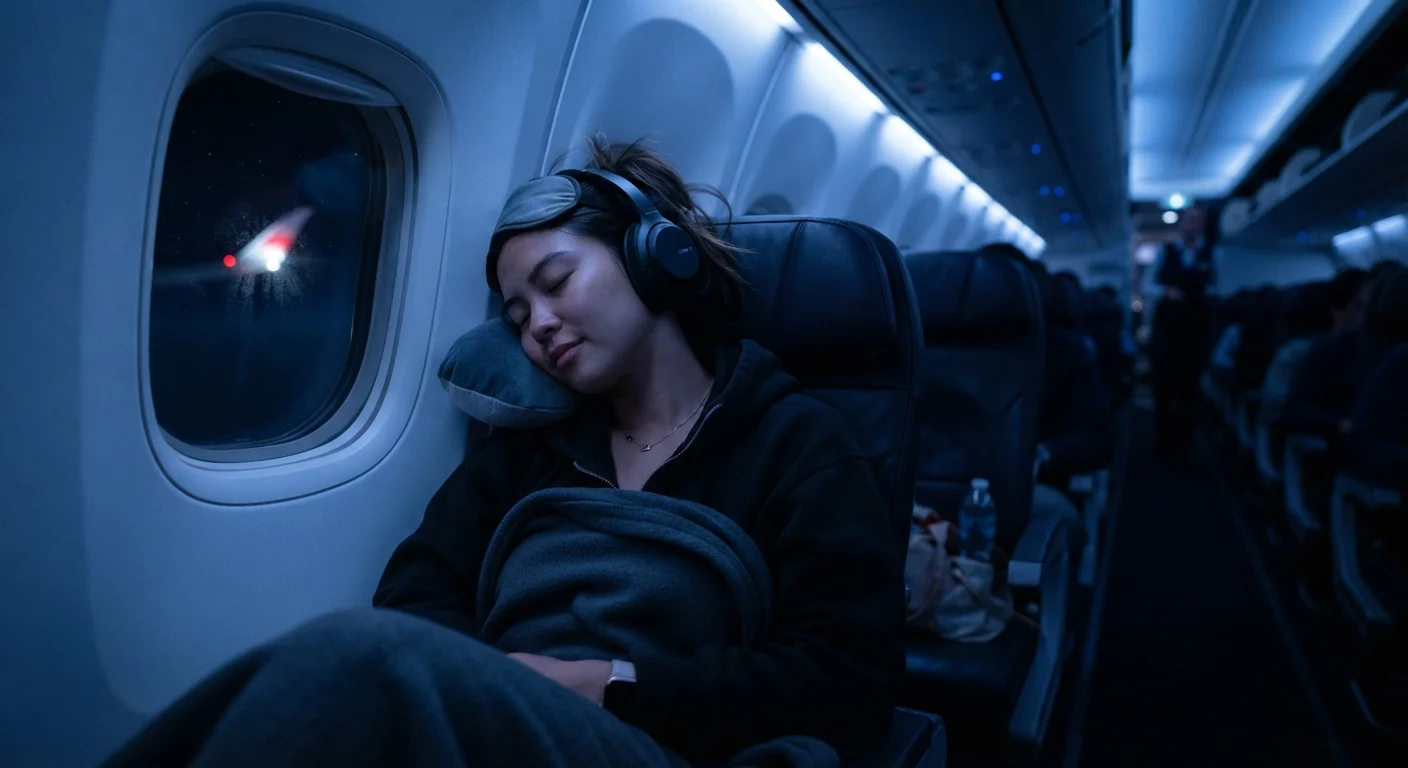
Photo credit: ProximityFinds.com | One-stop Reading Source
In this article
Jet lag isn't just tiredness — it's a circadian disruption. Understand what's happening in your body and which strategies have evidence behind them.
Key Takeaways
- Jet lag is a circadian rhythm disruption caused by crossing multiple time zones rapidly.
- Eastward travel typically causes worse jet lag than westward travel for most people.
- Light exposure, sleep timing, and hydration are the most evidence-supported management tools.
- Melatonin can help with jet lag timing, but it's not a sleep medication - context matters.
- Pre-trip sleep adjustments can reduce how hard jet lag hits upon arrival.
What's Actually Happening Inside Your Body
Your circadian rhythm is a roughly 24-hour biological cycle that regulates nearly every system in your body - when you feel alert, when you digest food efficiently, when your core temperature dips for sleep. It's anchored primarily by light hitting specialized photoreceptors in your eyes, which relay signals to the brain's master clock. Rapid air travel scrambles that system by physically moving you faster than any biological mechanism evolved to handle.
The result isn't vague tiredness - it's genuine physiological conflict. Your gut may want breakfast while your destination clock says midnight. Your cortisol (the alertness hormone) peaks at the wrong hour. Even immune function and cardiovascular rhythms are temporarily out of phase. Understanding this helps explain why simple tricks like "just push through" rarely work as advertised.
Jet Lag Is a Medical Reality
Jet lag is recognized by sleep medicine professionals as a circadian rhythm sleep-wake disorder. While it resolves on its own for most healthy travelers, severe or prolonged symptoms - especially combined with existing health conditions - warrant a conversation with a healthcare provider before your trip. This article is general information, not medical advice.
Myths vs. Facts: What the Evidence Actually Supports
Jet lag has attracted no shortage of folk remedies and anecdotal wisdom - some useful, some harmless, and some actively counterproductive. The myth-and-fact breakdowns below focus on what sleep scientists and circadian researchers have actually studied.
Myth
Jet lag is just being tired from a long flight - a good night's sleep will fix it.
Fact
Jet lag is a circadian rhythm disruption that persists for days, not something one sleep session resolves.
Fatigue from a long trip is one symptom, but jet lag is fundamentally different. Your body runs on an internal clock - the circadian rhythm - governed by the suprachiasmatic nucleus in the brain, which synchronizes with environmental light cues. When you cross multiple time zones quickly, your internal clock is still aligned with home time while the outside world demands something different. This misalignment affects sleep, digestion, mood, and cognitive performance. Research suggests the body re-synchronizes at roughly one to one-and-a-half time zones per day, meaning a transatlantic trip can leave you out of sync for five or more days.
Myth
It doesn't matter which direction you fly - jet lag is the same either way.
Fact
Eastward travel typically produces more severe jet lag because it forces your clock to advance, which is harder for most people than delaying it.
Human circadian rhythms run slightly longer than 24 hours by nature, which means the body finds it easier to delay its clock (going west, staying up later) than to advance it (going east, sleeping earlier). Flying from New York to Paris demands a roughly six-hour advance; flying the return trip is generally better tolerated. This is why many frequent international travelers prefer westward routing when scheduling permits.
Myth
Staying up all night before a long eastward flight will make the adjustment easier.
Fact
Arriving severely sleep-deprived makes it harder to use light cues effectively and weakens cognitive resilience during adaptation.
The logic sounds intuitive - exhaust yourself so you sleep on the plane - but circadian researchers caution against it. Extreme sleep deprivation impairs your ability to stay awake at target local times, undermines mood and immune function, and makes it harder to resist napping at the wrong hours upon arrival. A smarter evidence-informed approach is gradually shifting bedtime and wake time toward destination time in the days before departure, rather than a dramatic all-nighter.
Myth
Melatonin is a sleeping pill you can take anytime to knock yourself out on a plane.
Fact
Melatonin is a circadian signal, not a sedative; its effectiveness depends almost entirely on when you take it relative to your current and target time zones.
Melatonin is a hormone the brain naturally produces as darkness falls, signaling that sleep time is approaching. Supplemental melatonin works best when used to shift the clock - taken in the early evening in your destination time zone to advance your rhythm for eastward travel, or in the early morning to delay it for westward trips. Taking it at the wrong time can actually reinforce misalignment. Dosage and timing guidance should come from a healthcare provider, since individual responses vary. Good sleep hygiene habits around melatonin use also improve outcomes.
Myth
Drinking alcohol on the plane helps you sleep and therefore reduces jet lag.
Fact
Alcohol disrupts sleep architecture, suppresses REM sleep, and worsens dehydration - all of which intensify jet lag symptoms.
Alcohol may shorten the time it takes to fall asleep, but it fragments sleep quality significantly by reducing restorative REM stages. Cabin air at altitude is already drying - typically around 10-20% relative humidity - and alcohol accelerates fluid loss, compounding fatigue and headache. The net effect on landing is worse, not better. Staying well hydrated with water throughout the flight is one of the few universally agreed-upon, low-risk strategies for softening jet lag.
For a broader look at how the body responds to stress and disruption, see what the science says about stress and your body.
Practical, Evidence-Informed Strategies Before and After You Fly
Before departure: In the two to three days before an eastward trip, try going to bed and waking up 30-60 minutes earlier each day. Seek morning light exposure at home to begin nudging your clock forward. For westward travel, do the reverse.
During the flight: Set your watch to destination time immediately. Sleep and eat according to destination cues where possible. Stay hydrated, limit alcohol, and move around periodically.
After arrival: Get outdoor daylight exposure during the local morning - natural light is the single most powerful circadian resynchronizer available. Resist long naps; if you must nap, keep it under 30 minutes before local early afternoon.
Don't Rely on Sleeping Pills Alone
Sedative sleep aids may help you sleep on a plane, but they do not reset your circadian clock - they can even delay adaptation if timed poorly. Long-haul flights also carry a deep-vein thrombosis risk, and sedatives that reduce movement can compound that concern. Always consult a healthcare professional before using any medication for travel sleep.
Recovery from jet lag shares some principles with post-exercise recovery: the body needs cues, consistency, and patience rather than brute force. For context on how rest and active engagement interact with recovery, resting vs. active recovery is worth a read.
~1-1.5
Time zones re-synced per day
Sleep medicine research generally estimates the circadian clock adjusts at roughly one to one-and-a-half time zones per day after a long-haul flight.
10-20%
Typical cabin relative humidity
Aircraft cabin humidity levels are far lower than most indoor environments, contributing to the dehydration that amplifies jet lag fatigue.
This article is for general informational purposes only and is not medical advice. Consult a qualified healthcare professional before making decisions about medications, supplements, or travel health planning.

Author
Travel Editorial Team
Travel Editorial Team is the collective byline for our editorial team and contributor network. Articles published under this byline or an editorial pen name are researched, written, and reviewed according to our editorial standards for clarity, consistency, and independence before publication.
View all articles →