
Saving While in Debt: A Realistic Framework for Doing Both at Once
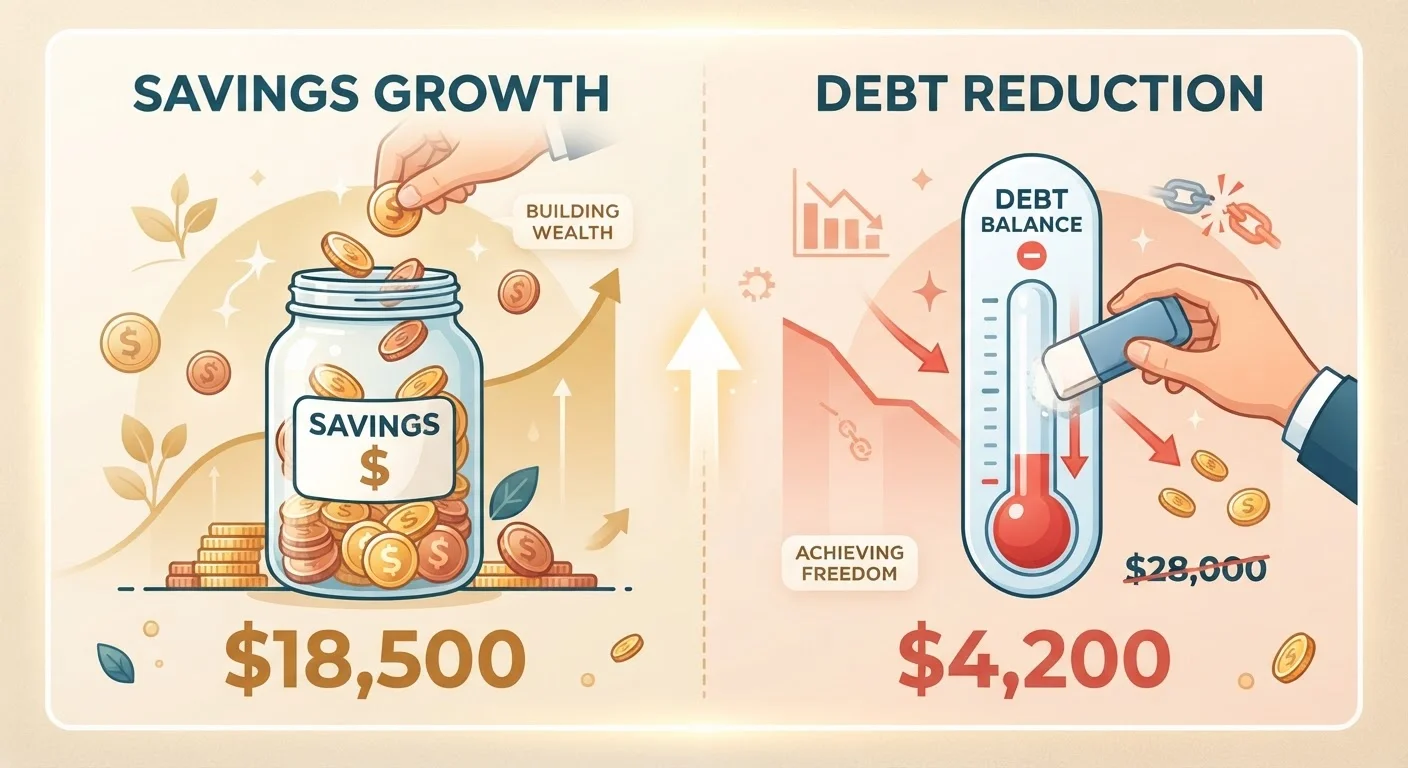
Photo credit: ProximityFinds.com | One-stop Reading Source
In this article
Many Americans carry debt and need savings simultaneously. Explore how to think about balancing both goals, including when prioritizing one over the other makes sense.
Key Takeaways
- Carrying debt doesn't mean you should stop saving - both goals can and often should run simultaneously.
- A small emergency fund acts as a financial firewall, preventing new debt when unexpected expenses arise.
- High-interest debt generally warrants more aggressive payoff focus, but context matters greatly.
- Splitting available dollars between savings and debt repayment is a sound middle-ground strategy for many households.
- Automating contributions to savings - even small amounts - builds momentum and reduces decision fatigue.
Why Doing Both at Once Is Often the Right Call
Conventional wisdom sometimes suggests picking one financial goal and attacking it exclusively - put every spare dollar toward debt, then save later. In practice, that all-or-nothing approach leaves many households financially exposed. If an unexpected car repair or medical bill arrives while your savings account sits at zero, the likely result is new debt layered on top of existing obligations.
The more resilient framework treats saving and debt repayment as parallel tracks rather than competing priorities. This doesn't mean splitting your money evenly - it means allocating thoughtfully based on interest rates, income stability, and your specific debt profile. Understanding the fundamentals of both goals is a useful starting point before diving into strategy.
77%
Americans carrying some form of debt
Surveys consistently show the large majority of U.S. households carry at least one form of debt, from credit cards to mortgages.
$500-$1,000
Recommended starter emergency fund
Many financial educators recommend this threshold as a minimum buffer before aggressively targeting debt beyond minimums.
20%+
Typical credit card APR range
Average credit card interest rates in the U.S. have climbed significantly, making high-rate card debt particularly costly to carry.
The Emergency Fund Floor: Your Non-Negotiable Starting Point
Before aggressively paying down any debt beyond minimum payments, financial educators broadly recommend establishing a small emergency cushion - commonly cited as $500 to $1,000. This isn't the three-to-six-month full emergency fund you'll eventually want; it's a firewall against the financial shocks that derail debt payoff plans entirely.
Without even a modest buffer, a single unexpected expense forces you back to a credit card or personal loan, undoing weeks of repayment progress. Once that starter fund is in place, you can redirect more cash toward debt while slowly growing savings over time. Consider where you keep that fund - high-yield savings accounts vs. traditional savings accounts differ meaningfully in how your money grows while sitting idle.
Keep Your Emergency Fund Separate
Store your emergency fund in a dedicated account separate from everyday checking. This reduces the temptation to spend it on non-emergencies and makes it psychologically easier to treat it as untouchable. Even a basic savings account at a different institution can create enough friction to protect the balance.
When to Prioritize Debt Over Saving
Not all debt is created equal. High-interest debt - particularly credit card balances carrying annual percentage rates (APRs) above 15-20% - typically costs more in interest than most savings vehicles can return. In these cases, the math favors directing extra dollars toward debt payoff rather than savings beyond the emergency floor.
Two well-established repayment frameworks - the debt avalanche (targeting highest-interest balances first) and the debt snowball (targeting smallest balances first for psychological momentum) - offer structured paths for aggressive payoff. A side-by-side look at both strategies can help you choose the approach that fits your mindset. Also watch for habits that quietly undermine debt payoff progress - small behavioral patterns that erode momentum without drawing much attention.
Always Pay Minimums First - No Exceptions
Before allocating any dollar toward extra savings or accelerated debt payoff, ensure every minimum payment is covered on time. Missing minimum payments triggers late fees, potential penalty APRs, and credit score damage that compounds the cost of your debt. No savings strategy outweighs the immediate harm of a missed payment.
When to Prioritize Saving Over Debt
Low-interest debt - such as federal student loans, certain auto loans, or mortgages - may not demand the same urgency. If your interest rate is modest and your income is variable or your job security uncertain, building a larger savings cushion can be a rational choice even if it means carrying the debt longer.
Employer-sponsored retirement matches are another scenario where saving wins clearly: if your employer matches 401(k) contributions up to a percentage of your salary, that match is an immediate, guaranteed return on those dollars - often better than the interest cost of the debt you carry. Not capturing that match to pay down a 5% student loan is leaving money on the table. The decision to drain savings for debt payoff deserves careful thought and shouldn't be made impulsively.
Treat an employer 401(k) match as a guaranteed return, not an optional perk. Capture the full match before directing extra cash anywhere else - including high-interest debt payoff - because no debt savings rate typically outpaces a 50-100% immediate return on contributed dollars.
Employer matches are one of the few risk-free, guaranteed returns available in personal finance, making them a mathematical priority even for households actively managing debt.
When deciding how much to put toward savings versus debt, start with your income stability. The less predictable your income, the larger your emergency buffer should be before you accelerate debt payments.
Income variability changes the risk calculus: a freelancer or hourly worker faces a meaningfully higher chance of needing liquid savings than a salaried employee with stable hours.
A Practical Split Approach That Works for Most Budgets
For households with mixed debt types and limited discretionary income, a proportional split is often the most workable approach. After covering minimum debt payments and essential expenses, allocate remaining dollars using a deliberate ratio - for example, directing 70% toward extra debt repayment and 30% toward savings, or an even 50/50 split if debt interest rates are moderate.
The 50/30/20 budgeting framework offers a useful starting structure for finding that discretionary pool. If your debt load is high, consider consulting strategies for managing multiple debts at once to avoid organizational missteps. Some borrowers also explore debt consolidation to simplify repayment and potentially reduce interest costs, freeing up more room in the budget.
“Financial security isn't built by choosing between saving and paying off debt - it's built by doing both deliberately, even if imperfectly, over time.”
— Finance Editorial Team, Editorial analysis based on widely recognized personal finance frameworks
Building the Habit: Small Steps That Stick
Consistency matters more than the size of individual contributions. Automating a small fixed transfer to savings each payday - even $25 or $50 - removes the temptation to redirect that money elsewhere. Over time, it builds both a balance and a behavioral pattern that's easier to scale up as income grows or debt decreases.
Review your split every three to six months. As balances fall, you can redirect more cash to savings or accelerate payoff on remaining debt. Financial plans rarely succeed in a straight line, so building in scheduled check-ins keeps you adaptive. For unfamiliar terms that appear in loan statements or savings account disclosures, a personal finance glossary covering key saving and debt terms can eliminate confusion. Your overall budget structure should support these habits rather than work against them.
This article is for general informational and educational purposes only and does not constitute personalized financial, investment, or legal advice. Consult a qualified financial professional for guidance specific to your situation.
Personal Finance Glossary: Saving and Debt Terms
Plain-language definitions for common terms like APR, amortization, and liquidity - useful for understanding loan statements and savings account disclosures.
50/30/20 Budgeting Framework Guide
A structured explanation of how to divide take-home pay across needs, wants, and savings - a practical starting point for building a workable budget.
Debt Avalanche vs. Debt Snowball Comparison
A side-by-side look at two popular debt payoff methods, including how each works mathematically and which behavioral styles each suits best.

Author
Finance Editorial Team
Finance Editorial Team is the collective byline for our editorial team and contributor network. Articles published under this byline or an editorial pen name are researched, written, and reviewed according to our editorial standards for clarity, consistency, and independence before publication.
View all articles →