
Needs, Wants, and Savings: The Logic Behind the 50/30/20 Framework
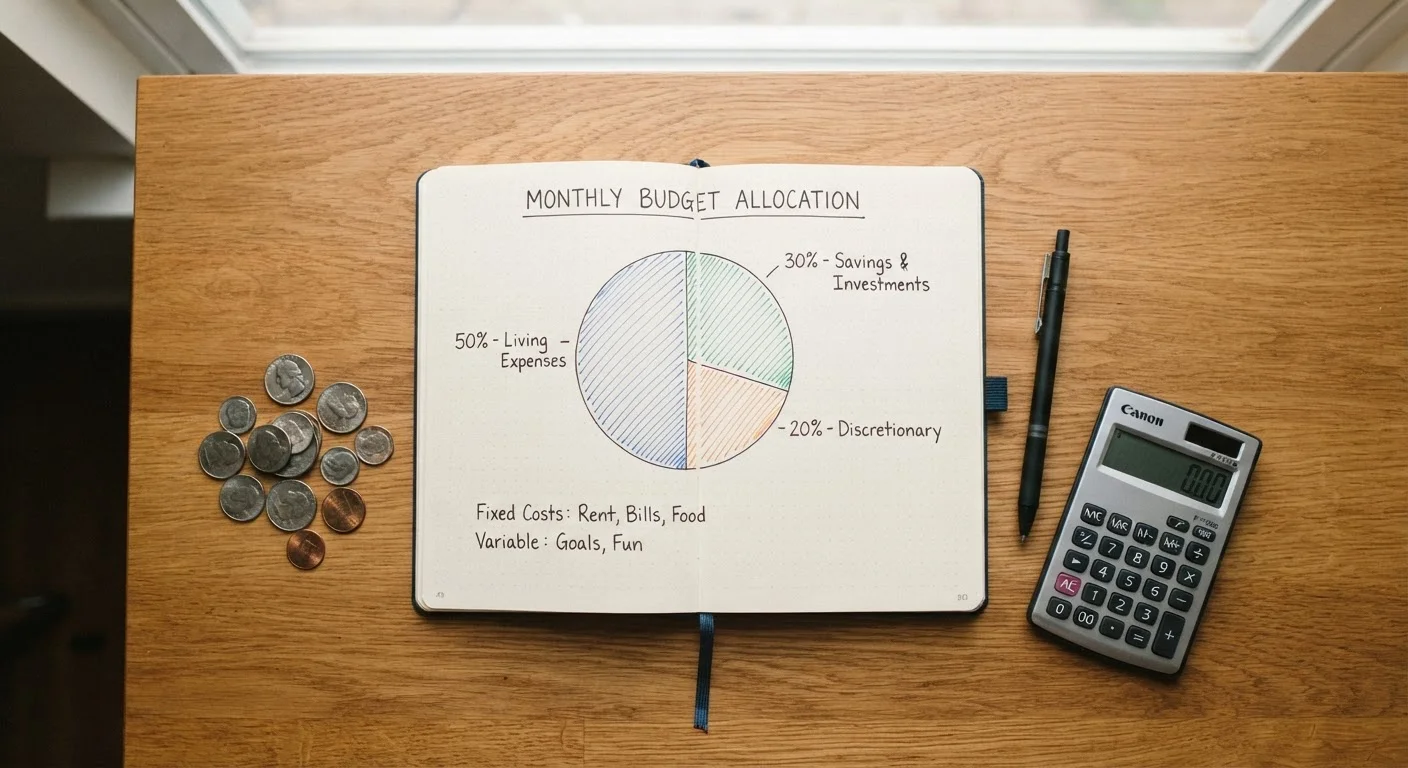
Photo credit: ProximityFinds.com | One-stop Reading Source
In this article
The 50/30/20 rule offers a simple way to divide your take-home pay. Understand the reasoning behind each category before you apply it.
Key Takeaways
- The 50/30/20 rule splits after-tax income into needs, wants, and savings or debt repayment.
- Needs are non-negotiable essentials; wants are discretionary spending you choose but could forgo.
- The 20% savings category covers both emergency funds and long-term financial goals.
- The framework is a starting point - your ratios may need adjustment based on your circumstances.
- Applying this rule consistently can make budgeting approachable without complex tracking.
Why a Percentage-Based Budget Works
Most budgeting methods fail not because they're wrong in theory, but because they're too complicated to maintain. Tracking 40 spending categories or reconciling every receipt demands effort that fades quickly. The 50/30/20 rule takes the opposite approach: it asks you to think in three buckets, not dozens.
Because the categories are percentages of income rather than fixed dollar amounts, the framework scales automatically. Whether you earn $3,000 or $8,000 a month, the proportions stay the same. That makes it one of the few budgeting structures that works without recalibration every time your paycheck changes.
If you're weighing this method against more granular approaches, see how it compares in zero-based budgeting vs. the 50/30/20 rule.
57%
Americans with less than $1,000 in savings
According to a 2023 survey by Bankrate, more than half of U.S. adults could not cover a $1,000 emergency expense from savings alone.
20%
Target savings rate under the 50/30/20 rule
Financial educators broadly consider saving 15-20% of take-home pay a foundational benchmark for building long-term financial stability.
~33%
Average share of income spent on housing
The U.S. Bureau of Labor Statistics Consumer Expenditure Survey consistently shows housing as the largest single spending category for American households.
Breaking Down the Three Categories
50% - Needs
Needs are expenses you cannot responsibly eliminate without risking your housing, health, or ability to work. This includes rent or mortgage payments, utilities, groceries, health insurance premiums, minimum payments on debt, and transportation costs necessary for employment. The test is practical: if skipping it would create a genuine hardship or financial penalty, it's a need.
One common mistake is treating comfortable habits as needs. A premium cable package is a want. A car payment for a vehicle you rely on to commute is a need. Keeping this distinction honest is what makes the 50% category meaningful.
30% - Wants
Wants are discretionary - the spending that improves your quality of life but isn't essential to it. Dining out, streaming services, travel, hobbies, and clothing beyond the basics all fall here. This category isn't something to eliminate; it's something to manage. A budget with no room for enjoyment tends not to last.
Budgeting for wants also helps with travel planning - allocating a portion of your 30% toward a trip fund makes vacations achievable without blowing your financial plan.
20% - Savings and Debt Repayment
This category covers building your financial future: emergency fund contributions, retirement account deposits, and any debt payments above the required minimum. Paying down debt faster than required reduces the interest you owe over time, which is effectively a guaranteed return on that money.
For a deeper look at how this figure connects to overall financial health, the concept of your savings rate is worth understanding alongside this framework.
Start With Your Biggest Gap First
When you compare your actual spending to the 50/30/20 targets, focus on whichever category is furthest off - not all three at once. If your savings rate is near zero, even redirecting 5% of income toward savings is a meaningful first step. Trying to fix all three buckets simultaneously often leads to abandoning the budget entirely.
Applying the Rule to Real Life
Start with your monthly take-home pay after taxes and any pre-tax deductions (like a 401(k) contribution). Multiply that number by 0.50, 0.30, and 0.20 to find your target dollar amounts for each category. Then compare those targets against what you're currently spending.
Most people find the needs category is close to their actual spending, but the 20% savings target reveals a gap. That gap is where the framework does its real work - it makes a previously invisible shortfall concrete and actionable.
If your needs consistently exceed 50%, look at which fixed costs could be reduced over time rather than making immediate cuts. If your wants far exceed 30%, identifying two or three specific areas to trim is more sustainable than a blanket spending freeze.
Once you have a clear picture of your income and categories, setting up your first monthly budget can walk you through translating these targets into a working plan. For those managing debt alongside savings goals, saving while in debt offers practical guidance on balancing both priorities at once.
This article is for general informational and educational purposes only and does not constitute personalized financial advice. Consult a licensed financial professional before making decisions about your personal financial situation.
Frequently Asked Questions

Author
Finance Editorial Team
Finance Editorial Team is the collective byline for our editorial team and contributor network. Articles published under this byline or an editorial pen name are researched, written, and reviewed according to our editorial standards for clarity, consistency, and independence before publication.
View all articles →