
Zero-Based Budgeting vs. the 50/30/20 Rule
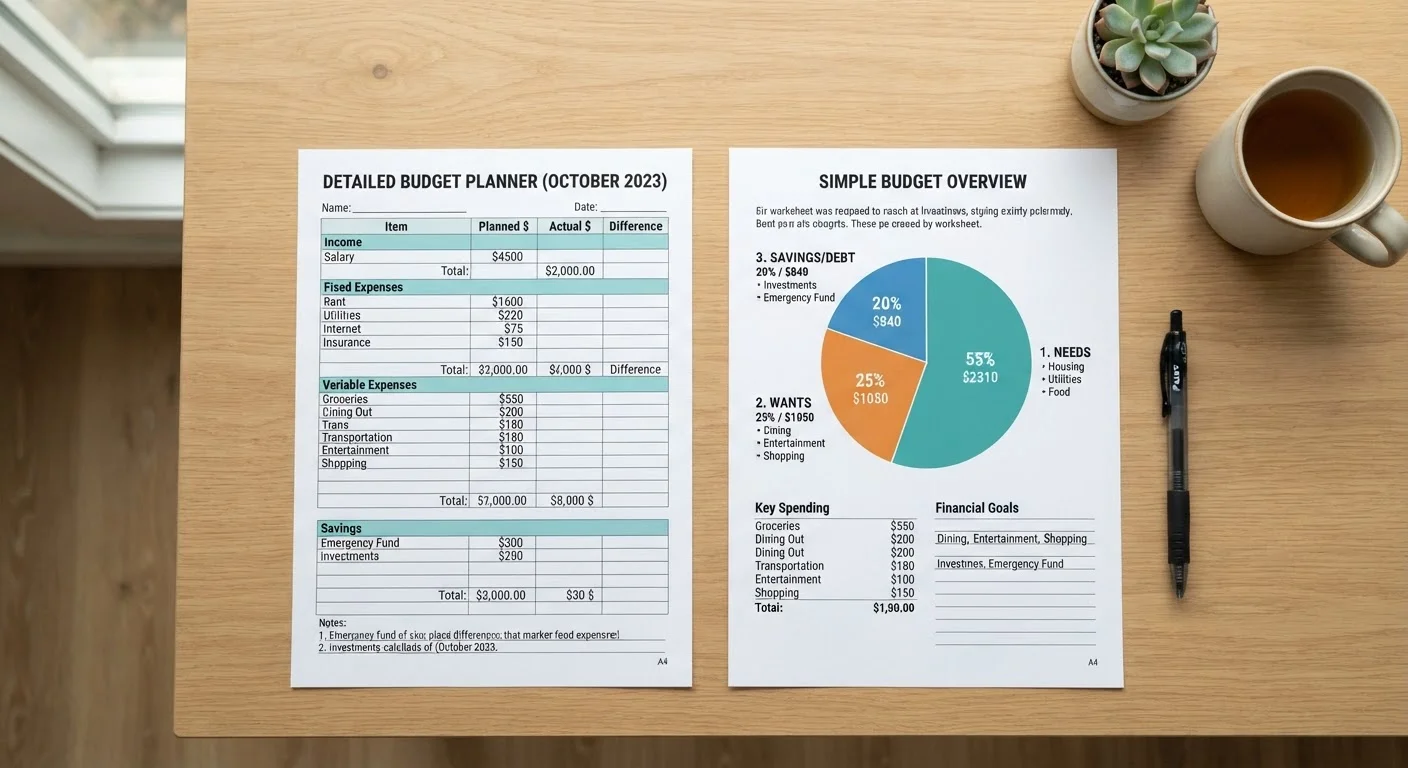
Photo credit: ProximityFinds.com | One-stop Reading Source
Two of the most popular personal budgeting frameworks compared side by side—what they are, how they work, and which fits your situation.
Key Takeaways
- Zero-based budgeting assigns every dollar of income a specific job, leaving no unallocated money.
- The 50/30/20 rule divides take-home pay into three broad categories: needs, wants, and savings or debt repayment.
- Zero-based budgeting demands more time monthly but gives granular control over spending.
- The 50/30/20 rule is easier to maintain but may not suit tight budgets or complex financial situations.
- Neither method is objectively superior - the right fit depends on your income, goals, and lifestyle.
- Consulting a licensed financial adviser is recommended before making significant financial decisions.
How Each Method Works
If you're new to budgeting, understanding how each framework operates is the essential first step before choosing between them.
Zero-Based Budgeting
Zero-based budgeting (ZBB) starts from scratch each month. You take your total expected income, then assign every dollar a specific purpose - rent, groceries, utilities, savings, debt payments, entertainment - until the math reads income minus expenses equals zero. That zero doesn't mean you've spent everything; it means every dollar has a defined destination, including savings and investments. Any dollar without a job is a dollar that tends to drift.
The 50/30/20 Rule
The 50/30/20 rule takes a broader approach. You divide your monthly after-tax income into three buckets: 50% toward needs (housing, utilities, groceries, transportation), 30% toward wants (dining out, subscriptions, entertainment), and 20% toward savings and debt repayment. For a deeper look at why those proportions make sense, see the logic behind the 50/30/20 framework.
| Criterion | Zero-Based Budgeting | 50/30/20 Rule |
|---|---|---|
| Core concept | Assign every dollar a specific job | Split income into three broad percentages |
| Monthly setup time | High - rebuilt from scratch each month | Low - percentages stay consistent |
| Spending categories | Unlimited, fully customized | Three fixed buckets |
| Precision | Dollar-level granularity | Broad allocation only |
| Ideal income type | Variable or irregular income | Steady, predictable income |
| Learning curve | Steeper - requires category discipline | Gentle - easy to grasp quickly |
| Flexibility | Highly flexible within categories | Flexible within each broad bucket |
| Best for debt payoff | Strong - surplus directed intentionally | Moderate - built into 20% category |
Strengths and Limitations
Zero-Based Budgeting: Strengths
- Maximum visibility - you see exactly where every dollar lands, which makes it far easier to identify unnecessary expenses.
- Adaptable each month - because you build the budget from zero each cycle, it naturally accommodates irregular income or shifting priorities.
- Goal-directed - surplus dollars can be immediately re-routed to a savings target or debt payoff rather than quietly disappearing.
Zero-Based Budgeting: Limitations
- Time-intensive - constructing a detailed budget monthly takes effort, especially for households with complex expenses.
- Can feel rigid - unexpected costs can disrupt the plan and require mid-month recalibration.
The 50/30/20 Rule: Strengths
- Simplicity - three categories are far less overwhelming than dozens of line items, reducing the friction that causes most people to abandon budgeting.
- Built-in balance - the framework ensures some allocation toward both enjoyment and financial security from the start.
The 50/30/20 Rule: Limitations
- Less precise - broad categories can obscure problem areas within each bucket.
- Income-dependent - on a lower income, meeting the 50% needs threshold may be impossible, making the percentages impractical without modification. See the case for and against strict budgeting for a broader discussion of rigidity trade-offs.
~74%
Americans living paycheck to paycheck
Various surveys over recent years have consistently found that a substantial majority of U.S. adults report limited financial cushion, underscoring why a structured budgeting framework matters.
20%
Savings and debt allocation in 50/30/20
The 50/30/20 rule designates a full fifth of after-tax income for savings and debt repayment, which aligns with widely cited guidance for building an emergency fund.
$0
Unallocated income in zero-based budgeting
The defining rule of zero-based budgeting is that every dollar of income is assigned a purpose, leaving no money without a designated category.
Which Framework Fits Your Situation
The honest answer is that neither method is universally superior - suitability depends on your income level, financial goals, and how much time you can realistically dedicate to money management each month.
Choose zero-based budgeting if you have irregular income, are in active debt-reduction mode, or genuinely want to understand every dollar you spend. It rewards the effort with granular control. If you need a practical walkthrough to get started, the guide to setting up your first monthly budget provides a step-by-step structure you can adapt to either method.
Choose the 50/30/20 rule if you have a relatively stable income, are early in your budgeting journey, or want a system you can stick with over years without burning out on tracking. It provides structure without demanding perfection.
Hybrid approaches are also valid. Some people use the 50/30/20 rule as a macro-level guide while applying zero-based logic within each category - for example, itemizing exactly how the 30% wants bucket is spent. For a comparison of tools that can support either approach, see envelope, app-based, and spreadsheet budgeting methods compared.
These Percentages Are Starting Points
The 50/30/20 split is a guideline, not a rule carved in stone. In high cost-of-living areas, needs may consume well above 50% of take-home pay, requiring an adjusted ratio. Similarly, someone with significant debt might redirect a larger share from wants to repayment. Treat any percentage framework as a starting structure you refine over time, not a target you must hit exactly.
This article is for general informational and educational purposes only and does not constitute personalized financial advice. Consult a licensed financial adviser for guidance tailored to your individual circumstances.

Author
Finance Editorial Team
Finance Editorial Team is the collective byline for our editorial team and contributor network. Articles published under this byline or an editorial pen name are researched, written, and reviewed according to our editorial standards for clarity, consistency, and independence before publication.
View all articles →