
The Truth About 'Lifetime' Fluids and Filters
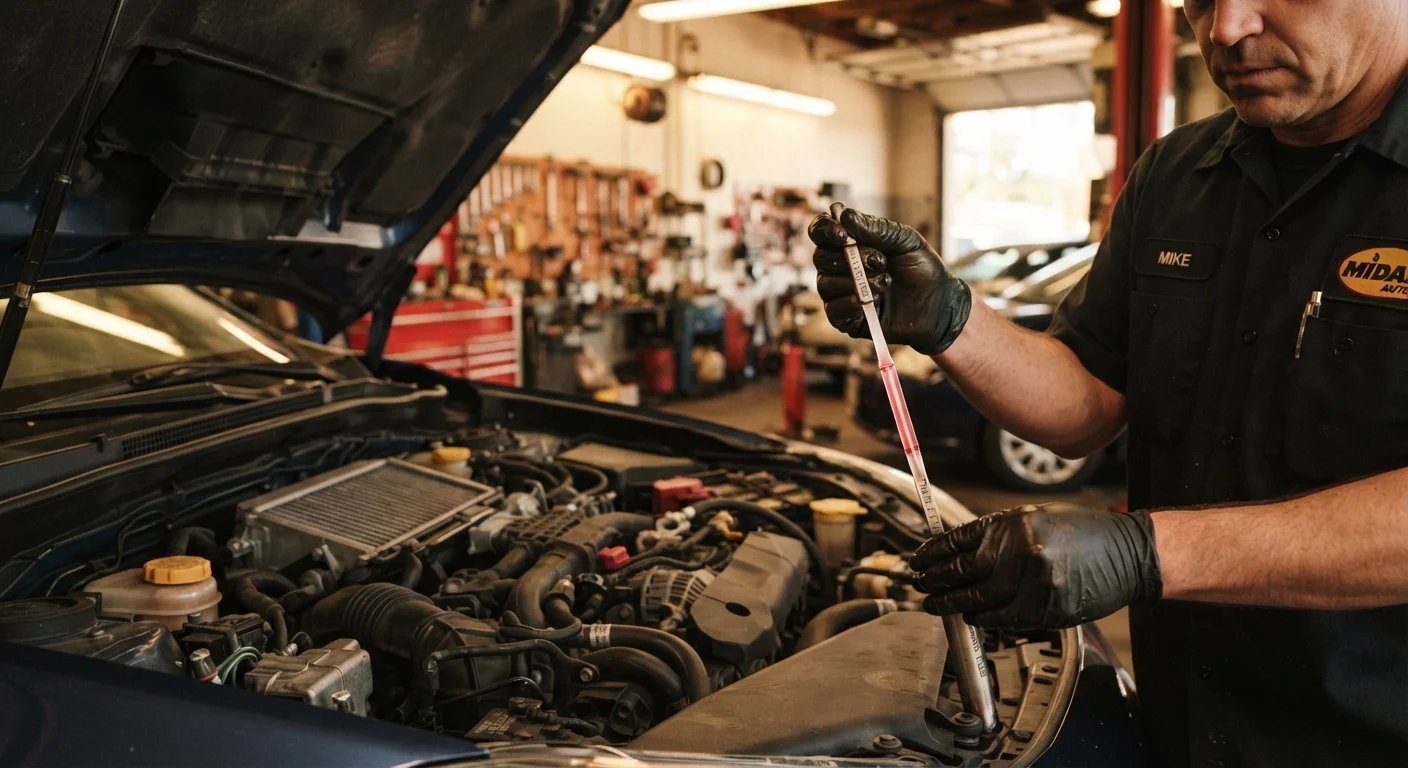
Photo credit: ProximityFinds.com | One-stop Reading Source
In this article
Some fluids are labeled 'lifetime fill,' but does that mean they never need changing? The evidence behind common maintenance myths.
Key Takeaways
- 'Lifetime' fluid labels are based on manufacturer testing conditions, not real-world driving.
- Transmission fluid, coolant, and brake fluid all degrade over time and typically need replacement.
- Severe driving - towing, stop-and-go traffic, extreme heat - accelerates fluid breakdown significantly.
- Your owner's manual and a qualified mechanic are the most reliable guides for service intervals.
- Skipping fluid changes to save money often leads to far more expensive repairs down the road.
What 'Lifetime Fill' Actually Means
Walk into many dealerships today and you'll hear that your transmission fluid or differential fluid is a "lifetime fill" - meaning it never needs to be changed. It sounds reassuring, and it's largely the reason so many drivers skip these services for years. But the word "lifetime" here doesn't mean what most people assume it does.
When automakers use that label, they're typically referring to the fluid's durability under controlled laboratory conditions or during the vehicle's expected warranty period - not necessarily over the full lifespan of a vehicle driven in varied real-world conditions. In practice, heat cycles, moisture contamination, and normal mechanical wear all degrade fluid quality over time. For a broader look at what each fluid in your car actually does, see Understanding Your Car's Fluid System.
Myth
If a fluid is labeled 'lifetime fill,' you never need to change it for the life of the car.
Fact
'Lifetime' typically refers to the warranty period or lab test conditions - not the full service life of a vehicle driven in the real world.
Automakers conduct durability testing under controlled conditions. The term "lifetime" on a fluid often traces back to those test parameters or to the expected ownership window during which a manufacturer warrants the vehicle. A car driven 200,000 miles in Texas heat, hauling a trailer on weekends, is operating well outside those baseline assumptions. Most independent mechanics and many manufacturer dealer networks now recommend transmission fluid changes between 60,000 and 100,000 miles regardless of original labeling.
Myth
Coolant in modern vehicles is so advanced it lasts indefinitely without replacement.
Fact
Even long-life coolant formulations degrade over time, losing corrosion inhibitors and becoming acidic - which can damage cooling system components.
Modern extended-life coolants do last significantly longer than older green antifreeze formulas. But "extended life" still has limits - typically 5 years or 150,000 miles, whichever comes first. As the additive package depletes, coolant pH drops and it can begin corroding aluminum components in the engine and radiator. A simple test strip can check inhibitor levels, and a mechanic can advise on whether a flush is warranted based on your vehicle's age and mileage.
Myth
Brake fluid doesn't need changing because it's in a sealed system.
Fact
Brake fluid is hygroscopic - it absorbs moisture through the system over time - which lowers its boiling point and can compromise braking performance.
The brake system isn't perfectly sealed from atmospheric moisture. Over time, glycol-based brake fluid absorbs water vapor, and even a small percentage of water contamination meaningfully reduces the fluid's boiling point. Under hard or sustained braking - like descending a long grade - this can contribute to brake fade. Most manufacturers recommend brake fluid replacement every two to three years. A moisture content test at your next service visit is a quick, low-cost way to know where you stand.
Myth
Cabin air filters and engine air filters last forever because the car runs fine.
Fact
Filters don't cause noticeable symptoms until they're significantly clogged - by which point efficiency and air quality have already been compromised.
A clogged cabin air filter restricts airflow through your HVAC system, reduces defroster effectiveness, and can harbor mold if moisture is present. A dirty engine air filter limits the air-fuel mixture and can affect fuel economy over time. Neither type of filter sends a dashboard warning light. Most manufacturers suggest inspecting both every 15,000 to 30,000 miles and replacing them based on condition - more frequently in dusty environments. Visual inspection at an oil change is usually all it takes.
Myth
Transmission fluid only needs changing if the transmission is slipping or acting up.
Fact
Waiting for symptoms usually means internal damage is already underway - proactive fluid changes are far cheaper than reactive repairs.
Transmission fluid lubricates clutch packs, seals, and valve bodies. As it degrades, it loses viscosity and its friction-modifying properties change - gradually, without obvious symptoms at first. By the time you notice slipping, delayed engagement, or rough shifts, microscopic wear particles have likely been circulating through the system for some time. Proactive fluid changes - typically every 60,000 to 100,000 miles depending on vehicle and service type - cost a fraction of a transmission rebuild. See also The Logic Behind Oil Change Intervals for a parallel discussion of why proactive maintenance beats reactive repair.
Why Driving Conditions Change Everything
Even if a fluid performs well under typical conditions, your driving habits can dramatically shorten its effective service life. Towing heavy loads, frequent short trips, stop-and-go commuting in high heat, and driving in mountainous terrain all put extra stress on your vehicle's fluids and filters.
Automakers call this "severe" service, and most owner's manuals include a separate - shorter - maintenance schedule for it. Many drivers technically qualify as severe-use without realizing it. If you want a practical breakdown of how maintenance intervals shift based on use, Car Maintenance Intervals Every Driver Should Know covers it in plain terms.
~30%
Drivers who qualify as severe-use
Industry estimates suggest a significant share of everyday drivers fall into the 'severe service' category due to short trips, towing, or extreme temperatures - yet most follow the standard maintenance schedule.
3-5%
Moisture in brake fluid triggers replacement
Many brake fluid test standards recommend replacement when moisture content reaches 3-5%, a threshold that can be reached within two to three years of normal driving.
The Cost of Trusting the Label Too Long
Fluid degradation doesn't announce itself loudly. Transmission fluid that has broken down looks darker and smells burnt, but by the time those signs appear, internal wear may already be underway. Neglected coolant becomes acidic and can corrode the radiator and water pump. Old brake fluid absorbs moisture and raises the risk of brake fade under hard stops.
The gap between "it seems fine" and "it's already causing damage" is exactly where deferred maintenance becomes expensive. The Hidden Costs of Skipping Routine Maintenance walks through how these small deferrals compound into major repair bills.
Don't Wait for a Warning Light
Most fluid degradation happens silently - no dashboard light, no dramatic symptom. By the time a sensor triggers a warning or you notice shifting problems, internal components may already be worn. Scheduled inspections are the only reliable way to catch fluid issues before they escalate into expensive repairs.
What to Do Instead
The most reliable approach is straightforward: open your owner's manual and locate the maintenance schedule for your specific vehicle. Cross-reference the "normal" and "severe" service intervals, then honestly assess which category your driving falls into. When in doubt, ask a qualified mechanic to inspect fluid condition - many shops can test brake fluid moisture content and visually assess transmission fluid on the spot.
If your vehicle uses synthetic fluids - which most modern vehicles do - intervals are generally longer than older mineral-based specs. But longer doesn't mean indefinite. For context on how fluid formulation affects service life, Engine Oil Demystified explains additive packages and why they matter.

Author
Automotive Editorial Team
Automotive Editorial Team is the collective byline for our editorial team and contributor network. Articles published under this byline or an editorial pen name are researched, written, and reviewed according to our editorial standards for clarity, consistency, and independence before publication.
View all articles →