
Spring vs. Fall: Does Timing Your Sale Really Matter?
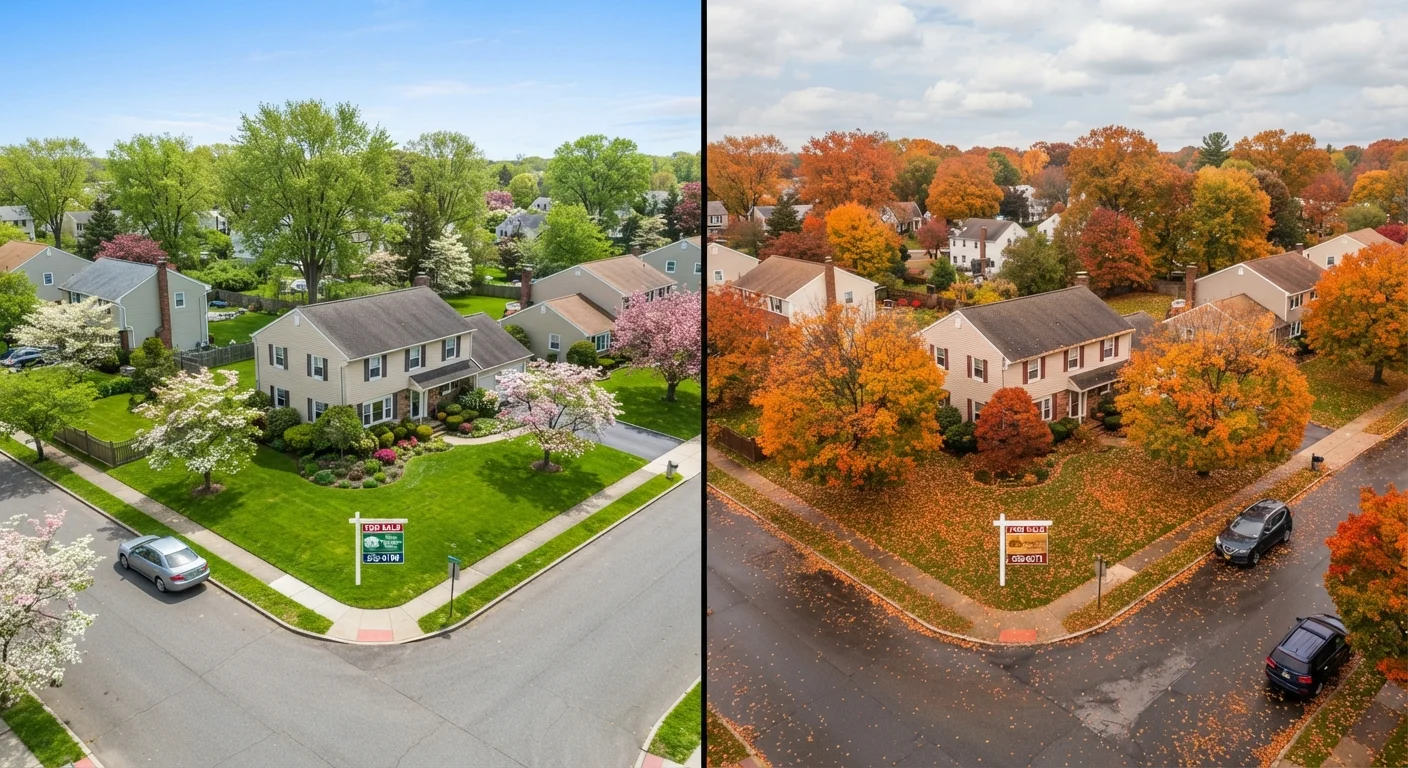
Photo credit: ProximityFinds.com | One-stop Reading Source
In this article
Compare how seasonality affects buyer demand, days on market, and final sale prices to decide when listing might work best for you.
Key Takeaways
- Spring typically brings more buyers but also more competing listings, which can offset pricing advantages.
- Fall markets often feature more motivated buyers and less seller competition, potentially benefiting well-prepared listings.
- Local market conditions, personal circumstances, and home readiness often matter more than season alone.
- Days on market and final sale price are both influenced by seasonality, but neither outcome is guaranteed by timing.
- Consulting a local real estate professional can clarify how seasonal trends play out in your specific area.
Why Season Gets So Much Attention in Real Estate
Ask almost any real estate professional when to list a home, and spring will likely come up first. The conventional wisdom is well-established: warmer weather draws out buyers, school-year calendars create urgency, and blooming curb appeal photographs beautifully. But the real estate market has grown more nuanced, and fall has earned a legitimate place in the conversation.
Seasonality does influence buyer demand, days on market, and - to a degree - sale prices. However, treating any single season as a guaranteed advantage oversimplifies a decision that depends heavily on local inventory, interest rate environments, and your home's individual condition. Before choosing a listing window, it's worth understanding what each season actually delivers and what it costs you.
For a deeper look at how asking prices and final outcomes diverge, see our piece on why listing and sale prices often differ.
The Case for Listing in Spring
Spring - broadly March through May in most U.S. markets - consistently sees the highest volume of active buyers. Families with school-age children are motivated to close in time to move before the next academic year, creating a natural deadline that drives decision-making. Longer daylight hours mean more showing availability, and landscaping tends to be at its most photogenic.
Historically, homes listed in spring have sold faster and, in many markets, at modestly higher prices compared to winter months. Higher foot traffic increases the likelihood of multiple-offer situations, which can push sale prices above the listing price in competitive markets.
The trade-off is inventory. Spring also brings out the most seller competition. More listings mean buyers have more choices, which can temper the advantage of high demand. A home that isn't well-prepared or well-priced doesn't automatically benefit from spring traffic - it simply gets more exposure to buyers who may pass it over for a better-presented alternative.
Start Prep Early for a Spring Listing
Sellers targeting spring often underestimate how much lead time preparation requires. Photography, minor repairs, decluttering, and staging all take time to coordinate well. Aiming to list in late March or April means beginning your preparation process no later than January or February. Rushed preparation is one of the most common reasons well-timed listings underperform.
If you're targeting a spring listing, begin your preparation well in advance. Repairs, staging, and photography scheduling can take weeks. Our pre-listing checklist outlines what to prioritize before going live.
The Case for Listing in Fall
Fall - September through November - is often underestimated. While total buyer volume drops compared to spring, the buyers who are actively searching in fall tend to be more serious. Casual browsers have largely exited the market; those still looking frequently have genuine urgency, whether driven by job relocations, lease expirations, or year-end financial considerations.
Seller competition also thins considerably in fall. Fewer competing listings mean your home gets more relative attention from the available buyer pool. In markets where spring inventory surges regularly, fall can actually be a more favorable environment for a well-priced, move-in-ready home.
| Spring Listing | Fall Listing | |
|---|---|---|
| Buyer demand volume | High - peak traffic nationally | Moderate - fewer but more motivated buyers |
| Seller competition | High - most listings hit in spring | Lower - fewer competing homes |
| Typical days on market | Shorter in most markets | Slightly longer on average, market-dependent |
| Price premium potential | Moderate-to-strong in competitive markets | Modest - driven by low competing inventory |
| Curb appeal advantage | Strong - blooming landscaping | Warm tones; varies by climate |
| Buyer urgency profile | Mixed - includes casual browsers | Higher - serious, timeline-driven buyers |
Pricing strategy matters in any season. Understanding how to position your listing relative to comparable sales is essential - and that analysis doesn't change based on the calendar. Consider whether working with a listing agent makes sense for navigating the nuances of your local market.
What the Data Actually Suggests
~50%
of annual home sales occur March-July
National Association of Realtors data consistently shows spring and early summer account for roughly half of all annual U.S. existing home sales by volume.
7-10 days
Median days on market difference, spring vs. fall
In many U.S. metros, homes listed in peak spring spend roughly one to two weeks less on market compared to fall listings, though this gap narrows significantly in supply-constrained markets.
1%-3%
Typical seasonal price variance
Research from housing economists suggests seasonal pricing differences between peak and off-peak periods are often modest - typically in the low single-digit percentage range nationally.
National data from real estate research organizations consistently shows spring as the period with the highest transaction volume in the U.S. However, price premiums tied specifically to spring have narrowed in many markets over the past decade, particularly in regions with strong year-round demand.
Days on market - how long a home sits before going under contract - tends to be shortest in spring and shortest again in early fall, with a slower period in mid-summer and the steepest slowdown in December and January. Importantly, days on market is also highly sensitive to pricing accuracy. An overpriced home in peak spring will often linger longer than a well-priced home listed in October.
Once you receive an offer, timing becomes less relevant than terms. Knowing how to evaluate and respond to a purchase offer is critical regardless of what season you list in.
This article is for general informational purposes only and does not constitute personalized real estate, legal, or financial advice. Market conditions vary significantly by location. Consult a licensed real estate professional familiar with your local market before making listing decisions.

Author
Real Estate Editorial Team
Real Estate Editorial Team is the collective byline for our editorial team and contributor network. Articles published under this byline or an editorial pen name are researched, written, and reviewed according to our editorial standards for clarity, consistency, and independence before publication.
View all articles →