
Listing Price vs. Sale Price: Why the Gap Exists
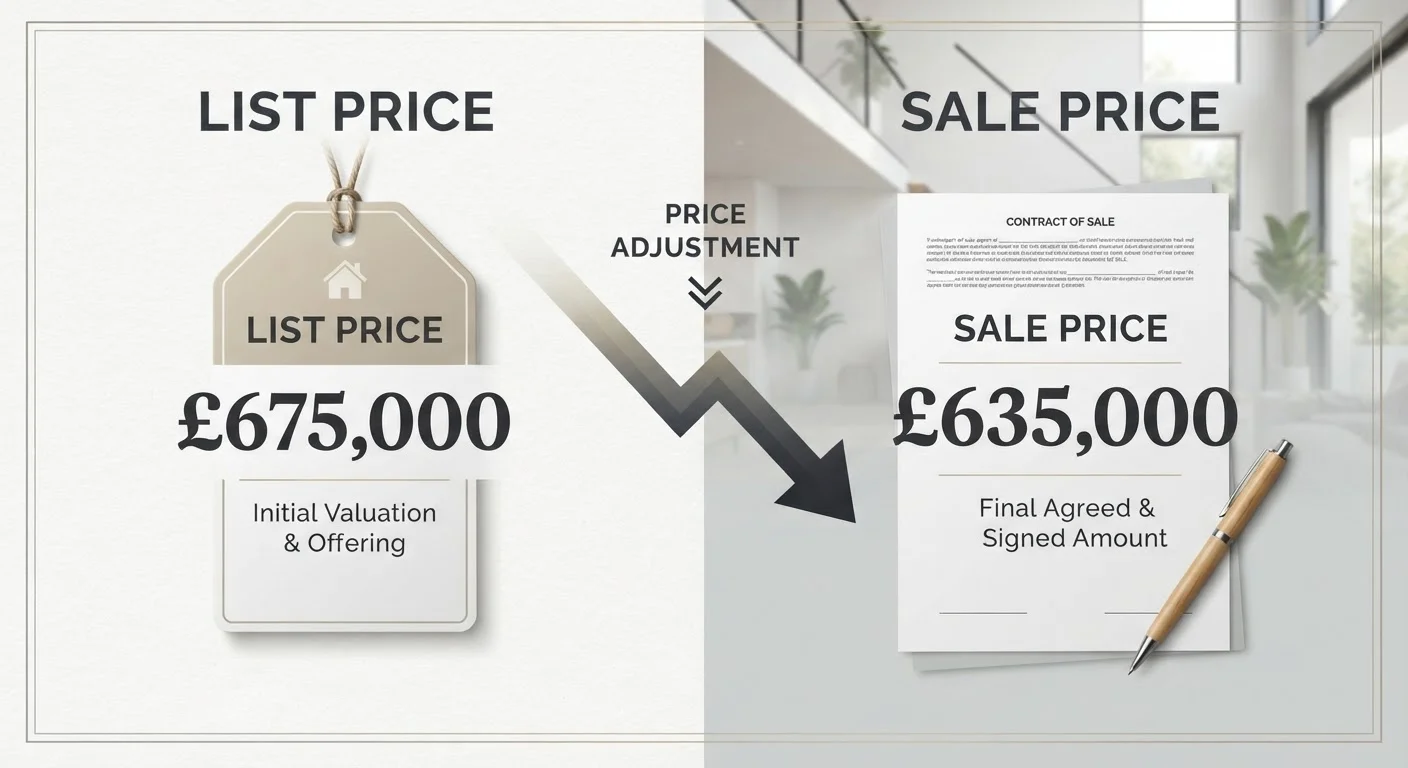
Photo credit: ProximityFinds.com | One-stop Reading Source
In this article
Explore why homes rarely sell at their listing price, what drives the difference, and what that means for your pricing strategy.
Key Takeaways
- The listing price is a starting point set by the seller; the sale price is determined by negotiation and market conditions.
- Homes commonly sell below the listing price, though competitive markets can push sale prices above asking.
- Overpricing a listing often leads to longer days on market and a lower final sale price.
- Appraisals, inspections, and buyer financing all create pressure that can widen the price gap.
- A well-researched listing price grounded in comparable sales typically minimizes the gap.
What Each Price Actually Means
The listing price - sometimes called the asking price - is the figure a seller chooses before the property hits the market. It is, at its core, an invitation to negotiate. The seller sets it based on their own assessment of value, often informed by a real estate agent's comparative market analysis (CMA) or a formal appraisal.
The sale price, by contrast, is the number both parties agree to in the final purchase contract. It reflects the market's actual response: buyer demand, property condition, financing constraints, and negotiating dynamics. The sale price is the only figure that materially affects the seller's net proceeds.
These two numbers are rarely identical. Understanding why they diverge - and by how much - is essential for anyone preparing to sell. For a deeper look at how the final number translates into cash in hand, see our guide on closing costs sellers actually pay.
Why a Gap Almost Always Exists
Several structural forces push the sale price away from the listing price, in either direction.
| Criterion | Listing Price | Sale Price |
|---|---|---|
| Set by | Seller (with agent or independently) | Mutual agreement between buyer and seller |
| When it appears | Before the home hits the market | At contract execution, after negotiation |
| Primary purpose | Anchor buyer expectations; invite offers | Record the legally binding transaction value |
| Influenced by | Seller goals, comps, agent guidance | Buyer demand, inspection, appraisal, financing |
| Can it change? | Yes - via price reductions before contract | Yes - via renegotiation before closing |
| Reflects market value? | Seller's estimate; may or may not align | Closest available proxy for true market value |
Buyer Negotiation
Most buyers submit an initial offer below asking. Even in strong markets, negotiation is expected. Sellers who price with no room for negotiation may alienate buyers; those who price with appropriate flexibility close faster and often at better net values.
Home Inspection Findings
After an offer is accepted, a home inspection frequently reveals deferred maintenance or defects. Buyers may request price reductions or repair credits, narrowing their effective purchase price - and the seller's proceeds.
Appraisal Contingencies
When a buyer uses mortgage financing, the lender orders an independent appraisal. If the appraised value comes in below the agreed sale price, the lender will not finance the full amount. This creates renegotiation pressure that almost always moves the final price downward.
Market Conditions
In a buyer's market - where supply exceeds demand - sellers often accept offers well below asking. In a competitive seller's market, multiple-offer situations can push the sale price above the listing price. Seasonality also plays a role; see how timing your sale affects final prices for more context.
The Pricing Strategy Behind the Numbers
How a seller arrives at their listing price has a direct bearing on the size of the gap - and the quality of the eventual offer.
~3-5%
Typical gap between list and sale price
In balanced markets, homes commonly sell within 3-5% of their listing price, though this varies significantly by local conditions and property type.
18+ days
Added days on market for overpriced homes
Industry research consistently shows that homes requiring a price reduction spend considerably more time on market than accurately priced comparable listings.
~80%
Financed purchases requiring an appraisal
The vast majority of US home purchases involve mortgage financing, meaning an independent appraisal is a standard step that can trigger price renegotiation.
Overpricing is the most common strategic error. A home priced above what comparable recent sales support will attract fewer showings, accumulate days on market, and often generate lowball offers once buyers perceive a property as stale. The result is frequently a final sale price lower than what an accurate initial price would have achieved. Our editorial team has detailed these dynamics in common pricing mistakes that cost sellers money.
Underpricing is a deliberate tactic in some markets - particularly where inventory is tight - designed to spark a bidding war. This strategy carries risk: if fewer buyers compete than expected, the seller may simply accept a lower price than necessary.
Accurate pricing, rooted in a thorough CMA and current local data, typically produces the smallest gap between listing and sale price, the shortest time on market, and the least negotiating friction. Whether you work with a listing agent or pursue a FSBO approach affects how reliably you can access that data - see selling with an agent vs. selling on your own for a balanced comparison.
List-to-Sale Ratio as a Market Indicator
Real estate professionals often track the list-to-sale price ratio for a given area as a measure of market temperature. A ratio consistently above 100% signals a strong seller's market where bidding wars are common. A ratio below 95% suggests buyers hold more negotiating power. Reviewing this metric for your specific zip code - available through your agent or local MLS data - can help you set a more informed listing price from the start.

Author
Real Estate Editorial Team
Real Estate Editorial Team is the collective byline for our editorial team and contributor network. Articles published under this byline or an editorial pen name are researched, written, and reviewed according to our editorial standards for clarity, consistency, and independence before publication.
View all articles →